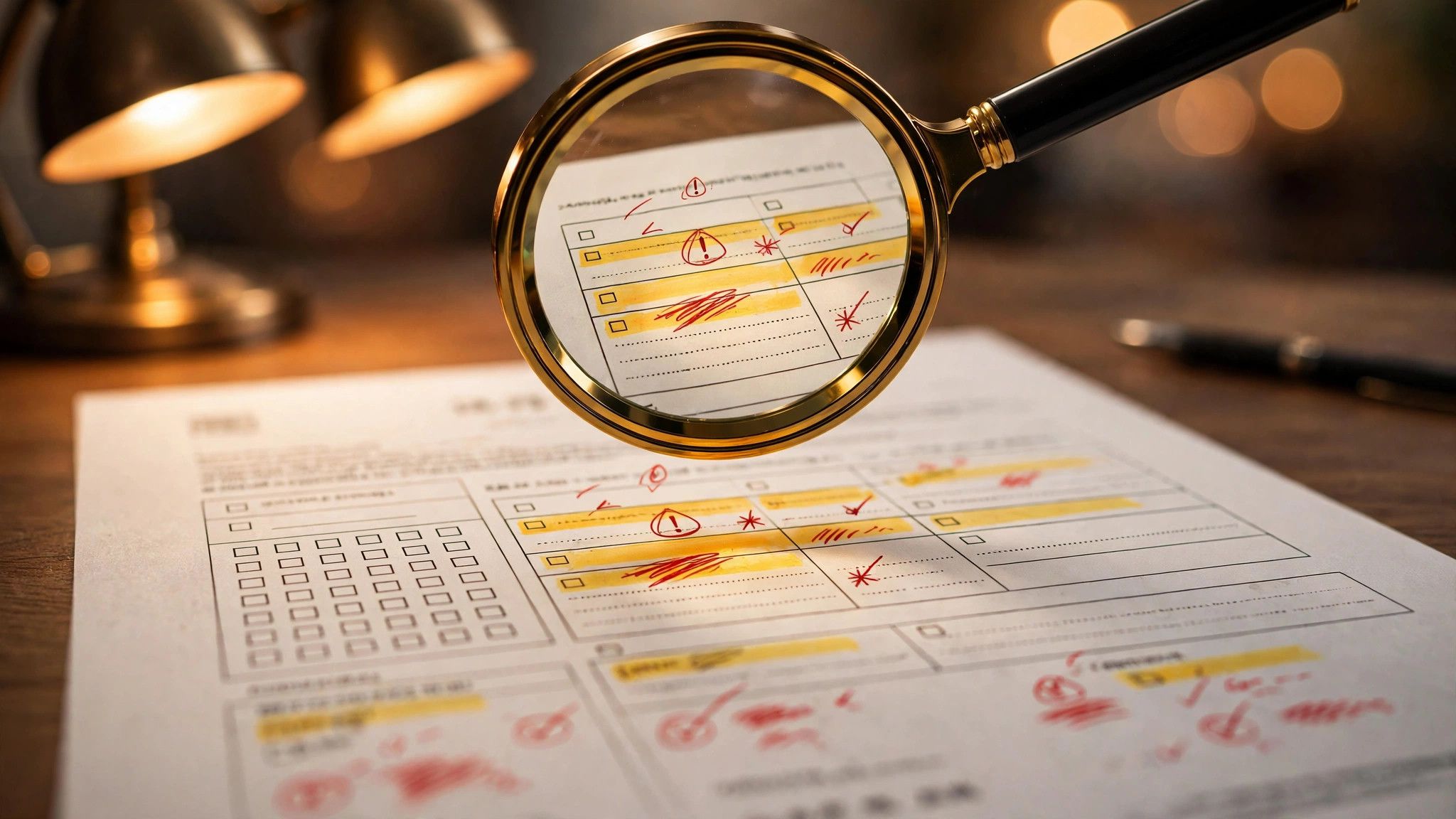

A paper deep-reading prompt solves a familiar problem: you finish a paper but can't recall its argument and can't spot the holes in its method. Paste the paper's text in, and the AI first tears into the argument and method like a seasoned reviewer, then explains the core argument, key method, and scope of applicability, and finishes with a quick-reference table. The prompt below is ready to copy and paste.
The prompt (copy and paste it as-is)
You are a senior reviewer in [FIELD]. You have reviewed hundreds of papers in this field and specialize in spotting leaps in reasoning and methodological flaws. Read the following paper closely and produce a deep-reading note in English, in this exact order:

1. Critique first: list 3 to 5 points most worth challenging — leaps in reasoning, sample or data limitations, missing controls, conclusions that outrun the evidence. Puncture each point in one sentence and note which part of the original text it is based on.
2. Then explain: summarize the core argument in no more than 200 words; then state the key method, data sources, and main findings.
3. Place its value: what specific problem does this paper solve in [FIELD]? Is its conclusion useful for [READING_GOAL]? Where are the boundaries of applicability?
4. Quick-reference table: output a table with the columns: core argument | key method | strongest evidence | biggest limitation | one-sentence verdict.

Constraints: judge only on the basis of the paper's text; do not invent content the authors never wrote. Cite the source when quoting the paper's claims. Where the original text says nothing, write "not stated in the original" explicitly — do not fill in the gaps yourself.

Paper text:
[PAPER_TEXT]
What to put in the three variables
- [FIELD]: the paper's subfield, e.g. "recommender systems", "behavioral economics", "educational assessment". The more specific, the sharper the standards and vocabulary the AI critiques with; too vague and you only get platitudes.
- [READING_GOAL]: what you are reading this paper for, e.g. "writing a literature review to find research gaps" or "judging whether this method fits my project". Different goals shift the emphasis of the "place its value" step.
- [PAPER_TEXT]: the full text of the paper, pasted directly. Line breaks from PDF copying don't matter; you can delete garbled formulas — they don't affect the judgment of the argument.
Why "critique first, explain second"
Summarize first and critique later, and the AI gets carried along by its own summary — the critique becomes a formality. Flip the order: playing reviewer first forces it to verify the chain of reasoning section by section — is the sample adequate, are the controls complete, do the conclusions outrun the evidence? Once that step is done properly, the later summary of the argument and method actually gets more accurate. The constraint "write 'not stated in the original' where the text says nothing" is the single most important line in the whole prompt: without it, the AI will paper over missing arguments with smooth prose, and you'll never see the paper's real weak spots.
Two places where this goes wrong
- Split very long papers. Paste roughly 8,000–12,000 words at a time — run "introduction + methods" and "experiments + conclusions" separately, then ask the AI to merge the two quick-reference tables. Paste the whole thing at once and the model tends to read only the first half, missing the flaws in the second.
- Don't let the AI fabricate citations. After it runs, spot-check one or two "based on section X of the original" references against the source. If the paper is unpublished or confidential, redact it first, or only use it in an AI tool your organization allows.
Next time you open a paper, don't read it end to end first. Paste the text in, run this prompt, and decide whether it deserves a close read only after you have the "list of flaws" and the "quick-reference table" — reading time should go to papers worth reading closely.