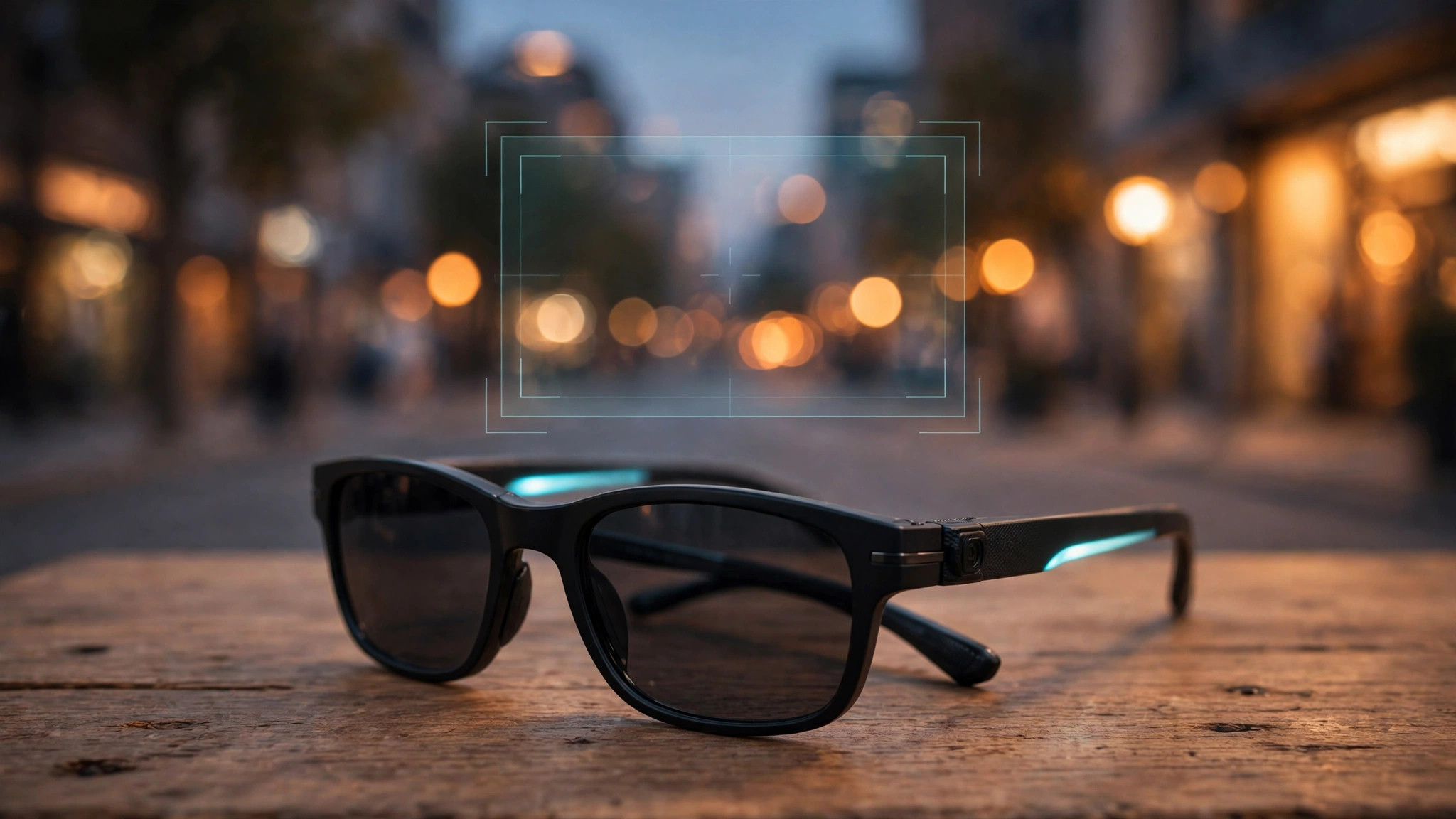
Are AI glasses worth buying? Here's the verdict up front: if you expect them to replace your phone's camera or your earbuds, no. If you're a vlog creator, a frequent outbound traveler, or a cycling commuter, they're currently the most practical body-camera form factor. The one problem AI glasses genuinely solve: those moments when you want to capture something but don't want to raise your phone.
The real selling points: hands-free first-person view
First-person capture is the one irreplaceable selling point. Filming daily life, cycling, or taking the kids out—tap once and recording starts, far more natural than pulling out a phone. Real-time translation is the second: reading menus or asking directions abroad, point at the thing and ask, smoother than switching between translation apps. AI Q&A is a bonus, not a must-have—handy for weather and reminders, but complex queries still need your phone. At around 40 grams, wearing them most of the day is barely a burden.
Entry barriers: battery and prescriptions first
Battery life is barrier number one. The advertised 8–12 hours reflects light use; continuous recording plus live translation will drain them in half a day of heavy use, so full-day outings need the charging case. Nearsighted users must factor in prescription lens cost and turnaround—prescription support is a purchase prerequisite. Privacy and social awkwardness is the second barrier: camera glasses make people uneasy in offices, restaurants, and gyms, and the recording indicator LED doesn't fully remove that discomfort. Prices in China cluster around 2,000 yuan, dropping near 1,000 yuan after subsidies—precisely because they're cheap, impulse buys are common.
Four products, how they differ
Ray-Ban Meta is the poster child of social shooting: the newly released Gen 3 supports 3K recording, starting at $449 overseas, but there's no official mainland China version—features and warranty take a hit. Xiaomi AI Glasses are the domestic value and ecosystem pick, starting at 1,999 yuan, with XiaoAi and Mi Home integration as their moat—this rundown covers all their pros and cons. Rokid takes the lightweight, open route at 38.5 grams, compatible with multiple mainstream AI models, with real-time translation as its strong suit. XREAL is a different lane entirely: "pocket cinema" display glasses, for watching films and gaming only—don't confuse them with shooting glasses. Nearsighted users can look at how the prescription version does it.
Who should buy
Vlog creators and short-video makers need them most—first-person footage is something a phone can't produce. Outbound travelers suit models with real-time translation, more efficient than translation apps abroad. Cycling and motorcycle commuters benefit: spoken navigation without looking down at the phone is a genuine safety upgrade. If you only want to try them out, borrow a friend's pair for two days first.
Where they fall short
Not good enough as your main earbuds: open-ear speakers leak badly on the subway, and bass is not happening. Not good enough as your main camera either: daytime footage is usable, but night and low-light shots are record-level only—no replacing your phone. Offline translation covers limited languages, and abroad you're fully dependent on a network connection. The biggest risk is collecting dust: ordering in launch-day excitement, then abandoning them in a drawer after a month of charging hassle is a well-worn story. Watch out for regional feature gaps too: some AI features from overseas versions are replaced or cut in the China version—verify the actual available feature list in your region before ordering.