
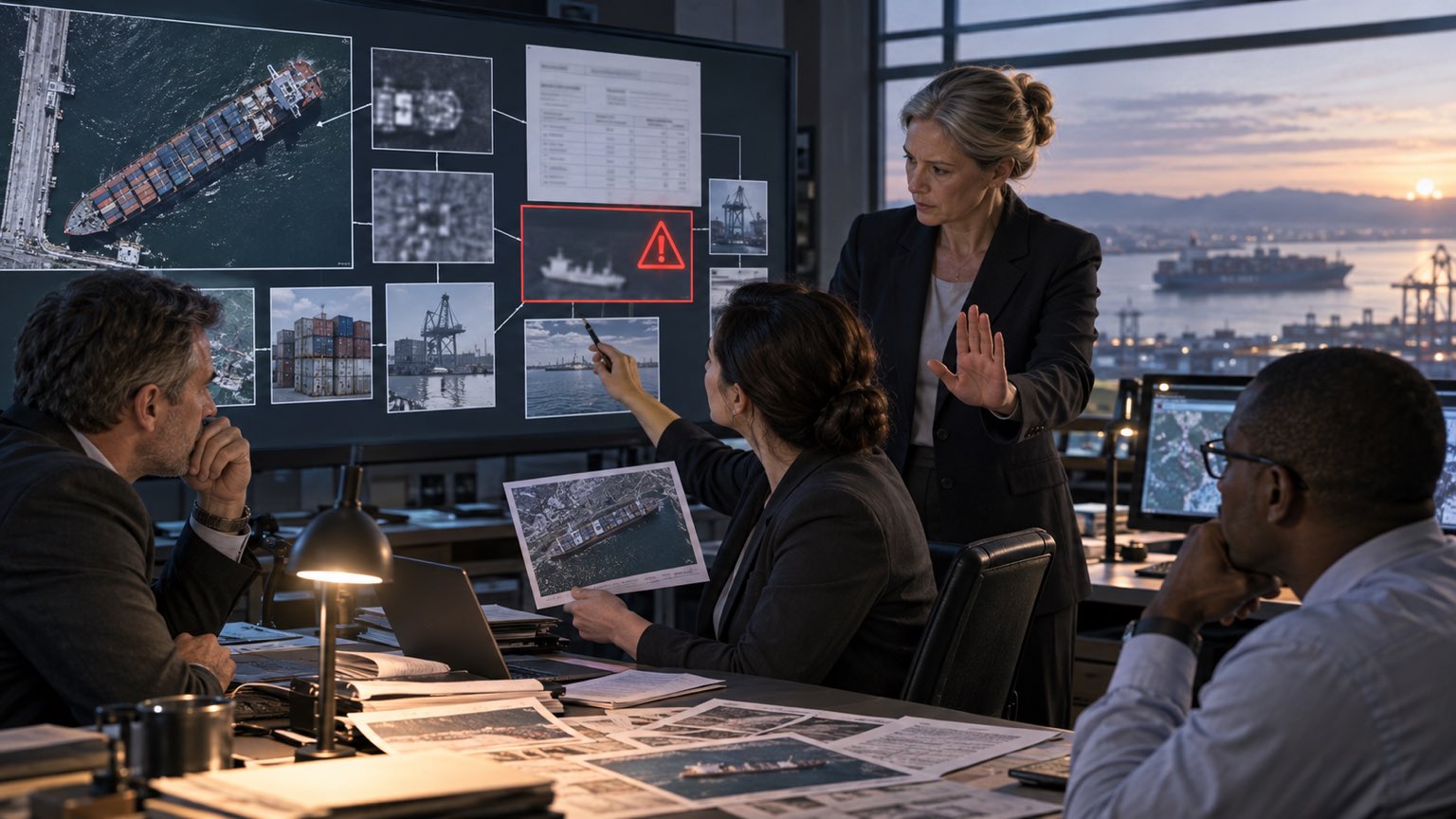
On September 18, 2026, CNN cited multiple sources revealing that during this spring's Iran War, an AI-generated intelligence report circulating within the U.S. military misjudged that a Chinese ship transiting the Middle East was carrying components related to a nuclear weapons project, and the U.S. military briefly prepared to intercept it. CNN stated that the military aircraft had already taken off, armed personnel were preparing to board, and more experienced analysts reviewed underlying materials before the operation and found the chatbot misjudged the cargo, leading to the plan being halted. The Pentagon and the U.S. Indo-Pacific Special Operations Command did not respond to CNN's request for comment, so the details of the incident remain investigative reports based on anonymous sources rather than official investigation conclusions.
Why mistakes can enter the formal decision-making chain
The report shows that problems do not occur only at the moment the model responds. Analysts first have chatbots synthesize data, then use AI to organize judgments into formal intelligence reports; The smooth, standardized appearance of the document reduces subsequent readers' vigilance toward underlying evidence. After information is widely distributed within organizations, the formatting authority of reports gradually replaces source reliability, only revisiting the original material as the operation approaches.
"Someone reviewing the case" does not mean the risk is controlled
| Process nodes | Verification that should have been completed | Reported exposed problems |
|---|---|---|
| Model input | Distinguish between raw intelligence, inference, and missing information | How chatbots combine materials is not transparent |
| Conclusion generation | Each judgment is bound to traceable evidence | Cargo identification errors still enter the report |
| Report approval | Independently reviewed by domain experts | The professional review happened too late |
| Authorization for action | Secondary confirmation of high-consequence conclusions | Only after the troops are prepared will they re-examine the basic facts |
This shows that "humans in the ring" cannot constitute a valid guardrail if it merely signs or reads the abstract. Reviewers must see the original source, the model's inferences, unverifiable parts, and conflicts among different evidences, and have the time and authority to veto the conclusion.
What kind of evidence threshold does high-risk AI require?
- The factual statements generated by the model are sourced point by item; content that cannot be traced cannot be included in the official report.
- Separate intelligence extraction, analysis and judgment, and report polishing, and prohibit the same model output from "proving" each other in the chain.
- For military, medical, judicial, or financial disposals, blind review is conducted by someone not involved in the initial draft.
- Records model versions, prompts, tool calls, and manual modifications to facilitate post-event decision reconstruction.
- Writing uncertainty into the conclusion should not allow a uniform format to mask the strength of evidence.
The real lesson is to move validation forward
CNN has not yet confirmed whether the tool involved is a commercial product or an internal government system, nor has it released the original report, so responsibility cannot be attributed to any specific model at this stage. A governance issue that can be confirmed is: a judgment that could trigger international conflict was driven by action preparation before the evidence chain completed independent verification. The key metric for high-risk institutions adopting AI should not be just "faster report output," but whether errors can be detected, blocked, and clearly attributed before entering the chain of command.