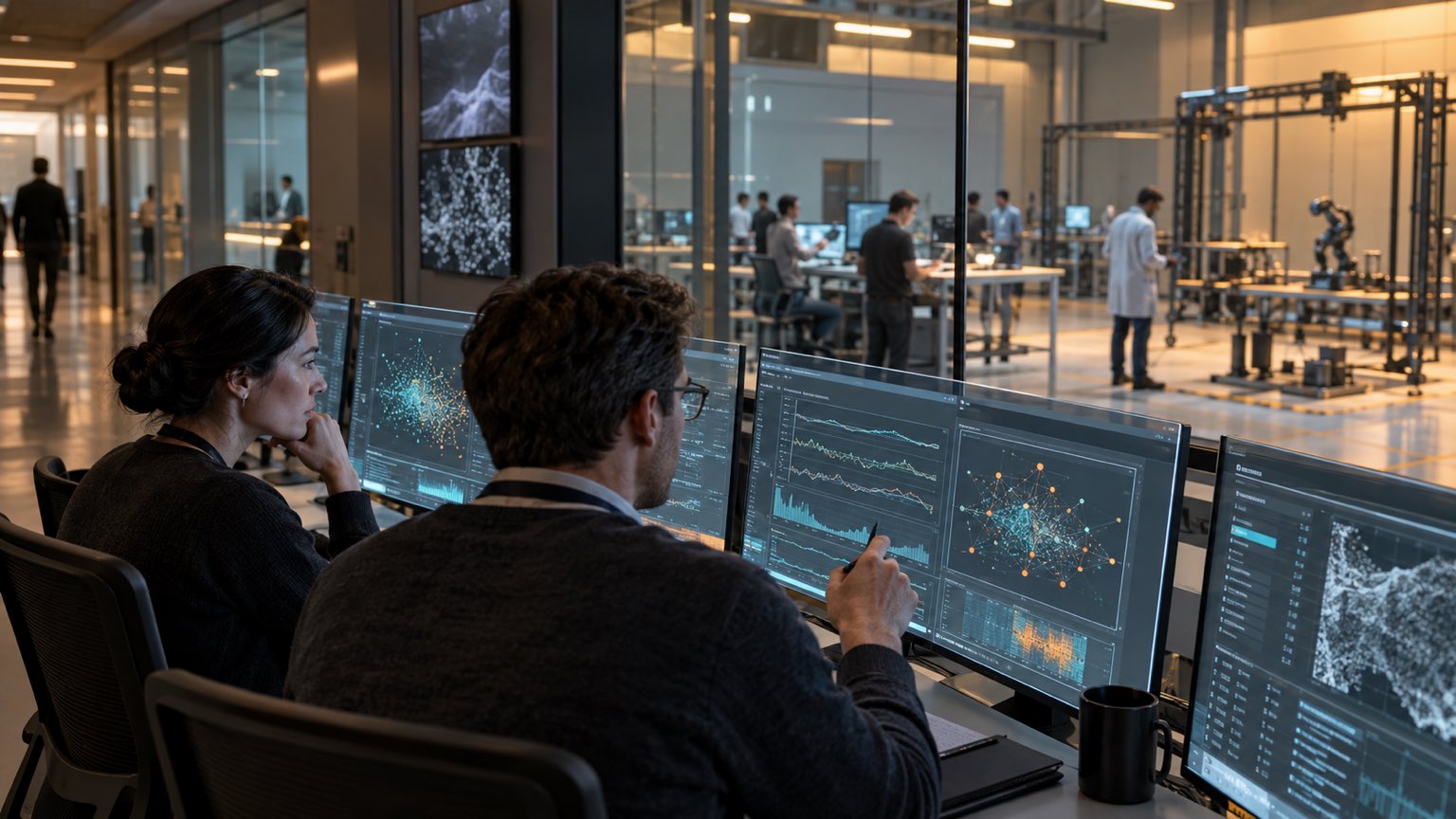
On September 18, 2026, Anthropic and Accenture announced in official press releases the establishment of an "embedded assessment" partnership: led by Accenture's professional AI business Faculty, internal evaluations and red-team model testing, alignment assessments, and safety barrier inspections will be conducted within Anthropic. Both parties expect to invest at least $1 billion in the next five years to build related capabilities. This is not a routine consulting procurement but an exploration of enabling external evaluators to enter the frontier model development process earlier.
"Embedded" is much more than testing it once before release
Traditional external reviews usually receive limited versions when the model nears completion, and observations can easily become one-time scores. The new model described by Anthropic gives evaluators access to employees close to the requirements, allowing them to follow the training process, understand development and deployment decisions, and directly interact with relevant teams. The goal is to identify blind spots during model development, rather than just checking several sets of benchmarks before going live.
A billion dollars invested in not just a security certificate
Faculty will bring industry experience from government, defense, healthcare, and infrastructure into the test, and the real usage by enterprise clients will also serve as the evaluation context. Funding will mainly be used to build personnel, tools, and long-term evaluation capabilities, and the announcement does not promise that any model is therefore "absolutely safe." Anthropic also clearly states that external evaluations do not shift responsibility from model developers, and the collaboration is not an exclusive arrangement; both parties can carry out similar projects with other institutions.
Independence remains a challenge for this mechanism
| Key issues | Information is currently public |
|---|---|
| Who is funding it? | Anthropic directly funds Accenture's work |
| What can you see? | The plan is to provide access close to employees, but specific permissions have not yet been standardized |
| How to report | The industry still lacks unified disclosure scope and reporting rules |
| How to avoid a single judgment | The collaboration is not exclusive; Anthropic is also discussing pilot projects with organizations such as METR |
If the assessed party pays directly, it naturally prompts the market to question conflicts of interest. A truly credible arrangement requires clearly stating access boundaries, escalation paths after problem discovery, public reporting rights, how major disagreements will emerge, and whether the evaluation team can issue conclusions without commercial pressure.
What does this mean for corporate buyers?
In the future, judging the safety of frontier models should not rely solely on benchmark scores provided by vendors. Procurement teams should also clarify: when evaluators intervened, whether they were exposed to real training and deployment processes, what issues were found, how remediation was conducted, and which content was not disclosed for security or commercial reasons. Anthropic and Accenture turned "continuous entry into R&D" into an executable experiment, but whether it can become an industry standard depends on whether a comparable, auditable reporting mechanism controlled by model companies is established.