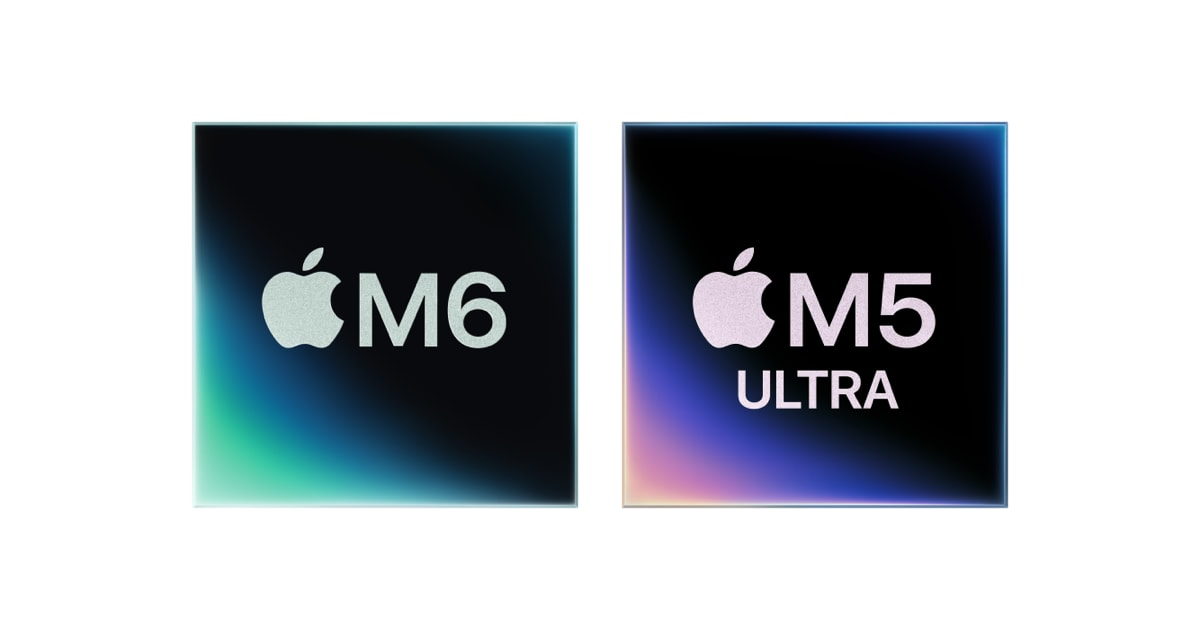
Apple released two chips, the M6 and M5 Ultra, which entered the new Mac mini and Mac Studio respectively. The former introduced the 2nm process into the M series for the first time, while the latter pushed the four-chip architecture and 1.2TB/s memory bandwidth to desktops. The core direction is clear: the Mac is accelerating to become a native AI computing platform.
M6 brings 2nm into Mac
The M6 uses a 2nm process, equipped with a 12-core CPU, 12-core GPU, and dual 16-core neural engines, with a unified memory bandwidth of up to 170GB/s. Its multithreaded performance is up to 1.2 times higher than the M5, and each GPU core is equipped with a neural network accelerator.
AI performance is the focus of this upgrade. The Mac mini with the M6 processor handles LLM prompts in LM Studio, with speeds up to 4.8 times faster than the M4; up to 32GB of unified memory also makes local large models and AI agents more realistic for daily workloads.
The M5 Ultra targets large AI models
The M5 Ultra connects two dual-chip M5 Max chips via UltraFusion, forming Apple's first quad-chip architecture, offering up to 36 core CPUs, 80-core GPUs, and 32-core neural engines, with unified memory bandwidth reaching 1.2TB/s—a 50% increase over the M3 Ultra.
More importantly, it offers up to 512GB of unified memory. Apple has made it clear that the new Mac Studio can run large language models with hundreds of billions of parameters on the device. For AI developers, this means that partial inference, fine-tuning, and sensitive data processing can be left locally.
Macs began competing for desktop AI computing power
From Core AI, Core ML, and Metal to Xcode, Apple is integrating CPUs, GPUs, neural engines, and unified memory into a native AI development stack. The Mac mini is aimed at resident AI agents, while the Mac Studio takes on heavier workloads for large models and research.
The M6 addresses the speed of local AI adoption, while the M5 Ultra competes for the high-end AI workstation market. The next phase of competition for Apple Silicon is no longer just about traditional CPU benchmarks, but about who can keep larger models on personal computers with lower latency and stronger privacy.