
Latest AI News: The World Artificial Intelligence Conference opens, with 29 countries preparing to establish AI cooperation organizations
24-hour AI News Snapshot: Kimi K3 resets the scale of open-source models, intensifying global AI gov
Zuni is a Chrome sidebar AI workspace and Gmail assistant aimed at browser office users, Gmail users, and knowledge workers. Its value is not that it does everything for users at once, but that it provides actionable assistance around using AI chat, summarization, and drafting on web pages and emails: users can talk to tabs or emails, draft Gmail replies and manage tasks, and then follow up with their own business judgment. When choosing such a tool, you need to pay attention to browser permissions, email privacy, and reply moderation, especially when it comes to accounts, customer profiles, contracts, courses, audio, video, or code output. Its visibility capabilities include AI workspace, Gmail drafting, and chat with tabs, making it better suited for browser workflow assistance.
Zuni is used for browser workflow assistance, and it is positioned as a Chrome sidebar AI workspace and Gmail assistant. Rather than just giving a generic tool label, this type of product is more interesting whether it can enter the real workflow: users need to be clear about what data to enter, what results to get, and which results still need to be confirmed by humans.
Zuni's core values focus on using AI to chat, summarize, and draft alongside web pages and emails. Around this, users usually use it in a clear task rather than as a fully automated decision-making system.
Based on verified information, its capability anchors include AI workspace, Gmail drafting, and chat with tabs. These capabilities determine that it is more of a secondary portal for browser workflow assistance rather than a universal assistant that covers all scenarios. For users, the most important thing is to prepare the input information clearly and then decide whether to enter the formal process based on the quality of the results.
If your task is to chat, summarize, and draft with AI next to web pages and emails, Zuni is a good fit. For example, it can be used by content teams for material processing and pre-launch checks, business teams can use it to organize structured information, and technical or operations staff can use it as part of pre-analysis, draft generation, or execution assistance.
It is not suitable for direct final conclusions without sources, objective constraints, and manual checks. In particular, when it comes to security, legal, education, customs, customer communications, contracts, shopping decisions, or public releases, tool outputs should be used as reference material and not as a substitute for ultimate liability.
Before use, it is recommended to prepare three types of information: task objectives, available materials, and judgment criteria. This makes Zuni's output more relevant to actual needs and makes it easier for team members to judge whether the results are available. For teams that need to be used for a long time, you should also focus on permissions, pricing, data retention, export formats, and integration into existing processes.
Who is Zuni for? **
It's more suitable for browser office users, Gmail users, and knowledge workers, especially those who already have a clear task and need to make the browser workflow assistance process smoother. If it's only occasional attempts, it's recommended to start with small tasks to verify the output quality.
Can it be a direct substitute for human judgment? **
No, I can't. Zuni can assist with AI chat, summarization, and drafting next to web pages and emails, but it still requires manual confirmation when it comes to browser permissions, email privacy, and reply moderation. It is safer to use it for drafting, collation, initial screening, transcription, classification, or candidate results.
What do I need to prepare before use?
At a minimum, clear task descriptions and materials available for processing should be prepared. If the task involves accounts, documents, images, videos, contracts, code, or customer information, also confirm permissions and privacy boundaries to avoid handing over sensitive content to inappropriate processes.
When is it not suitable for use? **
When a task requires a completely reliable legal conclusion, financial commitment, security assurance, medical advice, or automated decision-making that cannot be reviewed, it should not be relied upon alone. A more reasonable way is to use the output as a reference and then have the responsible person complete the final confirmation.

ChatGPT Atlas is an AI browser product for macOS. It embeds ChatGPT into any web page in the form of a sidebar, providing instant answers, web page summary, data analysis and product comparison. Users can select text to rewrite, polish and translate with one click, use intelligent agents to complete complex tasks such as retrieval, form filling and shopping, and achieve continuous collaboration through controllable browsing memory. ChatGPT Atlas supports both text, image, video and news searches. It has built-in multiple tabs, bookmarks and auto-completion, and can customize the appearance and preferences. In terms of privacy, users can fine-tune visible sites, clear history, enable traceless mode and manage browsing memory to ensure security and controllability.

YourAIScroll is an AI chat history export and management tool aimed at AI-heavy users, researchers, and knowledge organizers for exporting and managing conversation history across multiple AI platforms. It's suitable for those who already have clear tasks, assets, or business processes to centralize AI chat history export, Grok, Gemini, and Claude archives into a more performable workflow. When using it, you need to pay attention to account permissions, privacy data, and export formats, especially when it involves customer information, learning content, audio and video materials, business data, or public release, you should confirm authorization and manual review first. Overall, YourAIScroll is suitable as an auxiliary tool for exporting and managing conversation history across multiple AI platforms, rather than a substitute for the final judgment of professionals.
WebFill is an AI form-filling, email, and data entry extension aimed at salespeople, operations, and browser office users for automating form-filling, email-generating, and data entry. It's better for people who already have clear materials, scripts, customer communications, or business processes that centralize form filling, email generation, and data entry into a one-of-a-kind workflow that's easier to execute. When using it, you need to pay attention to form permissions, customer data, and pre-submission review, especially when it comes to customer information, voice information, image materials, web page data, or published content. Overall, WebFill is suitable as an aid for autofilling forms, generating emails, and handling data entry, rather than a complete replacement for the final judgment of editors, operations, R&D, or management.

WebCopilot is a web-based AI assistant and second brain tool aimed at knowledge workers, researchers, and web-heavy users for carrying AI notes and knowledge assistance on web pages. It's better for people who already have clear footage, scripts, customer communications, or business processes that combine page summarization, note saving, and browser assistance into a one, easier workflow. When using it, you need to pay attention to browser permissions, data privacy and fact-checking, especially when it involves customer information, character voices, image materials, web page data or published content, you should first confirm authorization and manual review. Overall, WebCopilot is suitable as an auxiliary tool for carrying AI notes and knowledge assistance on web pages, rather than a complete replacement for the final judgment of editors, operations, R&D, or managers.

Termo is an AI tool for users who need a clearer way to handle focused digital work. It can support creation, automation, analysis, learning, media production, development, research, customer operations, or document workflows depending on the product scope. Start with a small low-risk task, compare the result with your own standards, and keep human review for facts, permissions, privacy, brand voice, safety, and final delivery.

TaskAGI is a practical AI tool for teams and individual users who need a clearer way to handle focused digital tasks. It can support content work, document handling, automation, learning, communication, media production, research, or customer workflows depending on the product scope. Users should start with a small low-risk task, compare the output with their own standards, and keep human review for facts, permissions, privacy, brand voice, and final delivery.

24-hour AI News Snapshot: Kimi K3 resets the scale of open-source models, intensifying global AI gov
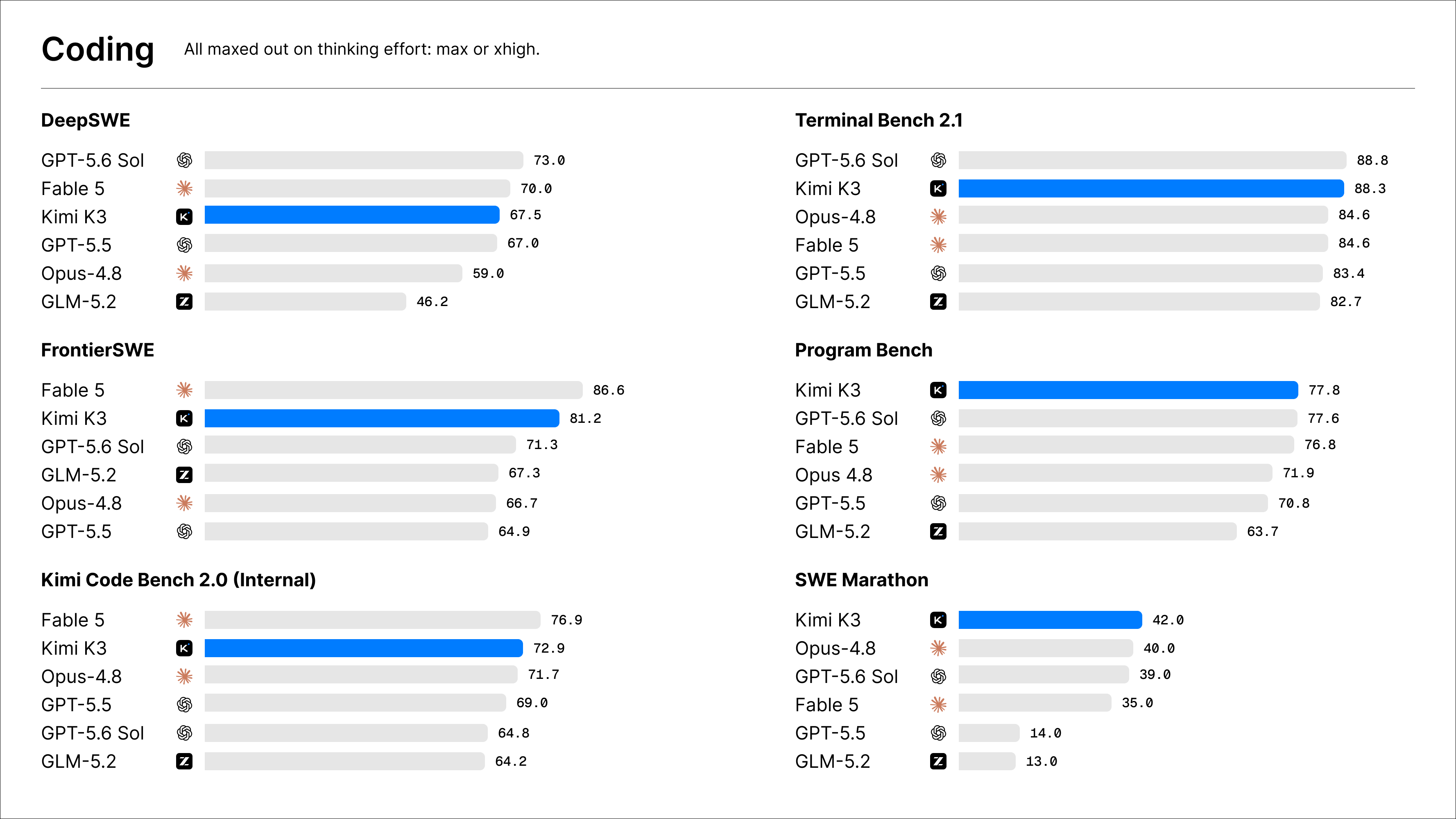
Moonshot AI officially launched the Kimi K3 . This 2.8-trillion-parameter model provides 1 million t
24-hour AI News Summary: Global AI competition continues to heat up, with chips, models, security re

On July 9, 2026, Mistral announced in its official article "Your Prompts and Skills Need a System of

On July 9, 2026, Google Research released the wearable health foundational model SensorFM. It was pr

On July 9, 2026, OpenAI officially announced ChatGPT Work in its announcement "ChatGPT is now a part