
Latest AI News: The World Artificial Intelligence Conference opens, with 29 countries preparing to establish AI cooperation organizations
24-hour AI News Snapshot: Kimi K3 resets the scale of open-source models, intensifying global AI gov
Weavely is an AI form generation and intelligent questionnaire tool aimed at operations teams, researchers, and product teams for quickly generating customized forms with AI. It's better for people who already have clear materials, scripts, customer communications, or business processes to centralize form generation, field design, and questionnaire building into a one-of-a-kind workflow that's easier to execute. When using it, you need to focus on data privacy, problem design and result analysis, especially when it involves customer information, character voices, image materials, web page data or published content, you should first confirm authorization and manual review. Overall, Weavely is suitable as an assistant tool for quickly generating custom forms with AI, rather than a complete replacement for editors, operations, R&D, or management.
For operations, researchers, and product teams, Weavely can be a practical AI workbench. It revolves around using AI to quickly generate custom forms, allowing users to start with footage, prompts, or business information to get results that can be edited, verified, or published.
It's better suited for tasks with clear goals, such as course content, marketing materials, customer communications, data organization, or internal training. It's a good idea for users to prepare text, images, voice, web links, or business context before letting Weavely participate in generating and organizing.
Ordinary processes often require users to switch back and forth between multiple tools, preparing materials, generating content, and then manually organizing output. Weavely's advantage is that form generation, field design, and questionnaire building are placed in the same task context, reducing the number of steps from scratch. For content creation, operational execution, product validation, or customer communication, this approach is better suited for quickly forming a judgable version.
It's easier for operations, researchers, and product teams to understand its value, as these users are often concerned about whether the results can move on to the next step rather than just looking at the demo. In actual use, you can use Weavely to generate a basic version first, and then make secondary modifications based on brand, tone, data sources, or delivery standards.
Weavely is not a substitute for a final review. Data privacy, problem design, and result analysis are the most important parts to confirm before use, especially in commercial releases, customer communication, character materials, web page collection, or team management scenarios, where manual review is more important than simply pursuing generation speed. It is suitable for rapid drafting, and complex research still needs to be reviewed.
Who is Weavely for?
Weavely is better suited for operations teams, researchers, and product teams. These users often already have a clear task to quickly generate custom forms with AI or get a result that can be modified first.
Can it be a direct replacement for manual delivery of final delivery? **
It is not recommended to use it this way. Weavely can take on generating questions, fields, and form structures based on demand, but the final copy, screen, voice, data, or customer responses still need to be manually checked to avoid factual errors, authorization issues, or style deviations.
What do I need to prepare most before use?
It's a good idea to prepare your goals, assets, and constraints in advance, such as scripts, images, web links, customer scenarios, brand requirements, or output formats. The more specific the input, the easier it is for Weavely to generate usable results.
What situations are not suitable for priority use?
If the task involves high-stakes decisions, sensitive personal information, unauthorized human voices or footage, or requires rigorous compliance reviews, relying solely on Weavely is not a good choice. In this scenario, you should confirm the permissions before using the output as an auxiliary reference.

Color Vortex PPT is an AI PPT creation, collaboration, and sharing platform aimed at workplace reporters, education users, and team collaborators. Its value is not that it decides all the work for users at once, but provides actionable assistance around completing PPT creation, collaborative editing, and secure sharing: users can generate PPTs, collaborate on modifications, share files, and view data analysis, and then complete follow-up processing based on their own business judgment. When choosing such tools, you need to pay attention to content accuracy, copyright material, and permission settings, especially when it comes to accounts, customer information, contracts, courses, audio, video, or code output. Its visibility capabilities include AI authoring, team collaboration, secure sharing, and data analysis, making it more suitable for team PPT workflows.

Zolltarifnummer.com is an AI customs tariff number query and interpretation tool mainly for import and export operations, cross-border sellers, and customs clearance personnel. Its value is not to make all the work for the user at once, but to provide actionable assistance around assisting in finding the 11-digit customs tariff number and understanding the classification basis: users can enter product information, get tax number suggestions, view reasons and measures, and then complete the follow-up processing based on their own business judgment. When choosing such a tool, you need to pay attention to customs responsibilities, product information accuracy, and manual confirmation, especially when it comes to accounts, customer information, contracts, courses, audio, video, or code output. Its visibility capabilities include AI customs tariff code, 11-digit classification, and explanation, making it more suitable for pre-customs reference.

Znote is an executable Markdown note-taking and automation tool aimed at developers, knowledge workers, and automation enthusiasts. Its value is not to make all the work for the user at once, but to provide actionable assistance around running code, generating tasks, and automating content in Markdown notes: users can write notes, execute scripts, generate Jira tickets, charts, or email drafts, and follow up with their own business judgments. When choosing such a tool, you need to pay attention to local file permissions, code security, and output review, especially when it comes to accounts, customer profiles, contracts, courses, audio, video, or code output. Its visible capabilities include Markdown notes that run, code execution, and automation, which are better suited for technical note automation.

ZINQ is an AI Agent business process automation platform aimed at small and medium-sized enterprises, operation teams, and business automation leaders. Its value is not to make all the work for users at once, but to provide actionable assistance around building, training, and deploying AI Agents to automate support, sales, and processes: users can build agents, train knowledge, connect business processes, monitor results, and then complete follow-up processing based on their own business judgments. When choosing such tools, you need to pay attention to process boundaries, customer data, and manual takeover, especially when it comes to accounts, customer profiles, contracts, courses, audio, video, or code output. Its visibility capabilities include AI agent platform, support, sales, and workflow automation, which are better suited for standardized business process automation.

Zetane is an enterprise document intelligence and Agentic AI automation platform for enterprise operations, RFP, and technical documentation teams. Its value is not to make all the work for the user at once, but to provide actionable assistance around automating the processing of large and complex documents, RFPs, and contract materials: users can import documents, extract information, generate responses, and collaborate on reviews, and then complete the follow-up process with their own business judgment. When choosing such a tool, you need to pay attention to document permissions, fact-checking, and business responsibilities, especially when it comes to accounts, customer information, contracts, courses, audio, video, or code output, all of which should be manually reviewed. Its visibility capabilities include agentic AI, enterprise document intelligence, RFPs, and contracts, making it better suited for complex document workflows.

Zefort is an AI contract management and compliance alerting platform aimed at legal operations, procurement teams, and compliance managers. Its value is not to make all the work for the user at once, but to provide actionable assistance around centrally managing contracts, extracting clauses, and setting reminders: users can import contracts, structure key data, track obligations, remind renewals, and then complete follow-up with their own business judgment. When choosing such tools, you need to pay attention to legal responsibilities, contractual permissions, and manual review, especially when it comes to accounts, customer information, contracts, courses, audio, video, or code output. Its visibility capabilities include CLM, contract data, and compliance reminders, making it more suitable for contract operations and not a substitute for legal advice.
24-hour AI News Snapshot: Kimi K3 resets the scale of open-source models, intensifying global AI gov
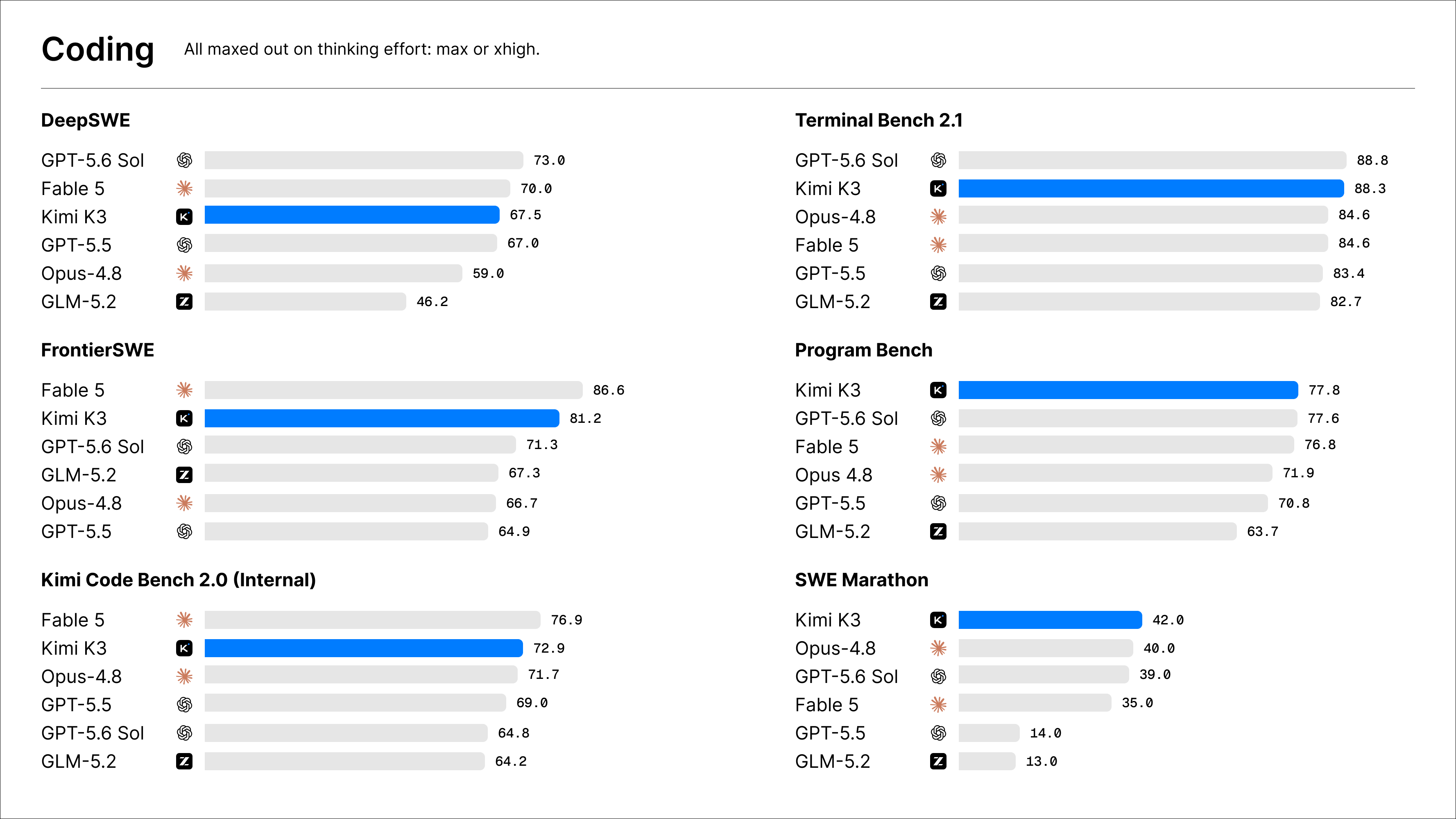
Moonshot AI officially launched the Kimi K3 . This 2.8-trillion-parameter model provides 1 million t
24-hour AI News Summary: Global AI competition continues to heat up, with chips, models, security re

On July 9, 2026, Mistral announced in its official article "Your Prompts and Skills Need a System of

On July 9, 2026, Google Research released the wearable health foundational model SensorFM. It was pr

On July 9, 2026, OpenAI officially announced ChatGPT Work in its announcement "ChatGPT is now a part