
Latest AI News: The World Artificial Intelligence Conference opens, with 29 countries preparing to establish AI cooperation organizations
24-hour AI News Snapshot: Kimi K3 resets the scale of open-source models, intensifying global AI gov
Type.ai is an AI workflow tool for teams that need to create, organize, convert, or review task-specific material before final use. It should be used with clear source material, a defined output goal, and human review for accuracy, rights, privacy, and publishing quality.
Type.ai is best used as a middle step in a workflow. Users prepare the source material, define the expected output, run the AI-assisted task, and review the result before using it in a real project.
The main value of Type.ai is that it gives users a focused workspace for a specific AI task. It can reduce repetitive preparation work, but it should not replace human judgment for factual accuracy, legal rights, clinical notes, security decisions, financial information, or public publishing.
Prepare the original files or prompts, the intended audience, the required format, and the checks that will decide whether the output is usable. Teams should also define who may upload data, who reviews the result, and which materials are too sensitive for automated processing.
Type.ai is useful for creators, operators, developers, marketers, educators, researchers, or product teams that already know the task they want to complete. It is especially helpful for drafts, internal materials, prototypes, short-form assets, documentation, and pre-production review.
Any result that affects customers, patients, security fixes, financial records, legal communication, or public distribution still needs human review. Users should check source rights, privacy rules, factual accuracy, brand fit, and platform policies before using the output.
What is Type.ai mainly used for?
It is mainly used to handle a focused AI workflow such as generating, converting, summarizing, editing, analyzing, or preparing material for later review.
What should users prepare before using Type.ai?
Users should prepare the source material, the desired output format, the intended use case, and a review standard. Teams should also decide which data may be uploaded and who approves the final result.
Can Type.ai replace human review?
No. It is better treated as an assistant for intermediate work. Final publishing, delivery, compliance checks, medical notes, security fixes, or business decisions should still be confirmed by a responsible person.

Prism is a free LaTeX native research writing and collaboration workbench launched by OpenAI, a one-stop editing platform for papers, reports, and academic documents. Prism deeply integrates AI writing capabilities into LaTeX workflows, supporting real-time writing and compilation previews in the browser, unlimited multi-person collaboration and annotation, and reducing version conflicts and repeated layout. With project-level contextual understanding, Prism can polish and proofread, optimize structure, format and citation, and provide functions such as literature search and citation management (including collaboration with Zotero) to make scientific writing more efficient and standardized. No local installation is required, making it suitable for laboratory teams and researchers to iterate on manuscripts continuously.

TranslateBase is an AI multilingual text, PDF, and image translation platform aimed primarily at cross-border teams, students, and document translation users. Its value is not that it does everything for the user at once, but provides actionable assistance around translating text, PDF, images, and video subtitles: users can upload documents, select languages, use OCR or glossaries, export the results, and complete the subsequent processing based on their own business judgment. When choosing such a tool, pay attention to privacy documents, terminology consistency, and translation proofreading, especially when it comes to accounts, customer profiles, contracts, courses, audio, video, or code output. Its visibility capabilities include AI multilingual translation, PDF translation, OCR, and glossary, making it more suitable for multilingual document processing.

Ichigo Reader is a comic image translation and word processing tool aimed at comic readers, translators, and image localizers. Its value is not to turn copyright risk materials into content that can be disseminated at will, but to provide actionable assistance around identifying comic picture text and translating it into the target language: users can upload images, identify bubble text, translate and export results, and then complete follow-up processing based on their own translation proofreading and typesetting judgment. When choosing such tools, you need to pay attention to comic copyright, translation proofreading and typesetting restoration, especially in scenarios involving public release or commercial use, all should be manually reviewed. Its visibility capabilities include OCR, image translation, and comic word processing, making it better suited for licensed material processing.

Kaka is an AI short drama script and storyboard creation assistant, mainly aimed at short drama writers, production teams, and content studios. Its value is not to decide all the work for users at once, but to provide actionable assistance around assisting in the procurement, evaluation, writing and video storyboarding of short drama scripts: users can analyze the script, generate the plot, disassemble the video and organize the storyboard, and then complete the follow-up processing based on their own business judgment. When choosing such a tool, you need to pay attention to script copyright, plot quality, and manual review, especially when it comes to accounts, customer information, contracts, courses, audio, video, or code output. Its visible capabilities include script evaluation, intelligent pulling, video to storyboard, and video-to-script, which are more suitable for the early creation of short dramas.

Zaayve is an AI scripting and content writing tool aimed at short video creators, social media operations, and copywriters for generating scripts, social media content, and online communication materials. It's suitable for those who already have clear tasks, materials, or business processes, centralizing AI writing tools, scripts, and online content into easier workflows. When using it, it is necessary to focus on factual accuracy, platform specifications, and copyright boundaries, especially when it involves customer information, learning content, audio and video materials, business data, or public release, and authorization and manual review should be confirmed first. Overall, Zaayve is suitable as an aid in generating scripts, social media content, and online communication materials, rather than a substitute for professional final judgment.

Youbooks is an AI nonfiction book generation and long-form writing tool aimed at authors, knowledge paid teams, and content publishers for generating nonfiction manuscripts based on materials and writing styles. It's suitable for those who already have clear tasks, materials, or business processes, bringing together AI book generators, sources, and human writing models into easier workflows. When using materials, it is necessary to pay attention to copyright, fact checking, and publication quality, especially when it involves customer materials, learning content, audio and video materials, business data, or public release, authorization and manual review should be confirmed first. Overall, Youbooks is suitable as an aid in generating nonfiction manuscripts based on information and writing style, rather than as a substitute for the final judgment of professionals.
24-hour AI News Snapshot: Kimi K3 resets the scale of open-source models, intensifying global AI gov
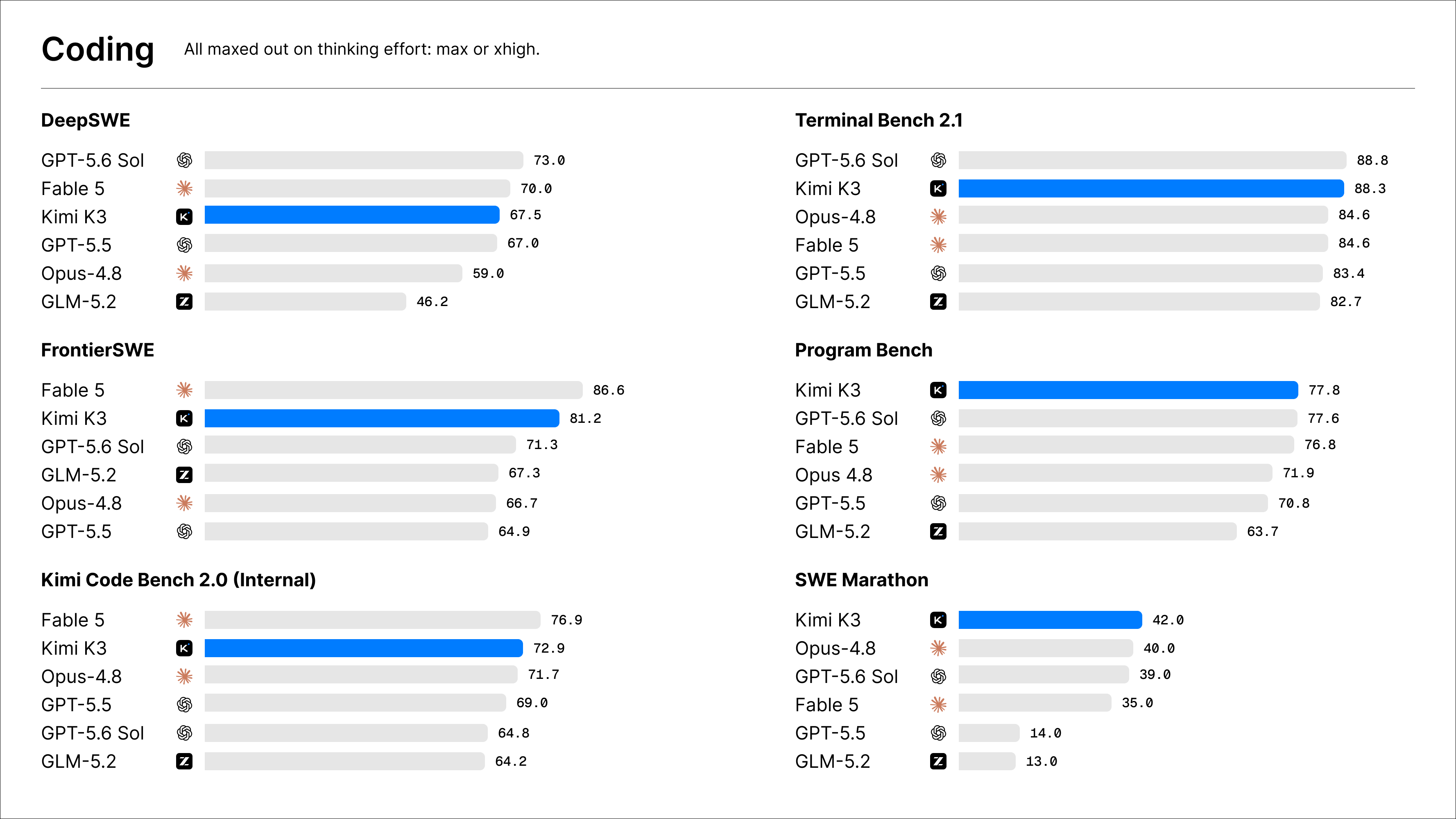
Moonshot AI officially launched the Kimi K3 . This 2.8-trillion-parameter model provides 1 million t
24-hour AI News Summary: Global AI competition continues to heat up, with chips, models, security re

On July 9, 2026, Mistral announced in its official article "Your Prompts and Skills Need a System of

On July 9, 2026, Google Research released the wearable health foundational model SensorFM. It was pr

On July 9, 2026, OpenAI officially announced ChatGPT Work in its announcement "ChatGPT is now a part