
Latest AI News: The World Artificial Intelligence Conference opens, with 29 countries preparing to establish AI cooperation organizations
24-hour AI News Snapshot: Kimi K3 resets the scale of open-source models, intensifying global AI gov
Ryne AI is an AI text paraphrasing and detection comparison tool for writers who need to compare text naturalness, modify tone, and check detection feedback to rephrase AI-generated text, view detection reports, organize citations, and class notes. It focuses on helping users understand text style differences and make their expressions more natural, with key features including Text Humanizer, AI Report, and Citation Kitchen, a free plan available, and the inclusion of Lecture Lab and Essay Composer. It offers free entry or trial credits, which are suitable for verifying results with small tasks first. Notes Before Use: Academic and professional submissions should follow institutional rules and cannot be used to conceal sources, falsify citations, or circumvent review. If you plan to adopt it for a long time, it is recommended to test input lead time, output availability, manual review costs, and permission boundaries with real samples before deciding whether to put it into a fixed process.
Ryne AI is an AI text paraphrasing and detection comparison tool designed around rephrasing AI-generated text, viewing detection reports, organizing citations, and class notes. Its value is not to make the final judgment for the user, but to help the user understand the differences in text style and change the expression to be more natural, so that the originally scattered or repetitive steps become easier to check and continue to process.
These capabilities are suitable for tasks with clear objectives and relatively clear input materials. It is best to prepare the footage, target format, acceptance criteria, and content that needs to be manually confirmed in advance, so that it is easier to determine whether the output is truly usable.
For writers who need to compare text naturalness, modify tone, and check for detection feedback, Ryne AI can do some of the work in first draft generation, information organization, lead filtering, format conversion, or scheduled execution. It reduces duplication of actions but doesn't automatically address factual accuracy, copyright authorization, compliance review, and eventual trade-offs.
Writers who need to compare text naturalness, modify tone, and check for detection feedback are more likely to use Ryne AI because they often already know what material they are working with, who they end up delivering, and what standards the results should be. Individual use can start with a low-risk task, while team use should be clear about permissions, reviewers, and data scope.
Rewriting AI-generated text, viewing test reports, and organizing citations and class notes are all suitable for first-round testing scenarios. It is recommended to select a realistic but low-impact sample that records what can be used directly in the output, what needs to be manually modified, and whether the modification cost is lower than the original manual process.
Academic and professional submissions should comply with institutional rules and cannot be used to conceal sources, falsify citations, or circumvent review. If the input involves customer profiles, real photos or voices, business materials, financial data, recruitment evaluations, academic submissions, or internal documents, authorization, privacy, and platform rules should also be confirmed separately.
To determine whether Ryne AI is suitable for long-term use, you can test three to five real-world tasks in a row, comparing input preparation time, output stability, manual modifications, and final adoption ratio. Only when the results are stable and the cost of the review is manageable is it appropriate to include a fixed workflow.
What problems is Ryne AI primarily suited for? **
It is mainly suitable for rewriting AI-generated text, viewing inspection reports, and organizing citations and class notes, especially for tasks with clear objectives and results that can be manually accepted. Write down the material range, output format, and review criteria clearly before use, making it easier to judge whether the results are available.
Can Ryne AI be a direct replacement for human final delivery? **
Direct substitution is not recommended. It can undertake generation, sorting, analysis, transformation, or scheduling, but fact-checking, compliance judgments, professional conclusions, and final trade-offs still need to be done by humans.
What do I need to prepare before using Ryne AI?
It is recommended to prepare clear input materials, target scenarios, desired formats, and review rules. When using it by a team, it is also necessary to agree on what content cannot be uploaded, who is responsible for checking the output, and what standards the results meet before it can continue to be used.

SafeWrite AI is a personalized AI text paraphrasing tool for content writers and student users who need to adapt their drafts to their personal writing style and review detector feedback. It focuses on tailoring text expressions to the user's own tone, with key features such as the ability to create a personal AI humanizer model, support for multilingual interfaces, and a free trial. It offers free entry or trial credits, which are suitable for verifying results with small tasks first. Note Before Use: It must not be used to forge authorship, circumvent academic integrity requirements, or handle unauthorized texts. If you plan to adopt it for a long time, it is recommended to test input lead time, output availability, manual review costs, and permission boundaries with real samples before deciding whether to put it into a fixed process.

Netus AI is an AI rewriting and text detection auxiliary tool. It is mainly used to rewrite, interpret and detect AI text. It is suitable for content editors, researchers, SEO writers and people who need text version comparison. It can provide AI text rewriting and interpretation functions, support text comparison around test results, and is also suitable for checking the quality of machine expression and rewriting. Pay attention when using it, it should be used for compliance writing and editorial research, and cannot be used for academic cheating, false signature or circumvention of platform rules; important content still needs to be manually rewritten and verified by facts. It is suitable to use one or two low-risk tasks to test the input materials, output quality, manual modification amount and final adoption ratio, and then decide whether to put them into a fixed process.

Leap AI is an AI text detection and naturalization tool that offers free detection, sentence-level scoring, and a no-registration portal to help users discover parts of text that may be judged to be AI-generated and make their expressions more natural. It's suitable for editors, students, creators, and content teams for compliance checks and readability rewriting. Before use, it is recommended to conduct a small-scale test with real materials, focusing on observing the output quality, review cost, payment boundaries, data permissions, and whether the team can establish a stable manual review process. Before handling formal business, it should also be judged based on material authorization, privacy requirements, and manual review standards, and avoid using automatic results directly for external release or key decisions. If you are using it for a team, client, or teaching scenario, it is recommended to first confirm the source of the input material, the responsibility for reviewing the results, and the scope of external use.

HumanizerPro is an AI text rephrasing and naturalization tool for transforming mechanical, repetitive, or overly templated drafts into smoother natural language. It's suitable for first drafts that users have their own rights to, such as emails, blog paragraphs, product descriptions, study notes, and social media copy. When using it, it should retain the original intention, indicate the necessary source, and abide by the content specifications of the school, platform and work scenario, and should not be used to evade review or hide inappropriate sources. For texts that already have clear facts and opinions, it can improve the rhythm of expression; For content with unclear sources, unverified facts, or serious attribution, users should still complete the basis before considering polishing. This positioning is closer to a writing assistant than a fact generator or moderation avoidance tool.

Humantext.pro is an AI detection, text check, and humanizer tool. It offers AI detector, AI checker, and text naturalization capabilities to help users check if their content looks mechanical and polish. It is suitable for editors, students, content teams, and those who need to check the expression of AI drafts, as well as for verification and organization in AI text detection, content self-checking, natural rewriting, and readability optimization. Before use, you need to be aware that the test results may be misjudged and cannot be used as the sole basis for academic, recruitment, or compliance judgments, especially boundaries such as data sources, material authorization, result review, account permissions, or payment limits. When it comes to AI detection and rewriting, it should be treated as a compliance self-check and expression editing tool, not a tool for cheating or impersonating sources.

Humanizey is an AI text naturalization and detection self-checker. It offers AI humanizer capabilities and demonstrates a variety of detector-related self-check directions to help users improve the naturalness of their own text. It is suitable for content writers, students, editors, and users who need to check the naturalness of text, as well as for verification and organization in AI text polishing, self-check before detection, content rewriting, and readability optimization. Before using it, you need to note that the detector results cannot be used as the only judgment, and rewriting cannot replace the original and citation specifications, especially the boundaries of data sources, material authorization, result review, account permissions, or payment quotas. When it comes to AI detection and rewriting, it should be treated as a compliance self-check and expression editing tool, not a tool for cheating or impersonating sources.
24-hour AI News Snapshot: Kimi K3 resets the scale of open-source models, intensifying global AI gov
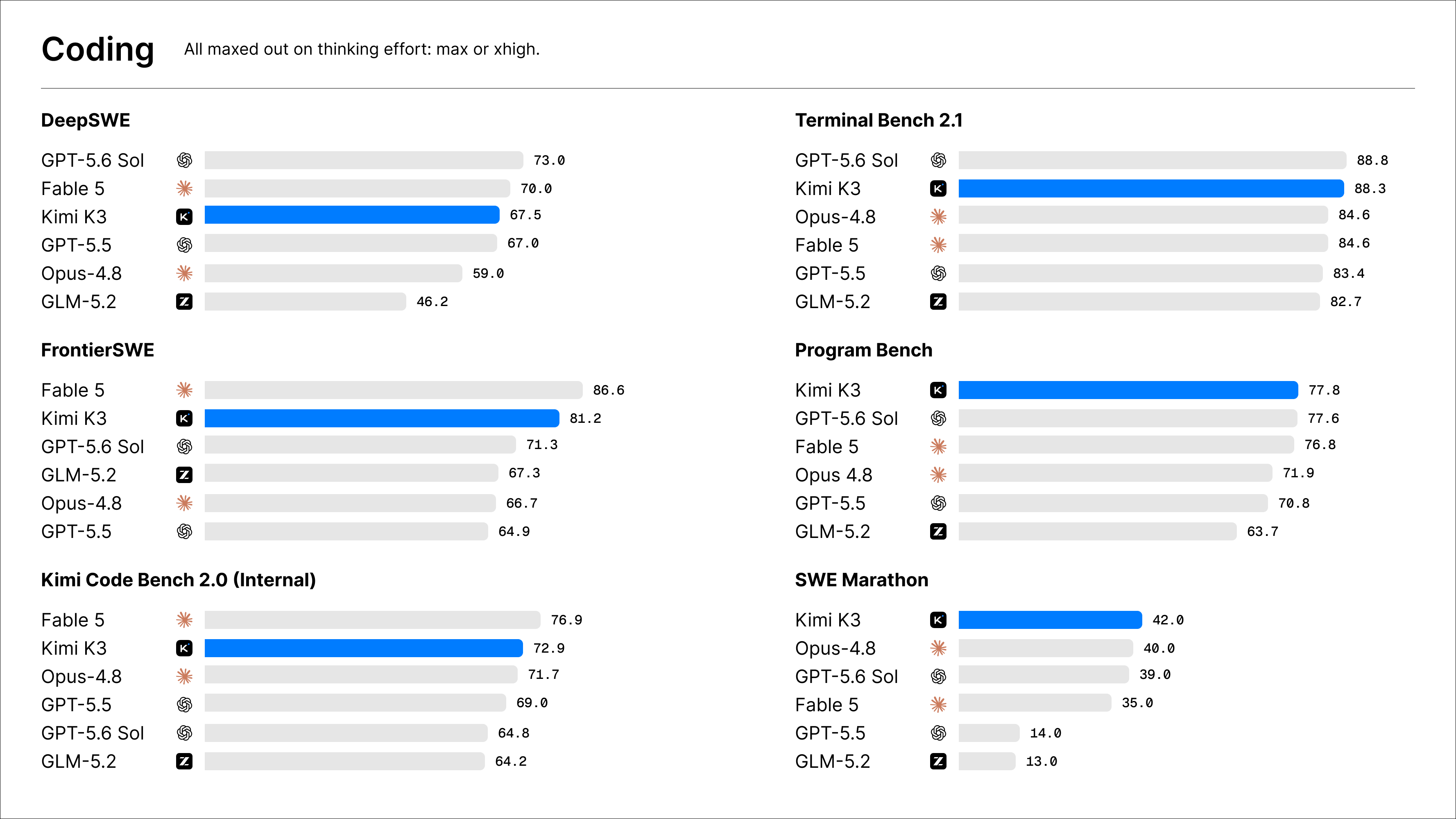
Moonshot AI officially launched the Kimi K3 . This 2.8-trillion-parameter model provides 1 million t
24-hour AI News Summary: Global AI competition continues to heat up, with chips, models, security re

On July 9, 2026, Mistral announced in its official article "Your Prompts and Skills Need a System of

On July 9, 2026, Google Research released the wearable health foundational model SensorFM. It was pr

On July 9, 2026, OpenAI officially announced ChatGPT Work in its announcement "ChatGPT is now a part