
Latest AI News: The World Artificial Intelligence Conference opens, with 29 countries preparing to establish AI cooperation organizations
24-hour AI News Snapshot: Kimi K3 resets the scale of open-source models, intensifying global AI gov
IDWise is an AI identity verification platform with core capabilities including document recognition verification, face and identity verification, and global ID coverage. It is suitable for fintech, overseas platforms, compliance teams, and businesses that require KYC, and is commonly used for account opening and registration, user identity verification, anti-fraud audits, and compliance process management. Users can use it to complete pre-collation, generation, or validation, and then put the results into their workflows to continue checking. Attention to Detail: Privacy protection, regional regulations, and mispositive handling require clear processes. For those who need to consistently produce output, it is recommended to combine manual review, material licensing, and actual business goals to determine whether the results can be used directly. When evaluating whether it will be used for a long time, it should also be judged based on the current quota, output quality, collaboration method and subsequent manual processing cost.
IDWise is positioned as an AI authentication platform that turns scattered inputs, footage, or business requirements into results that are easier to process. Its value is not to replace all human judgment, but to speed up the process of pre-finishing, draft generation, identification, or analysis after a clear task. According to the current page information, it mainly revolves around document identification verification, face and identity verification, and global identity document coverage, which is suitable for account opening and registration, user identity verification, anti-fraud audit, and compliance process management.
IDWise can help users handle tasks related to document identification and verification, making the steps that would otherwise need to be manually organized or tried and tried more concentrated. For teams that need to quickly validate direction, this type of capability is ideal for building first drafts, identifying problems, or forming discussable intermediate results.
In terms of face and identity verification, users can hand over existing text, images, files or business information to the tool for processing, and then continue to modify them according to the output. It is suitable for use with human judgment, especially for highly repetitive, well-structured, and targeted tasks.
Global ID coverage allows IDWise to not only complete single point processing, but also serve more complete work scenarios. Teams can use it for account onboarding, user identity verification, fraud audits, and compliance process management, before deciding whether to move on to formal delivery based on quality, cost, and risk.
IDWise is suitable for fintech, overseas platforms, compliance teams, and businesses that require KYC. If the user already has a clear goal, it can serve as an aid in the daily workflow; If the task is still vague, it is better to use it to explore first, and then combine the direction of convergence with human experience.
Privacy protection, regional regulations, and false positives require clear processes. At the same time, AI or automated results may be missing, mispositive, style inconsistencies, or distorted details. When it comes to customer delivery, commercial releases, learning submissions, compliance reviews, or important decisions, you should retain manual review steps and confirm price, quota, privacy, and licensing boundaries.
Is IDWise suitable for direct use in official delivery?
It is suitable for generating drafts, assisting in analysis, or completing pre-processing. Before official delivery, it is recommended to check the facts, format, copyright, brand tone and specific business rules to avoid publishing unverified results directly.
Is IDWise better for individuals or teams? **
Individuals can use it to reduce duplication of operations, and teams can put it into a fixed process for material preparation, data organization, candidate comparison, and collaborative review. The actual value depends on the frequency of the task and the manual inspection requirements.
What should I pay attention to when using IDWise?
The most important thing to pay attention to is the quality of input data, the verifiability of output results, and whether it complies with platform rules, privacy requirements, and commercial authorization. Complex tasks should not rely on generating results just once.

RNWY is an AI agent trust and reputation infrastructure for developers and platform teams building agent ecosystems, tool marketplaces, or automation services to build identity, scoring, reputation, and capability records for AI or human actors. It focuses on giving agent behavior, skills, and reputation a traceable layer of trust, with key capabilities including positioning as an AI trust layer, showcasing 185K+ agents scored, and providing skill.md for AI reading. It offers free entry or trial credits, which are suitable for verifying results with small tasks first. Before use, it should be noted that on-chain or reputation scores can only be used as signals, and there must be independent mechanisms for identity authentication, permission granting, and risk control. If you plan to adopt it for a long time, it is recommended to test input lead time, output availability, manual review costs, and permission boundaries with real samples before deciding whether to put it into a fixed process.

Resemble AI is a secure voice generation and deepfake detection platform for enterprise security teams, media teams, customer service voice teams, and compliance leaders to generate secure voices, voice cloning, media watermarking, authentication, and deepfake detection. It focuses on putting voice generation capabilities and content security detection in the same governance process, with common capabilities including text-to-speech, speech creation and speech conversion, including watermarking, authentication and deepfake detection, and support for cloud or on-premises deployments. It is more inclined to paid or team procurement scenarios, suitable for users with clear process needs. Before use, it should be noted that voice cloning must be authorized, and the security test results also need to be cooperated with manual and process evidence. If the team is preparing for long-term adoption, it is recommended to test input materials, output quality, manual review costs, and permission boundaries with a set of real-world tasks before deciding whether to include a fixed process.

Pervaziv AI is an AI DevSecOps and multi-cloud security platform that is mainly used to provide code review, risk assessment, package analysis, vulnerability management and multi-cloud enterprise AI capabilities to help teams protect application creation, deployment and operation processes. It is suitable for security teams, DevSecOps teams, cloud platform teams, and enterprise software engineering organizations. Common uses include checking code and dependency risks before release, managing the security status of multi-cloud applications, and establishing automated assistance for enterprise AI and DevSecOps processes. When using it, be aware that the security platform needs to cooperate with existing scanning, permissions, and audit processes. AI results cannot replace the security team's risk acceptance and remediation decisions. The page provides product and pricing entrances, and enterprise deployments usually need to be evaluated based on environmental scale. It is recommended to use one or two low-risk tasks to test input materials, output quality, manual modification amount and final adoption ratio before deciding whether to put them into a fixed process.

Parea AI is an AI evaluation and human annotation platform that is mainly used to help teams conduct experimental tracking, AI system evaluation, production observability, human annotation and failure debugging. It is suitable for LLM application teams, AI engineers, product teams and companies that need stable online model capabilities. Common uses include comparing different prompt words or model versions, checking for quality regression of answers before going online, and collecting manual annotations to improve system performance. Pay attention when using it, and the evaluation results depend on the test samples and labeling standards. If the sample coverage is insufficient, the platform will not be able to discover all real user problems. The page provides a free start entry, and the price needs to be checked for team size use. It is recommended to use one or two low-risk tasks to test input materials, output quality, manual modification amount and final adoption ratio before deciding whether to put them into a fixed process.

Openlayer is an observable platform for AI governance and LLM applications. It is mainly used to provide evaluation, CI/CD verification, production monitoring, safety barriers and compliance testing for AI systems, helping teams discover problems such as hallucinations, PII leaks and prompt injection. It is suitable for AI product teams, platform engineering teams, model governance leaders and enterprise security compliance teams. Common uses include performing regression testing before LLM applications go online, monitoring output quality and delay in the production environment, and establishing frameworks such as EU AI Act and NIST. Governance processes. Be careful when using it. It can help identify risks, but it cannot replace internal security, legal and data governance systems. When the test set design is insufficient, there will also be blind spots in the monitoring results. The page provides request demonstrations and pricing entrances, and is usually quoted based on team size, call volume, and governance needs. It is recommended to use one or two low-risk tasks to test input materials, output quality, manual modification amount and final adoption ratio before deciding whether to put them into a fixed process.

Maxim is a generative AI evaluation and observability platform mainly used to simulate, evaluate and monitor the quality of AI Agents and generative applications. It is suitable for AI product teams, engineering teams, model application developers and quality leaders. It can support experiments, Agent simulation and evaluation processes, provide observability for generative AI applications, and connect development, testing and online links with a unified library. When using it, note that the evaluation platform requires the team to first define indicators, test sets, and failure criteria; if there is no stable data and online process, the value of the tool will be weakened. It is intended for use by teams and enterprises and is usually evaluated by plan or usage. Before formal adoption, it is recommended to test once with low-risk materials or small samples, record the input quality, output results, manual modifications and final adoption ratio, and then decide whether to put them into the long-term workflow.

24-hour AI News Snapshot: Kimi K3 resets the scale of open-source models, intensifying global AI gov
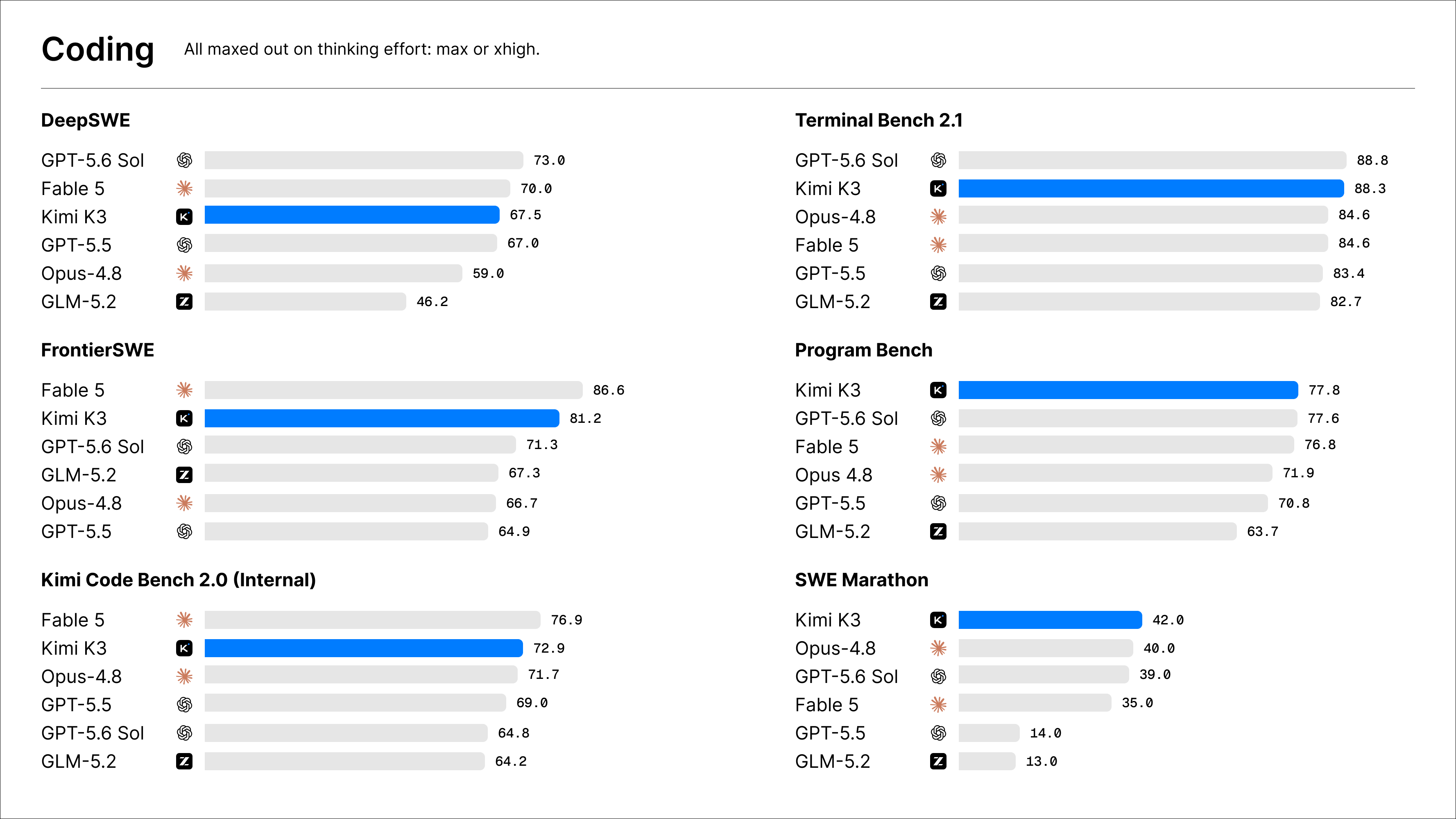
Moonshot AI officially launched the Kimi K3 . This 2.8-trillion-parameter model provides 1 million t
24-hour AI News Summary: Global AI competition continues to heat up, with chips, models, security re

On July 9, 2026, Mistral announced in its official article "Your Prompts and Skills Need a System of

On July 9, 2026, Google Research released the wearable health foundational model SensorFM. It was pr

On July 9, 2026, OpenAI officially announced ChatGPT Work in its announcement "ChatGPT is now a part