A face photograph can directly predict survival outcomes for cancer patients — demonstrated for the first time in a study published on October 19, 2026, in The Lancet Digital Health by a Mass General Brigham team. The researchers first trained a foundation model, FAHR-Face, on more than 40 million face images, then derived two tools from it: FAHR-FaceAge, which estimates a person's biological age, and FAHR-FaceSurvival, which produces a cancer-survival risk score from a single ordinary face photograph. To the team's knowledge, this is the first report of an AI algorithm that can directly predict cancer patient survival from a simple face photograph.
The clinician's first glance, turned into a number
The work starts from an old clinical habit. Corresponding author Raymond Mak, a radiation oncologist at the Mass General Brigham Cancer Institute, notes that physicians are trained in medical school to walk into a room, look at a patient, and form an impression of how healthy, frail, or sick they are — an impression that shapes choices among surgery, chemotherapy, and radiation, yet remains deeply subjective. FAHR-FaceAge turns that glance into a reproducible score: the gap between its estimated age and a patient's chronological age, the biological-age difference, was independently associated with survival. Putting both the face-age score and the direct survival score into a clinical prognostic model fit the data better than either alone, which means the two capture different information.
The numbers are worth a close look. In a test group of 3,820 cancer patients, 64 of the 122 patients in the highest risk band — more than half — died within 90 days of their photograph being taken. In a separate test group of more than 38,000 patients, those who looked older than their chronological age also carried a higher risk of dying. In age terms: patients the AI judged to look at least five years older than their real age had a 21 percent higher risk of death, while those judged at least five years younger had a 17 percent lower risk. These patients, followed for roughly four years on average, were undergoing radiotherapy.
Where on the face is it looking?
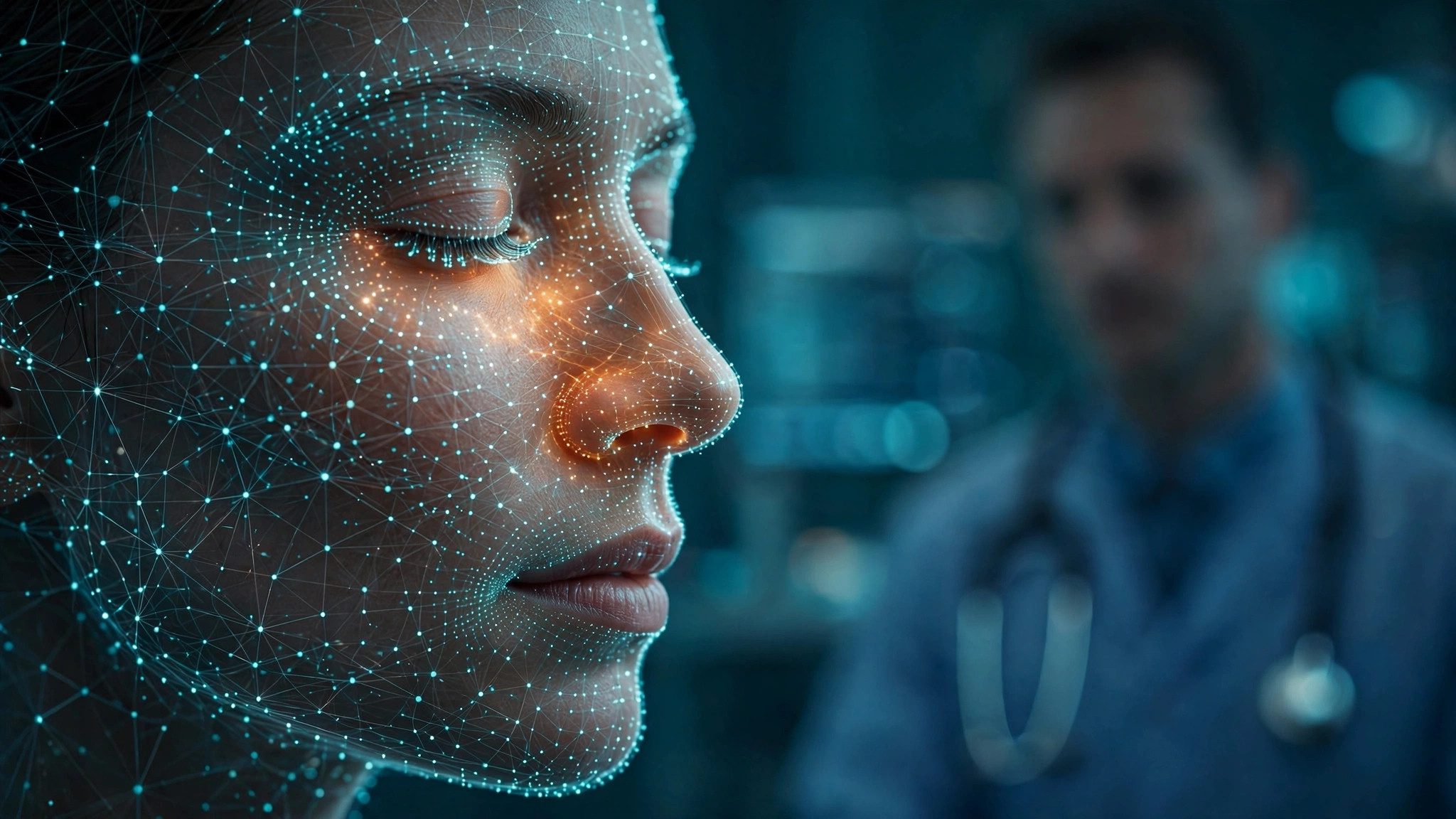
The team used attention mapping to trace what the model looks at. For age estimation, it focused mainly on areas such as the nasolabial folds and the forehead; for death risk, attention fell on the bridge of the nose and the areas below the eyes. The researchers are candid that they do not yet know why exactly those regions correlate with mortality risk. Some signals do have ready explanations: smokers, heavy alcohol users, and drug users were more likely to be judged older-looking, consistent with known health risks. The model was also robust to photo conditions — pose, lighting, expression, and makeup made little difference, and most plastic surgery was handled correctly, with one exception: after rhinoplasty, people tended to be rated slightly older in post-surgery images.
Three hurdles before the ward
The first is representation. The survival model was trained on a Boston-area cancer population that was majority white; the team is expanding its data to include a wider diversity of faces and has launched an institutional-review-board-approved public online study to collect photographs, while Mass General Brigham has filed a US provisional patent on next-generation facial health algorithms. The second is the level of evidence: this is a model development and validation study, not a clinical trial — it shows the scores correlate with outcomes, but not that doctors using them would make better treatment decisions or that patient outcomes would improve. The third is the boundary of use. Matthew Liao, director of the Center for Bioethics at New York University, who was not involved in the study, warns that if the algorithm mislabels a patient as healthy, needed care might be missed — and that insurers using such technology to grant or deny coverage, or employers screening for supposedly healthier candidates, are societal consequences that must be thought through in advance. Mak's own framing is restrained: tools like this are meant to support personalized treatment decisions, not replace physician judgment. For patients and families, the realistic reading for now is that this is a research signal about physiological reserve — not a tool for self-testing one's fate.