GraphRAG is a method that combines knowledge graphs with retrieval-augmented generation. It first extracts entities, relationships, and events from a set of documents to form connectable graphs, then generates summaries by community and hierarchy within the graph. When facing cross-document questions like "What are the main topics in the entire database, and how different organizations relate?" it is easier to see the overall structure than traditional RAG, which only finds a few similar text blocks.
What issues are traditional RAGs prone to missing?
Ordinary RAG converts queries into vectors, recalls the most similar fragments, and then gives them to the model for answers. This is ideal for clarifying facts, such as the termination date of a contract; But evidence of global problems may be scattered across dozens of documents, with no single fragment highly similar to the problem. Taking only a few high-ranking clips can easily mistake localized, high-frequency content for the overall conclusion.
GraphRAG's typical indexing process is heavier:
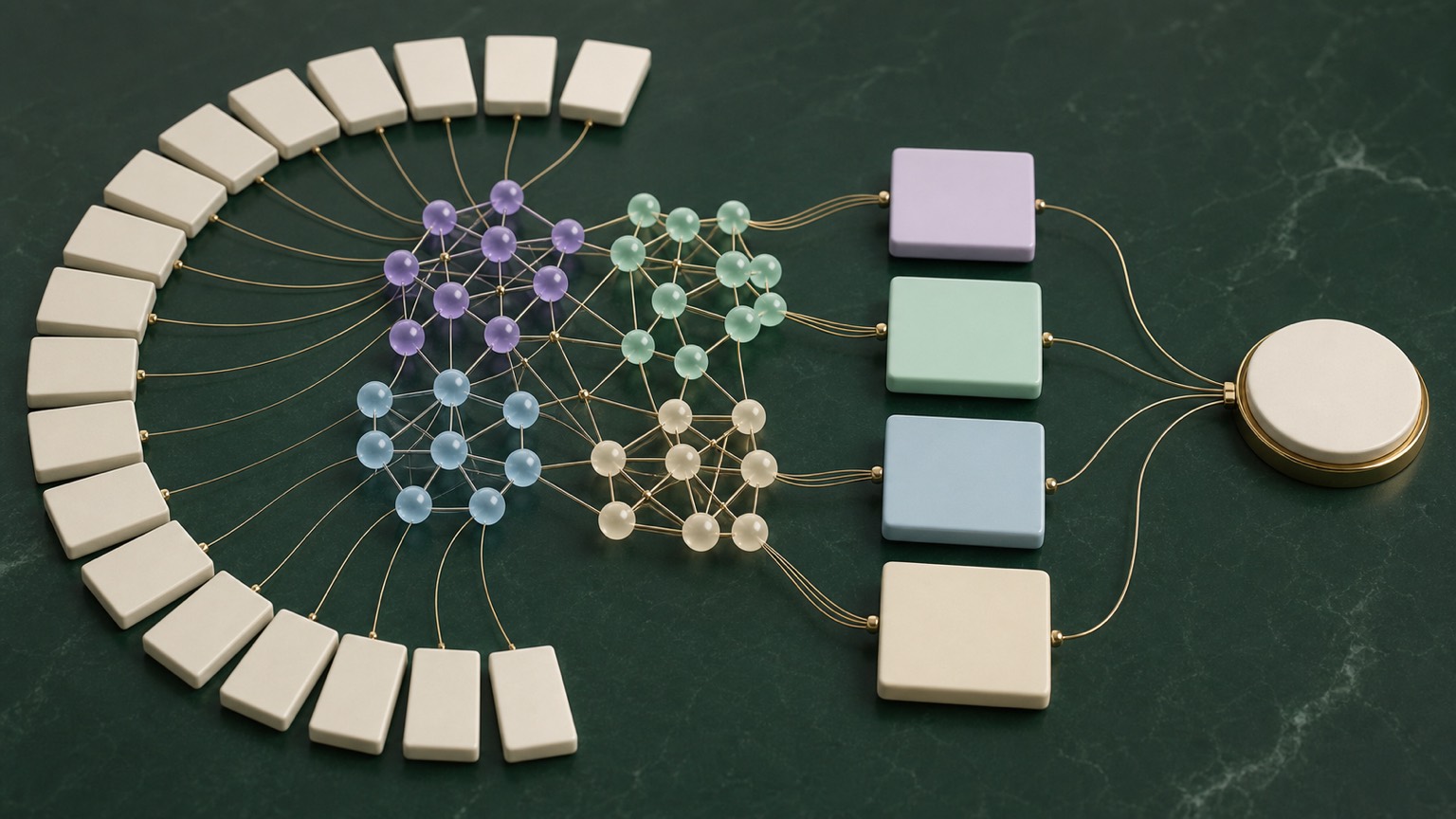
- Split the original document and extract people, institutions, places, concepts, and their relationships.
- Organize entities and relationships into graphs, and identify closely connected groups through community discovery.
- Summarizes are prepared for communities at different levels, preserving local facts and global themes.
- Select relevant entities, communities, or summaries during the query, then summarize them into a final answer.
It's not about eliminating vector retrieval, but rather adding relational and hierarchical perspectives to traditional RAG fragment recall.
When is it worth paying the mapping cost?
Collections of documents such as policy files, research materials, client interviews, and survey reports often include cross-document relationships, thematic evolution, and group patterns, making them suitable for global summarization with GraphRAG. If users only ask about individual product parameters, precise terms, or the latest records, ordinary keyword and vector searches are usually more direct and cheaper.
The quality of the spectrum depends on entity disambiguation and relation extraction. If people with the same name are not merged, the same institution is split into multiple nodes, or the model fabricates relationships, subsequent community summaries will magnify errors. Indexes also require additional model call, storage, and update processes; When documents change frequently, redrawing can become a major cost.
It also cannot replace original textual evidence
A community summary is a compression of the data, not the original facts themselves. Reliable systems should still retain the source mapping from nodes to document fragments, allowing users to verify the original text; For numbers, dates, and compliance judgments, priority should also be given to retrieving precise fragments.
The criterion for choosing GraphRAG is not "the graph sounds more advanced," but whether cross-document relationships and global topics are truly necessary. First, representative questions were used to compare the coverage, evidence traceability, indexing cost, and update time between traditional RAG and GraphRAG, and then a decision was made on whether to introduce a complex pipeline.