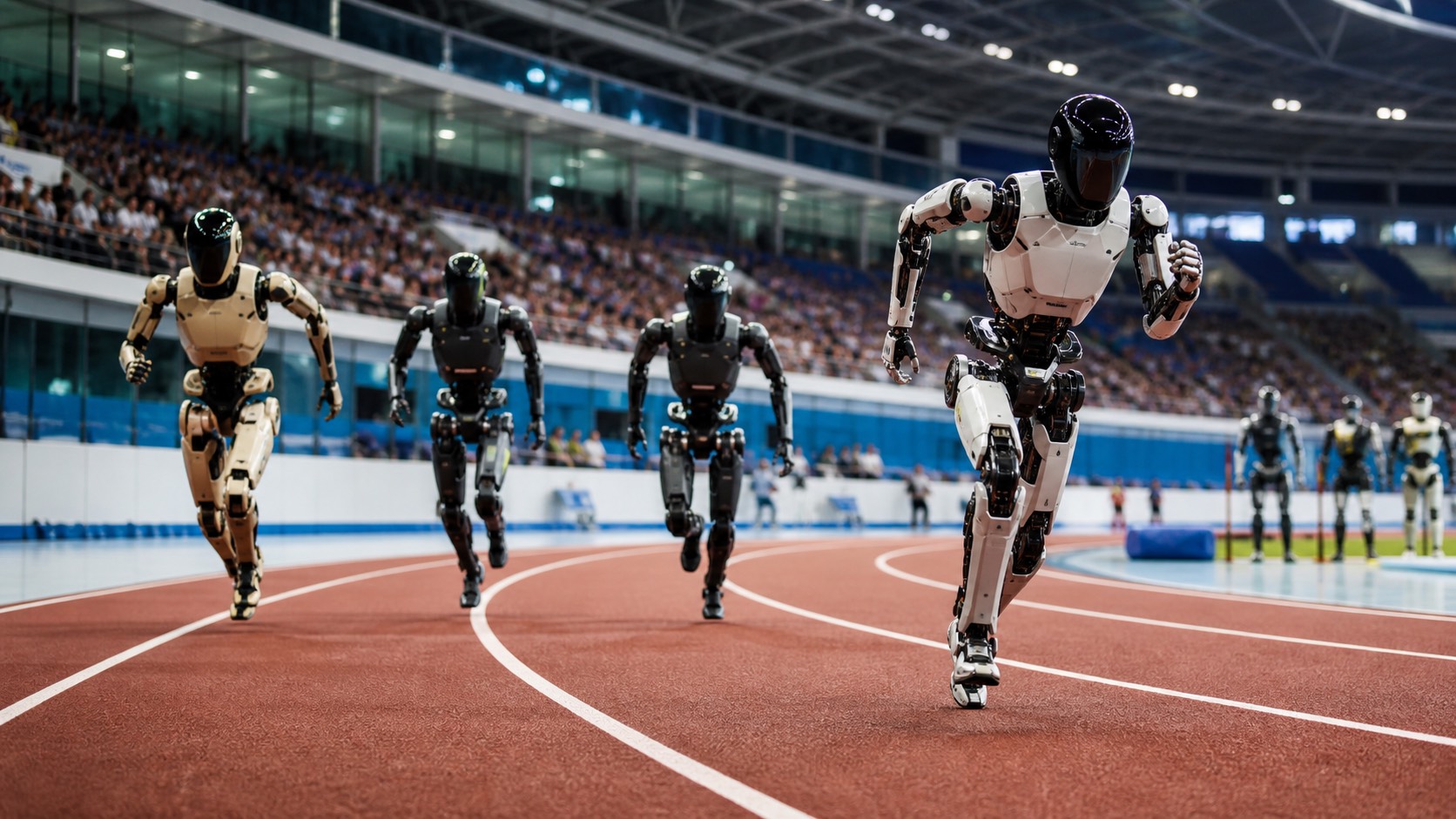
On the evening of August 22, 2026, the 2nd World Humanoid Robot Games opened at the "Ice Ribbon" at the National Speed Skating Oval in Beijing. According to official event information and on-site reports from IT Home, this edition featured 666 teams from 16 countries and 2,056 robots, with the number of events increasing from 26 in the first edition to 51.
Scale growth is only a superficial change. Among the 51 events, there are 30 competitive events and 21 scenario events, with a total of 1,301 matches arranged; In addition to running, long jump, weightlifting, tug-of-war, and table tennis, it also covers industrial assembly, logistics, hospitality, home services, fire rescue, and dexterous hand operations. Many competitive events have eliminated manual remote control and require robots to operate autonomously throughout the process.
Impressive competitive results but not just about "record-breaking"
During the opening ceremony heats, reports recorded Tiangong Ultra running 9.39 seconds in the 100m large group and 39.70 seconds in the 400m; The Honor "Lightning" ran 41.95 seconds in the 400m event. These figures quickly attracted attention and also showed significant advances in robot joint drive, gait control, and high-speed stability within a year.
However, the equipment specifications, starting methods, timing rules, and track conditions of robot events differ from those of human athletics certification systems. Placing robot results alongside human world records can help understand speed levels, but it does not allow us to identify them as the same competitive record. More noteworthy is the continuous annual changes in the same event and similar robots, as well as whether fall rates, energy consumption, and stability improve simultaneously during high-speed movement.
Scenario races are closer to real-world applications than single crosses
Tasks such as home storage, book organization, assembly, and powder weighing require robots not to explode in a short period but to continuously perceive, plan, grasp, and correct errors. A robot running fast doesn't mean it can recover after changes in object position, lighting, or failed actions; Scenario competitions more directly expose coordination issues among models, sensors, dexterous hands, and actuators.
The opening ceremony also showcased large-scale autonomous formations and continuous missions. Eighty Booster T2 robots independently plan their paths and dynamically adjust their postures, fifty Tiangong robots autonomously corner, and wheeled robot arrays perform long-range tasks in home, retail, and dining scenarios. Compared to single-machine demonstrations, multi-machine simultaneous operation is more likely to expose communication congestion, positioning drift, and abnormal recovery capabilities.
What this event truly tested
Humanoid robots are moving from the launch stage into a public environment where repeatable comparisons are possible. Sports events cannot replace long-term testing at factories, homes, and rescue sites, but they can create high loads, strong interference, and visible pressure of failure within a unified time and venue. For the industry, the value of competitions is not just about delivering the fastest results, but about gradually making autonomy, task completion rates, stability, and the number of human interventions comparable.
This competition will run until August 26. To assess technical value, we should continue to look at the final rules, complete results, task success rates, and whether the event is truly remote-controlled, rather than relying solely on a few speed numbers from the opening ceremony.