Kimi K2-0905 released: 256k context + stronger front-end coding and tool calling, AI upgrade for Agent and engineering practice
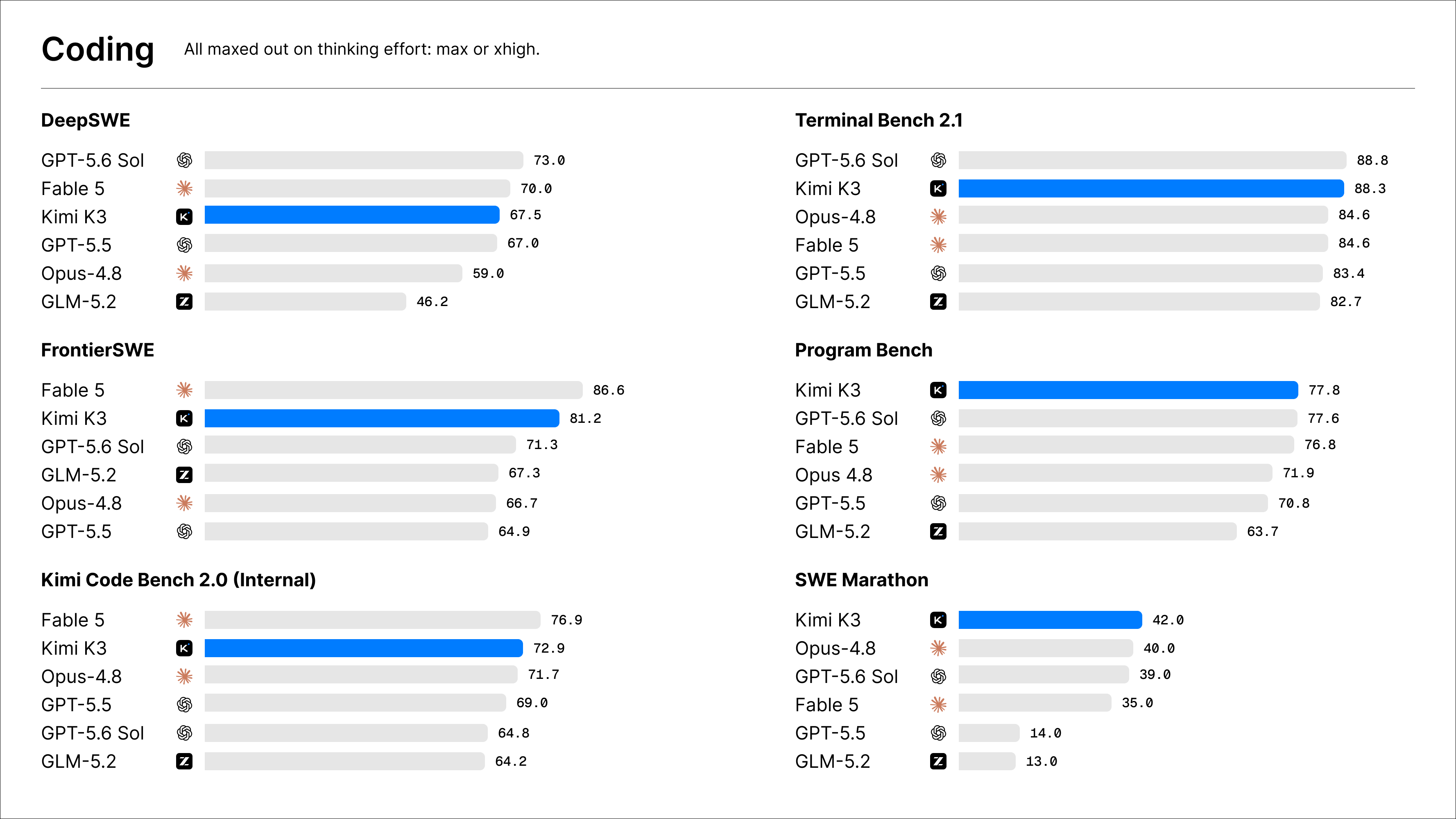
This update has advanced the engineering of artificial intelligence and large models by a step: Kimi K2-0905 strengthens front-end coding and tool calling, supports 256k context, and is compatible with a variety of Agent scaffolding. With high throughput reasoning and official emphasis on tool call stability, AI tools are suitable for code generation, automation, and enterprise scenarios.
1. Update highlights
1. Enhancement of coding capabilities: double upgrade of front-end and tool calls
AItools are more stable in componentized front-end, state management and interaction logic, and the tool call chain is more controllable, which is conducive to orchestrating ChatGPT, Claude and Kimi into the same development pipeline. Form a closed loop of intelligence and automation.
2. Ultra-long context: The scale advantage of 256k tokens
TheAI context extends to 256k, which can carry large code bases, design documents, and test records. Combine retrieval enhancement and segmented summary to maintain consistency in large models in long documents.
3. Agent scaffolding adaptation: Claude Code, Roo Code, etc.
Thescaffolding adaptation for multi-agent collaboration is more perfect, making it easy to solidify the division of labor between ChatGPT for planning, Claude for review, Kimi execution and tool call into reusable templates.
(1) Benefits from previous versions
Stronger function/tool calls, longer context, and faster responses enable AI tools to reduce rework, reduce integration costs, and improve observability in real-world engineering.
2. Value to AI tool stations and enterprises
1. Engineering efficiency: integration from requirements to code
Large models can directly read long specifications and interface documents, generate front-end pages, test cases and integration scripts; ChatGPT generates task lists, Claude proofreads style and safety, and Kimi completes implementation and calling.
2. Agent stability: The tool chain "avoids detours" Artificial
intelligence reduces failure retries through more stable tool calls; In scenarios such as automated O&M, data cleaning, and report generation, AI tool latency is more controllable and SLA is easier to guarantee.
(1) The landing method of teamwork
precipitates prompts, glossaries, and evaluation use cases into templates; Multi-model routing ensures that ChatGPT, Claude, and Kimi can back up each other during peak times, reducing single-point risks.
3. Getting started and deployment suggestions
1. Standard workflow
a. Organize specifications into structured prompts → requirements
b. Generate → Kimi output front-end/script and call code
c. Review → Claude for security and style checks
d. Validate → ChatGPT generation and execution test cases
e. Regression → write changes and indicators back to the evaluation set
2. Prompt and context governance
Set a token budget for AI tools; long articles first make chapter summaries and then progressively refine; Key code snippets are retrieved and inserted instead of stacked in the entire library, improving the accuracy and speed of large models.
(1) Balance cost and performance
Enable caching and concurrency capping in batch tasks; Set idempotent keys and timeouts for high-frequency tool calls to reduce resource jitter.
4. Risks and precautions
1. Cost fluctuations in ultra-long contexts
Although 256k is strong, it needs to be controlled regardless of history; External knowledge to retrieval to avoid invalid calculations by AI tools.
2. Tool call and data compliance
Minimum authorization for external APIs and databases, log recording and auditing; When deploying on the enterprise intranet, the access policies of ChatGPT, Claude, and Kimi need to be managed uniformly to avoid overstepping authority.
Frequently Asked Questions (Q&A)
Q: How do I orchestrate Kimi into the same AI toolchain with ChatGPT and Claude?
A: ChatGPT is used for task decomposition and data preparation, Claude is responsible for security and style review, and Kimi performs front-end coding and tool calling, forming a stable pipeline through multi-model routing and retry strategies.
Q: How is the 256k context used in engineering?
A: Inject requirements documents, interface protocols, design reviews, and key source code fragments into blocks, and AI summarizes them first and then positions them to generate fragments to achieve a consistent understanding of complex projects by large models.
Q: What are the direct benefits of front-end and tool call enhancements?
A: Component generation is closer to specifications, state management is more stable, functions/API calls are less failed and retries, and AI tools move from sample-level output to engineering products that can be directly merged.
Q: When should Kimi be prioritized over just using ChatGPT or Claude?
A: When the task requires long context reading or high-frequency tool calls, Kimi's 256k has more advantages in call stability. Planning and compliance can still be done by ChatGPT and Claude.