1. Product positioning
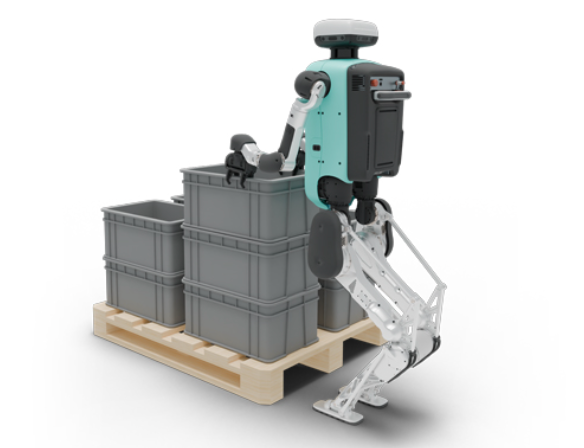
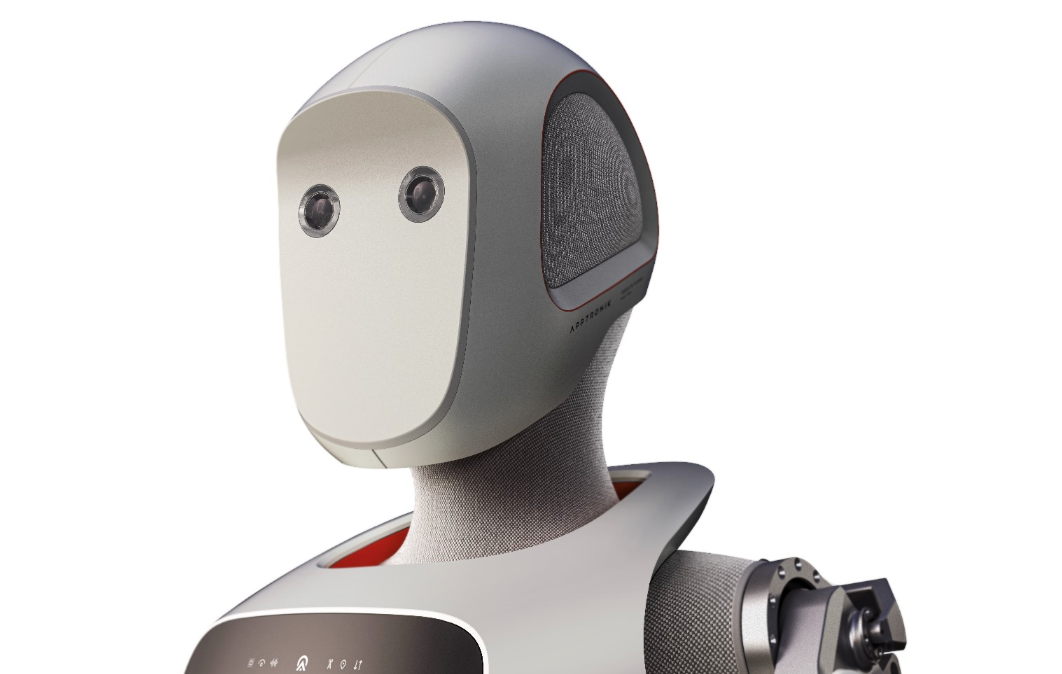
Apollo is Apptronik's general-purpose humanoid robot for warehousing and manufacturing, with a height of about 1.73 meters and a weight of about 73,000 grams, and its core task is to take on long, repetitive manual tasks. It is designed to be proportional to the human body, allowing it to move between existing passages, workstations, and equipment, using the same tools and tooling as humans, reducing major modifications to the plant structure.
2. Core parameters and technical highlights
Apollo has a load rating of around 25,000 grams and is suitable for handling containers, material turnover and line-side feeding, covering most common workpiece weights in warehouses and assembly lines. A single battery lasts about four hours, supports hot swapping, and can continue to work by replacing the battery, or it can be connected to an external power supply for long-term operation, which is convenient for scheduling shifts.
In terms of safety, it adopts a force control architecture and a multi-level protection area design, which can sense external forces and automatically decelerate or stop the machine, reducing the risk of collision when cooperating with people. Display areas on the head and chest are used to display expressions and statuses, allowing the operator to see the current pattern, battery level, and alarms at a glance.
Apollo is also modular, which can be used as a complete bipedal robot, or only the upper body can be retained with a wheeled chassis or fixed on the station, flexibly configuring according to the scenario and reducing the cost of customization for a single scenario.
3. Applicable groups and typical scenarios
The target customers are mainly third-party logistics, e-commerce warehousing and discrete manufacturing enterprises, especially in scenarios where labor is tight, multiple shifts are required, and positions are mainly handled, loaded, and picked. Typical applications include trailer unloading, box picking and palletizing, machine tool loading and unloading, station material distribution, etc.
Compared with fixed conveyor lines and specialized robotic arms, Apollo is more suitable for factories and warehouses with rapidly changing order structures and frequently adjusted site layouts.
4. Key points of deployment and operation and maintenance
On the software side, Apollo provides graphical configuration and task management tools that allow users to record and edit action processes through the interface, and connect with existing warehousing or manufacturing systems, allowing tasks to be directly converted from orders to robot execution instructions.
In terms of operation and maintenance, modular design and battery hot-swapping are conducive to rapid maintenance and upgrades, combined with remote monitoring and log analysis, it can operate according to the "multi-machine fleet" mode, rather than treating each unit as an independent project, which is conducive to controlling long-term total costs.
Q&A Frequently Asked Questions
Q1: What are the advantages of Apollo compared to traditional collaborative robotic arms?
A: The robotic arm is mostly fixed in a single station, and only solves the local process; Apollo can move around the workshop and complete the entire link such as handling and feeding between different stations, which is more suitable for production lines with changing processes and layouts.
Q2: Is the four-hour battery life enough to cover a flight?
A: The usual practice is to prepare multiple batteries, alternately replace them in shifts, and a single robot can resume work in just a few minutes, and after multiple machines rotate, it can cover the entire shift or even close to the whole day.
Q3: What preliminary renovations do existing warehouses need to be done?
A: The focus is to reserve the walking passage and safety distance of the robot, make simple optimizations for ground height differences, steps, etc., and cooperate with the IT team to complete the system docking, generally without large-scale civil engineering.
Q4: Can Apollo expand to non-industrial scenarios in the future?
A: The official plan includes retail services, elderly care and other directions, relying on the same hardware platform, through software upgrades and task libraries to expand to more industries, so that enterprises can reuse and invest on one platform.