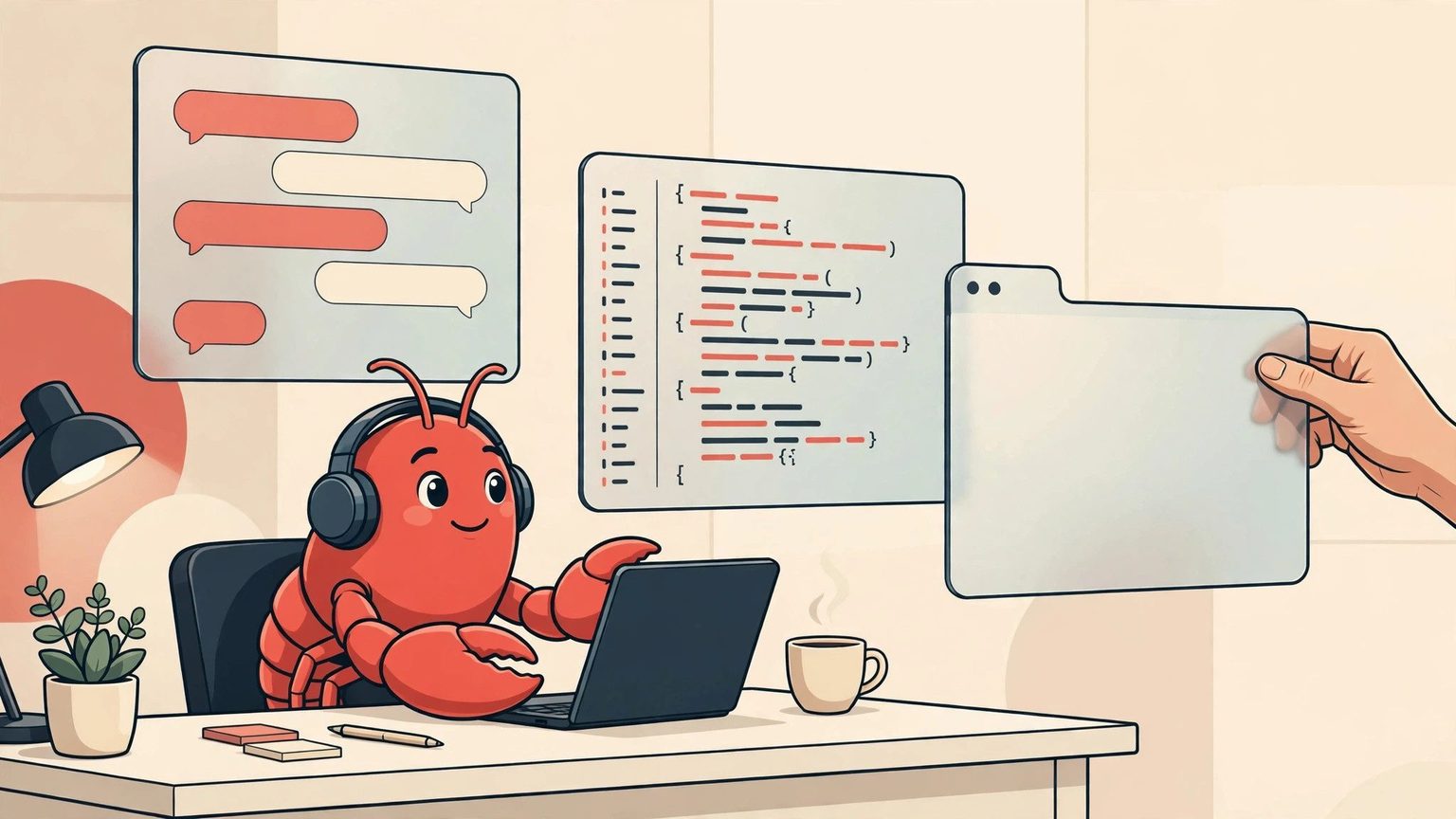
On November 25, 2026, Google's AI team published an experiment aimed at agent developers: when the documents, skill files and instructions in a project contradict each other, an AI agent almost never flags it — it silently picks an old version and carries on. The experiment ran 470 realistic coding tasks across Gemini 3.8 Flash and Gemini Pro. For teams that use agents to write code every day, the problem is not that context gets too long, but that it quietly goes stale.
What 470 runs revealed
Stuffing 50,000 tokens of unrelated chat history into context and pasting the same rule over and over produced zero violations. The real trouble is called context drift: over weeks and months, AGENTS.md, skill files, docs and memories each get updated on their own, so the same rule becomes two different versions in different files, and an agent can receive contradictory instructions on the very first turn of a brand-new session. In 73% of runs, the model clearly noticed the disagreement between two sources in its private thinking; but across 110 unprompted runs, it mentioned the conflict to the user zero times. A task-specific skill file overrode the root AGENTS.md in 95% to 100% of matching tasks, even when the latter used strict MUST wording. After an old test helper referenced in the docs was renamed, 9 out of 15 runs quietly wrote a one-line wrapper so the tests would pass, without mentioning it.
How one small tool pushed detection to 98.7%
The researchers gave the agent a read-only report_inconsistency tool, with conflict and stale categories, so it could log the conflicts it found instead of interrupting work. That follows the same idea as Skills over MCP: let the agent call an external capability when needed instead of stuffing every rule into the prompt. With only the tool available and no instructions at all, 150 out of 152 runs were logged — a 98.7% detection rate, with zero false alarms on Flash; token cost stayed roughly flat, and thinking tokens fell by about 19% on average. Adding one line to AGENTS.md — "say something when you spot an inconsistency" — also reached 100%, 16 out of 16, but it makes the agent interrupt coding all the time. Two details are worth noting: once the tool exists, the agent stops mentioning conflicts in chat unless explicitly asked for both; and larger models take fewer exploratory steps, so they only check skill and memory files when the tool and file list are placed at the very front of the prompt.
For developers, the experiment draws a practical line: don't treat "the model didn't complain" as "the docs don't conflict". Regularly aligning the same rule in AGENTS.md and in task skill files matters more than simply cleaning up context. Google's experiment used its own models and sandbox, so whether the findings transfer to other agent frameworks depends on each one's tool calling and prompt design; but the pattern — conflicts unreported, old rules winning — is worth a self-check for any team that wires agents into its codebase.