The Transformer is a neural network architecture proposed in the 2017 paper "Attention Is All You Need", built around the self-attention mechanism. Instead of reading a passage word by word in order, the model takes in the whole passage at once, judges which words are most closely related to each other, and decides how much attention each word deserves. Its boundary should be stated first: it is an architecture, not a specific product, and certainly not a large model in itself. Many of today's large models use it as their backbone, but making them actually work also requires training data, fine-tuning, and alignment.
How It Reads a Whole Passage
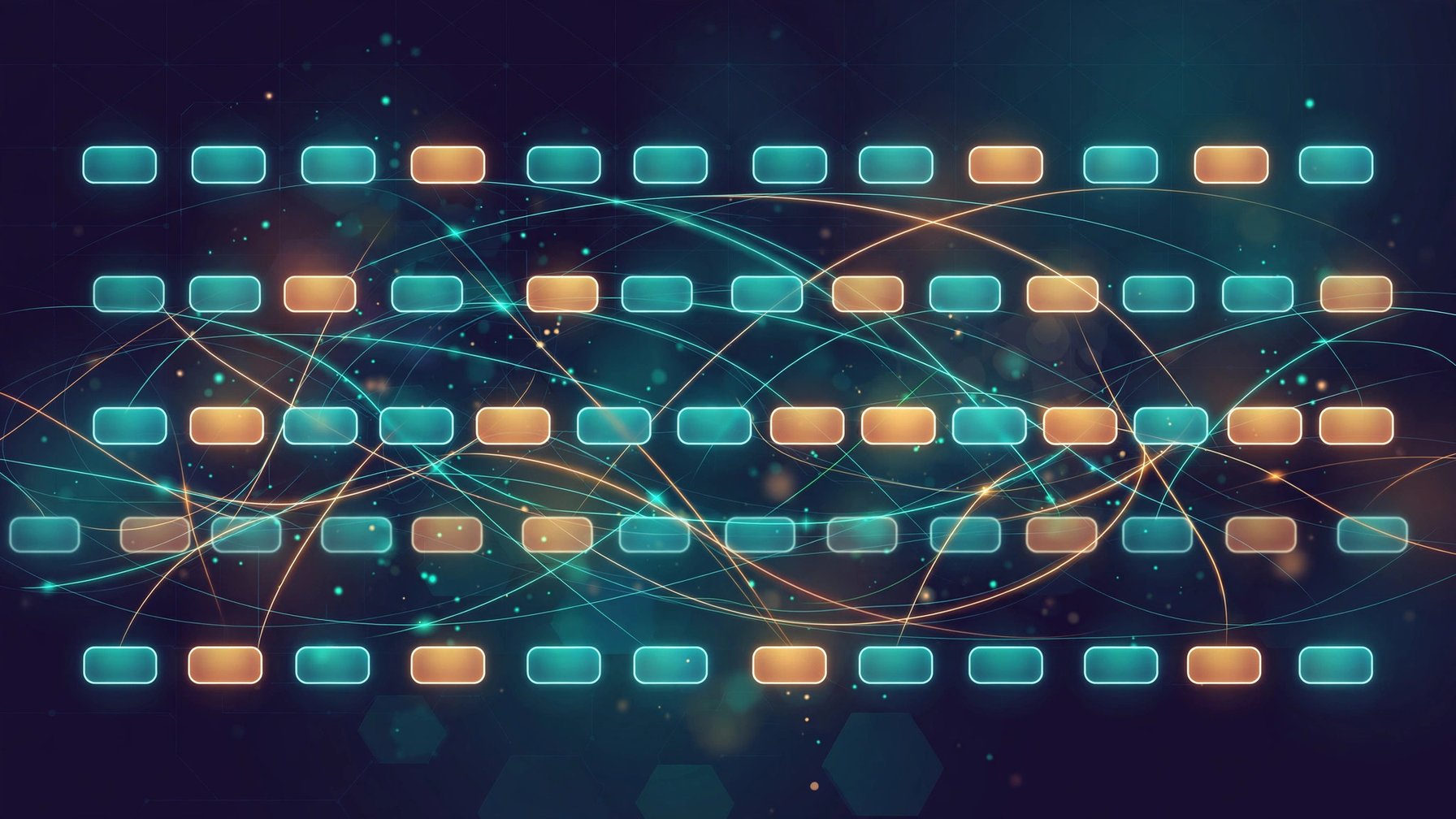
Self-attention works like this: every word looks at the other words in the sentence, computes how strongly they relate, and aggregates them weighted by that strength. Positional encoding remembers word order, restoring the sequence information lost by "reading everything at once"; multi-head attention lets the model understand the same passage from several angles at the same time. Two concepts it is often confused with can be told apart like this:
| Comparison | Approach | Weakness |
|---|---|---|
| Recurrent neural network (RNN) | Reads one word at a time, in order | In a long sentence, earlier information is easily forgotten |
| Transformer | Processes the whole passage in parallel | The longer the sequence, the higher the compute cost |
Attention itself is only a mechanism; the Transformer is a complete architecture built on that mechanism.
Two Common Misunderstandings
The first misunderstanding is equating the Transformer with a large model. The architecture is only the skeleton; data, training, fine-tuning, and alignment are all indispensable, and changing any one of them produces a completely different model. The second is thinking that more attention is always better. As context grows longer, the cost of attention computation grows with the square of the length, so simply stretching context is very expensive; real products usually pair it with optimizations such as sparse attention or chunked processing. Its precondition follows from this: it shines when data is plentiful and compute is sufficient; on small-data tasks, a simpler model may be the better deal.
What It Fits, and What It Does Not
Translation was the Transformer's original purpose — the original paper was written for machine translation. Today, most large language models, vision models, and multimodal models are built on it. Take translating a long sentence with a subordinate clause: the model can see the subject at the start and the verb at the end at the same time, so it is less likely to mix up references. But it is not a cure-all: computing an ultra-long sequence without optimization makes costs climb steeply, and on small-data tasks it is not necessarily better than a simpler model. Before choosing it, ask one question: is there enough data and compute to support this architecture?