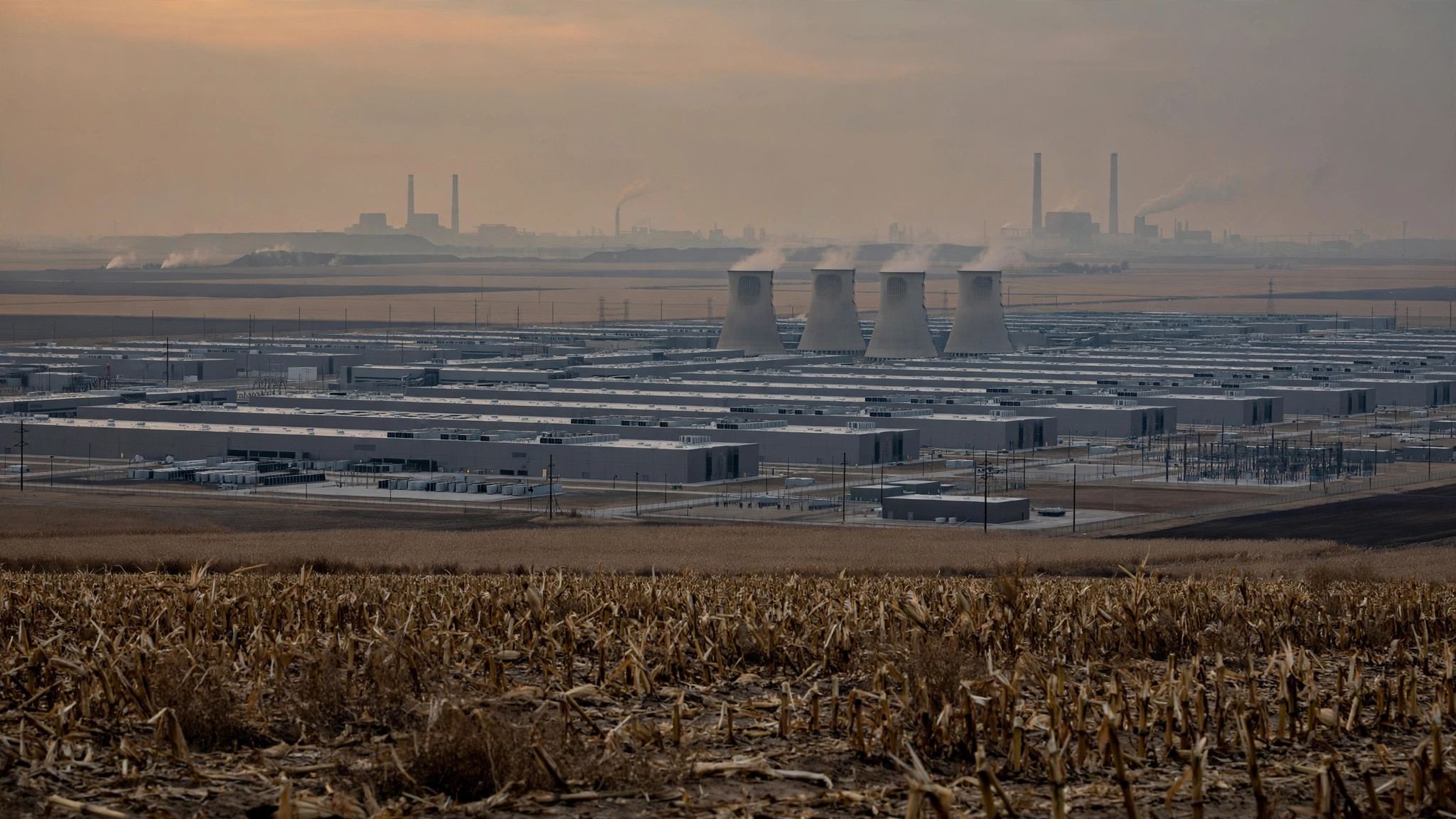
On November 19, 2026, a new study from the Massachusetts Institute of Technology (MIT) found that the electricity demand of data centers is pushing air pollution far from the server halls themselves: in 2023, the extra pollution from additional data center electricity demand alone caused about 650 premature deaths across the United States. Most strikingly, the highest death rates were not in the states with the most data centers.
The worst pollution is not where the most power is used
The study was published in Environmental Research Letters. The model estimates that of the 650 premature deaths, 513 were linked to fine particulate matter PM2.5 and 137 to ground-level ozone (smog), about 5.3% of all electricity-related deaths in the country. The highest per-capita death rates were in Iowa, Nevada, South Dakota, and Kansas, while northern Virginia and Texas — where electricity demand is most concentrated — had rates only about half those of the Midwestern states.
The mismatch comes from the grid itself. The U.S. power grid is interconnected, so new data center demand in Virginia is likely met by older coal and natural gas plants in the Ohio Valley, whose emissions were already high; pollutants then drift downwind. Ammonia from fertilizer on Midwestern farmland further accelerates PM2.5 formation. The study also found that rural populations face significantly higher risk than urban ones. Lawrence Berkeley National Laboratory previously estimated that data centers accounted for about 4% of total U.S. electricity use in 2023, corresponding to about 4.4% of national emissions — and the share is still climbing fast as new facilities are built.
Siting can't be decided on land and power prices alone
Noelle Selin, the study's senior author and an MIT professor, said that when siting and operating data centers, air quality must be part of the equation alongside land and energy prices. That has direct implications for three groups: local governments approving new projects should ask which power plants will supply the added demand; cloud providers talking about "clean power" should be judged on the actual generation mix, not just how many green-energy credits they bought; and beyond residents living next to a data center, communities further downwind are stakeholders too. The study did not cover on-site generation from data centers' own power plants, a gap the team wants to address next.
For the siting debate, this is not an isolated signal. This year, voters in several parts of the United States have already rejected data center projects in ballots, mostly over noise, water use, and electricity prices. Once air quality evidence enters the public debate, the balance in approvals will tilt further.