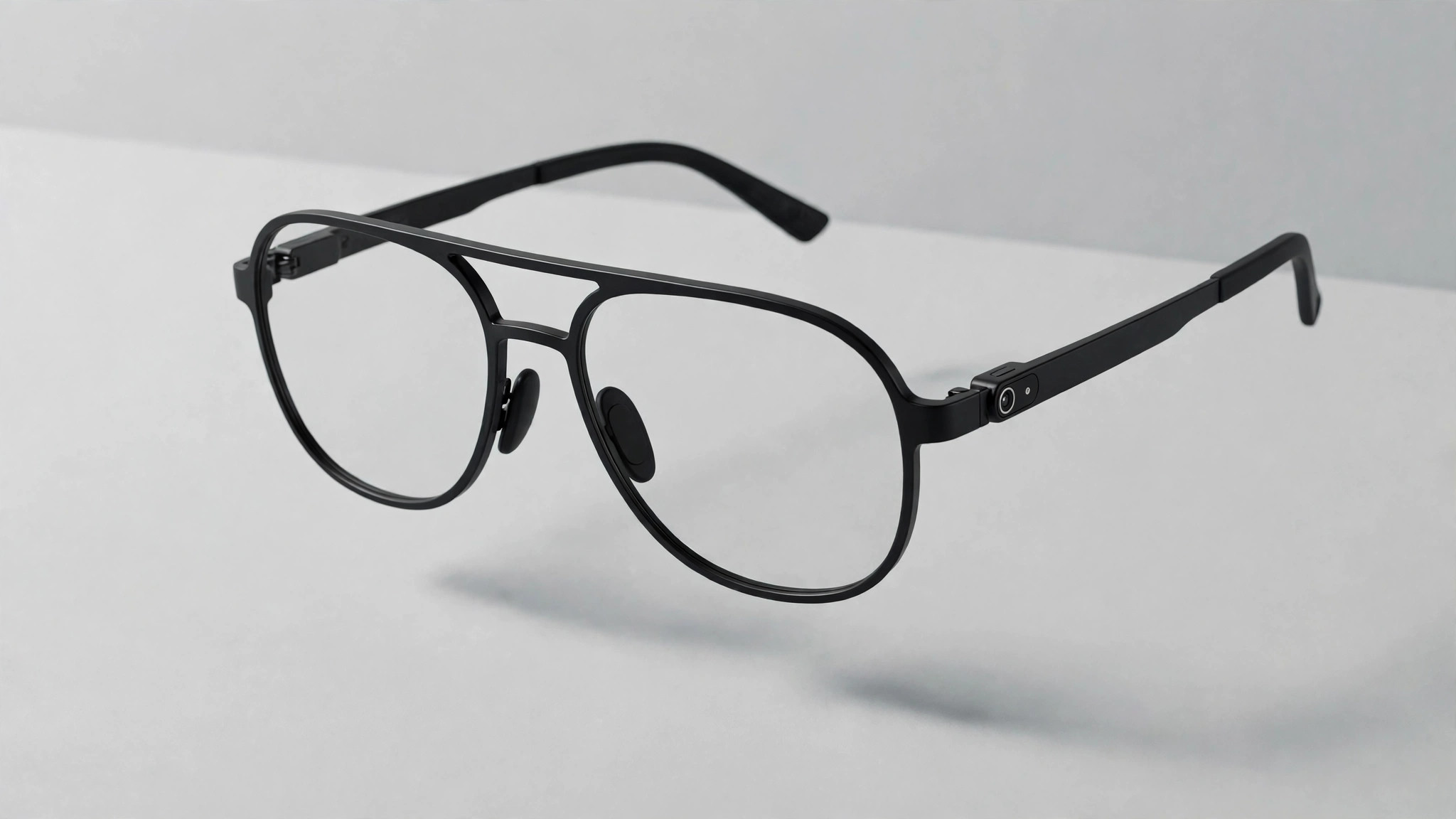
Google's smart glasses start at $395 — and have no screen. The Intelligent Eyewear, developed by Google with Samsung, Warby Parker, and Gentle Monster, opens for pre-order on November 12, 2026, and goes on sale December 10, 2026. The Warby Parker version starts at $395, in three styles — Alden, Reid, and Wren — as optical and sunglasses versions, in Pine, Saddle, and Jet Black; the Gentle Monster version starts at $449 and goes up to $489, across six designs. It launches only in the United States and South Korea — the Warby Parker version also in Canada — with no release date or price for China, the United Kingdom, or Europe.
No screen — interaction runs on sound
Gemini's answers, navigation, and translation all come through open-ear speakers. Say "Hey Gemini" or tap the temple to wake it, then ask questions while looking at road signs, posters, or menus; Google Maps gives voice navigation, and more than 70 languages are translated in real time. Guided Vision gives blind and low-vision users a spoken description of their surroundings. On privacy: camera images sent to Gemini are not stored in Gemini History, and are not used to train models or target advertising. When you do not want the electronics, a physical switch turns them off completely, and the glasses can be worn as ordinary glasses.
Hardware and the pairing bar
The hardware is built by Samsung: about 41 grams, a 12-megapixel ultrawide camera supporting 3K at 30fps or 1080p, with stabilization and HDR; dual open-ear speakers, four microphones; a Qualcomm Snapdragon AR1 Gen 1 chip, 2 GB of memory, 64 GB of storage; about 9 hours of battery life, with the charging case providing about 7 full charges, around 72 hours in total; IPX4 water resistance, Bluetooth 5.4, and Wi-Fi 6E. The pairing bar is not low: Pixel 7 and newer (Android 17), selected Samsung Galaxy phones (One UI 9 and above), and iPhone 13 Pro and newer (iOS 26.6 and above); some features are Android-only at launch, and you also need a Google account for the United States or South Korea belonging to someone 18 or older. Compared with the Meta Ray-Ban Display, the difference is plain: the Ray-Ban Display has a screen in the lens, while Google's model has no screen and relies entirely on voice interaction.
It suits users in the United States who already have a Pixel or Samsung phone, travel often, and want hands-free translation and navigation; it does not suit users in China, because it cannot be bought there, nor people who want a screen display, and iPhone users with older models are likewise outside the pairing range. For $395 you get a pair of glasses that talks, not one that displays — before buying, be clear which kind you want.