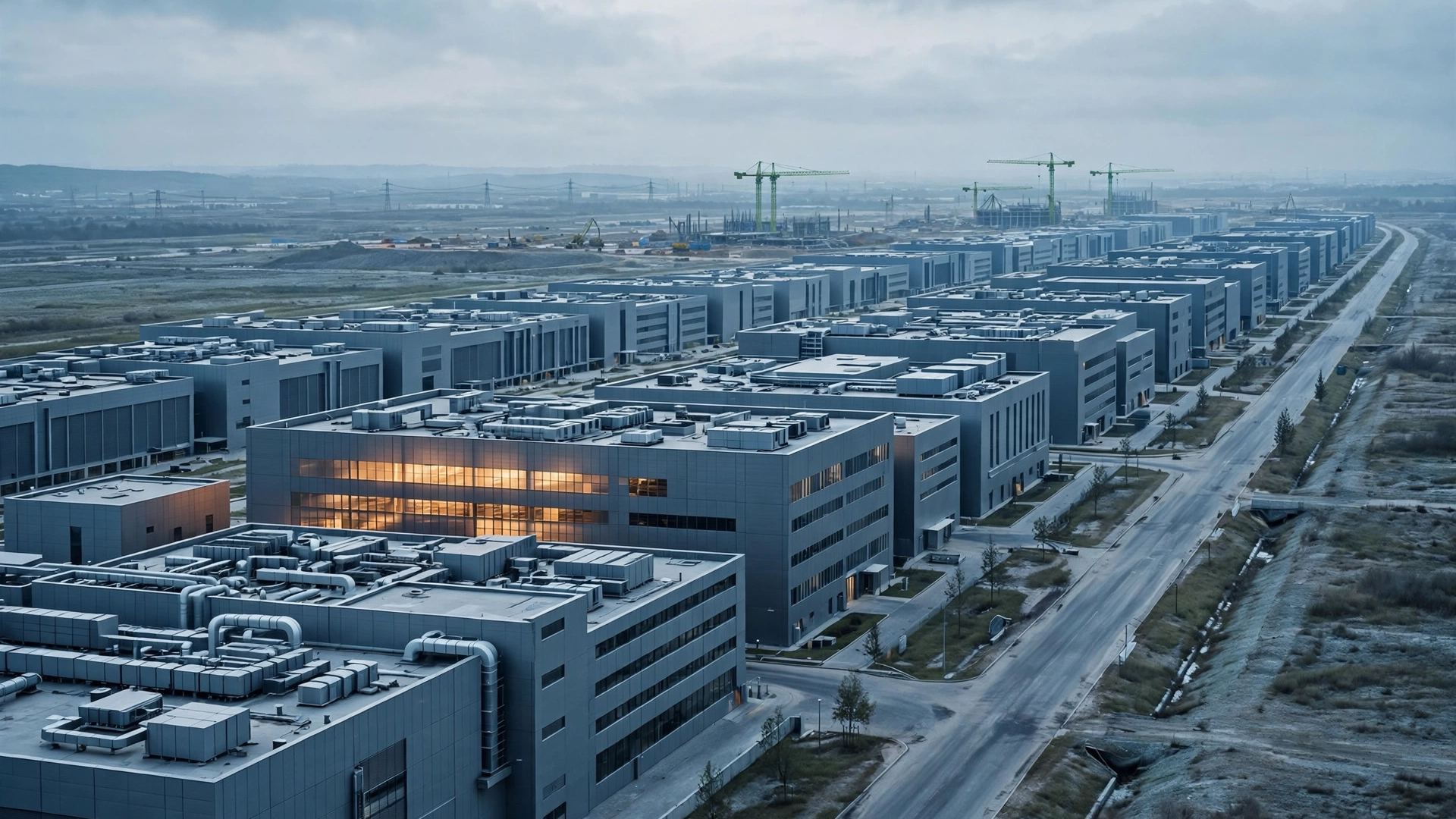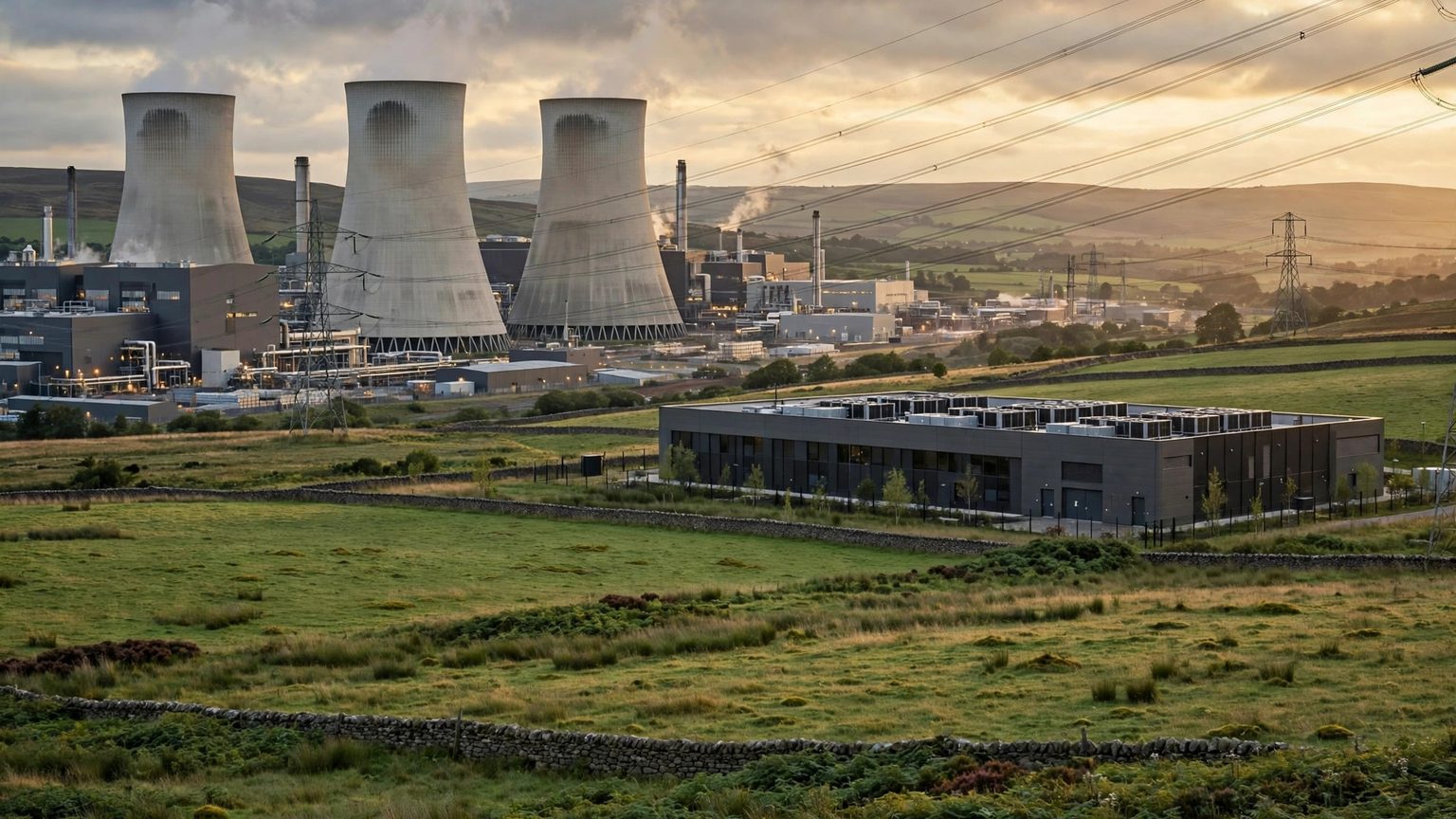
Drax announced on 3 November 2026, in a London Stock Exchange announcement, that it has signed an agreement with Brookfield and Brookfield's UK AI infrastructure platform Radiant to jointly develop an AI data centre on the Drax Power Station site in North Yorkshire. The project targets total capacity of more than 1 gigawatt, delivered in three phases; Brookfield estimates total investment, including chips, could exceed £20 billion, including about £2.5 billion for the first phase. This is only a joint development agreement; whether the first phase goes ahead still depends on planning approval, a tenant and a final investment decision.
How the three phases are sequenced, and how the money and power fit
| Phase | Capacity | Target timing |
|---|---|---|
| Phase 1 | Up to 100 MW | Operating from Q1 2028 |
| Phase 2 | A further 500 MW | 2028 to 2031 |
| Phase 3 | Further expansion | After 2031 |
The first phase will draw power directly from the grid, while the second phase is planned to be supplied directly by the power station. Drax Power Station has 4 GW of grid access and 2.6 GW of dispatchable generation capacity, the key condition the partners value. Capital and operating capability come from the AI infrastructure joint venture Brookfield and Qai announced in 2025; Qai is a subsidiary of the Qatar Investment Authority. Radiant is responsible for design, customer engagement and commercialisation. On the day of the announcement, Drax shares rose as much as 8.6%, reaching an intraday high of 886 pence.
The £20 billion figure needs to be taken apart
The £20 billion is Brookfield's estimate of potential investment across all three phases, including chips, not a committed amount; only the £2.5 billion first phase has a timetable, and it too is conditional. A planning application for phase 1 is being prepared, public consultation is expected to start in November, and planning permission, regulatory and grid approvals, a suitable tenant and commercial agreements are still needed. Drax chief executive Will Gardiner said the project, if built in full, could become one of the largest data centres in the UK. A more accurate description for now is that the UK has gained a gigawatt-scale site with power, land and potential funding; tenants and approvals are the next step that will decide whether it becomes real computing capacity.