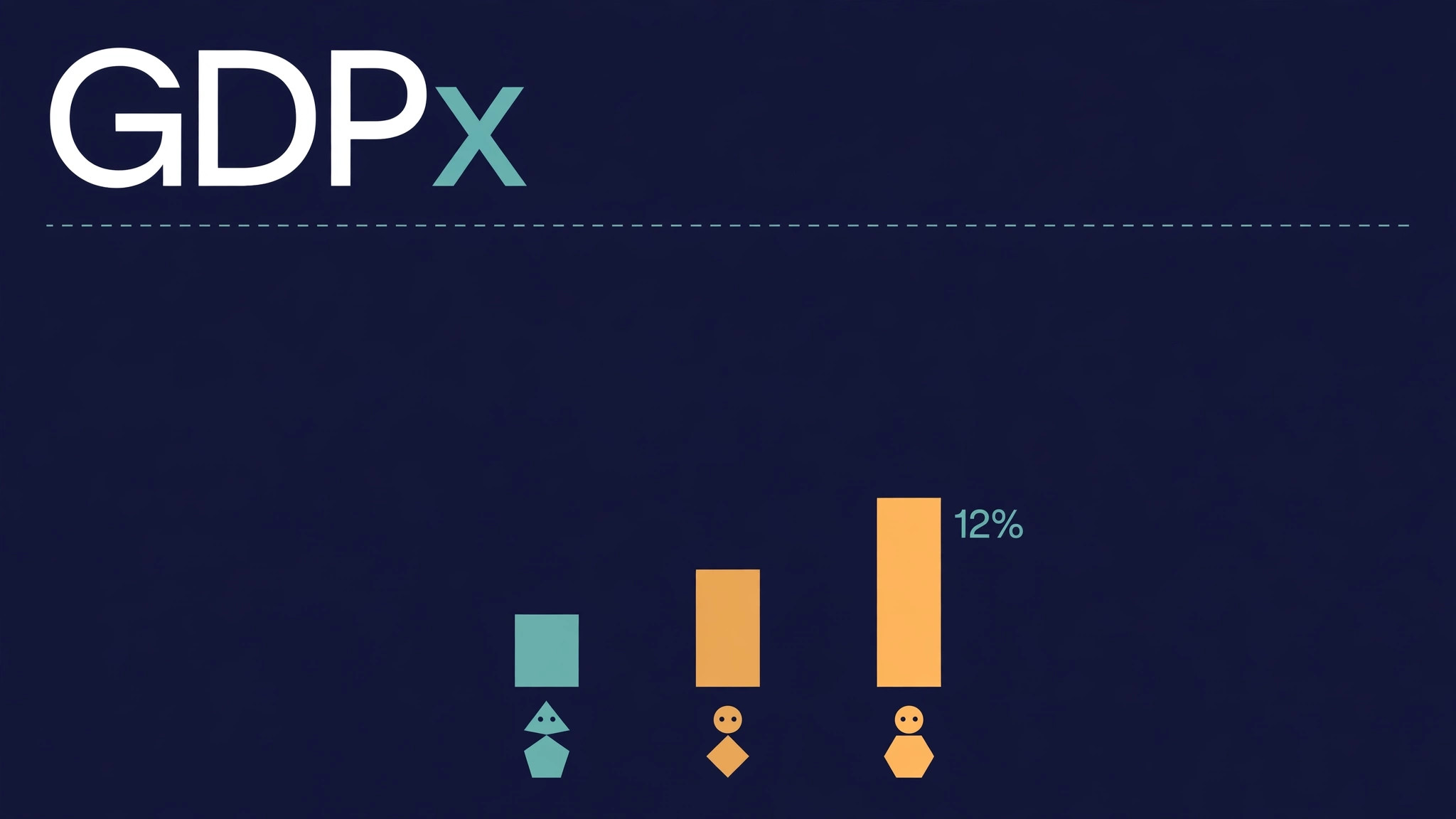
On November 2, SemiAnalysis released GDPx, an agent benchmark covering 11 high-value domains with 206 tasks in total. The leaderboard published by SemiAnalysis shows that even the best performer, Claude Opus 5.5, scored only 12.0%, followed by Gemini 4 Carbon at 10.9% and GPT-6 Astra at 9.6%. The low scores are deliberate: the benchmark is designed around the difficulty of real work, and the leading models are still far from completing professional work on their own.
Tasks Come From Real Work Environments, Not Single-Turn Q&A
GDPx tasks were supplied by 14 specialist data partners, and its 11 domains include chip design, cybersecurity, biology, finance, legal, quant trading, recursive self-improvement, hardware design, materials science, alignment, and software engineering. Each task has a default limit of eight hours, and models run in their native harnesses — Opus 5.5 in Claude Code, GPT-6 Astra in Codex, and Gemini 4 Carbon in Antigravity, with OpenCode used where there is no native harness. The headline score is the average pass@1 result across three attempts, with all domains weighted equally. Finance and legal tasks are the hardest: SemiAnalysis says basically every model scores zero on both types of task.
Safety Classifiers Pulled Down Two Leaders, and a Different Calculation Changes the Order
SemiAnalysis cautions that the overall scores of Opus 5.5 and GPT-6 Astra were pulled down by their own safety classifiers. In cybersecurity, biology, and alignment, the classifiers sometimes block a model's actions. Removing those three domains puts GPT-6 Astra narrowly ahead of Opus 5.5, while Gemini 4 Carbon slips from second to fifth. By domain, Opus 5.5 wins quant trading, hardware design, and chip design; Gemini 4 Carbon leads biology and software engineering; and GPT-6 Astra is strongest in recursive self-improvement and materials science. Meta's Muse Wonder Full was rated the best cybersecurity model. A leaderboard cannot be read from its headline score alone.
The value of GDPx is not the ranking but the warning: judging models only by question-answering benchmarks overstates their ability to handle long, multi-step work. All 206 tasks require a model to gather information, use tools, and complete several steps in a simulated environment, where a single mistake can zero the whole task. Scores must be read together with the evaluation method, and how to judge benchmark contamination applies to a new benchmark just as much: whether the tasks are fresh and whether the grading is transparent determines whether a score can be trusted. GDPx is, after all, one organization's set of tasks, and its conclusions still need independent replication.
SemiAnalysis says GDPx will be updated every three to six months, and the leaderboard is now public. What is worth watching is whether the ranking changes once Gemini 4 Carbon is generally available, and whether labs adjust their agents for long tasks. 12% looks more like a starting point: it measures how far the leading models still are from working independently.