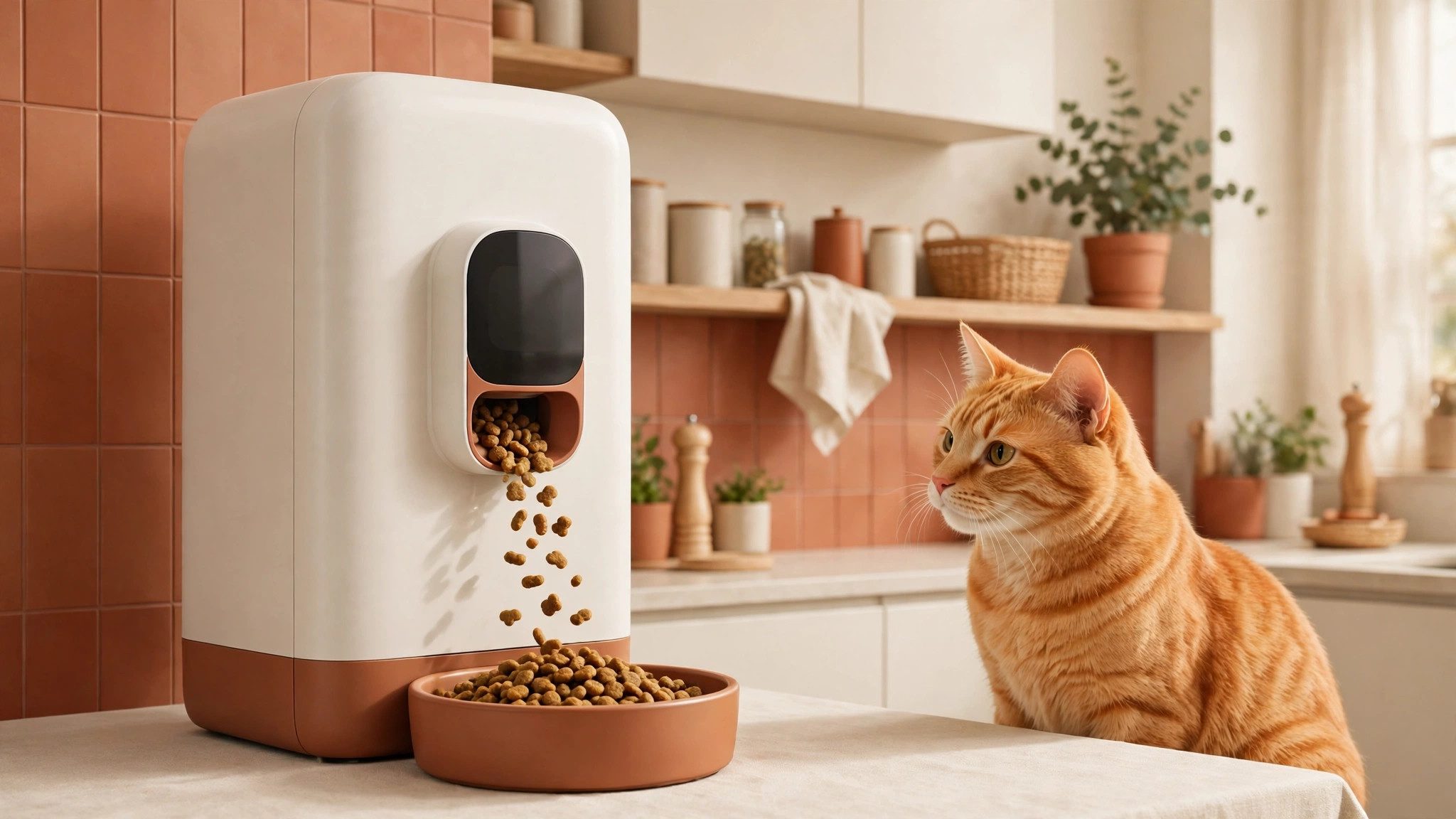
The real value of an AI pet feeder is actually simple: dispense food on time and in the right amount. Claims like “AI reads your pet's mood” or “smart eating-health analysis” are worth hearing out, not paying extra for.
Real selling points
First, scheduled portions: for office workers away for a day or on a two- or three-day trip, a feeder dispenses meal by meal more reliably than asking someone to drop by. Second, remote viewing: camera models let you check on your phone whether your cat or dog actually came to eat, and spot a jam quickly. Third, battery backup: models with a battery compartment keep feeding during a power cut, which matters far more than flashy features.
Barriers to use
Before buying, measure three things: your kibble size, your pet's appetite, and whether the feeder's spot has stable Wi-Fi. Oversized kibble jams easily, a wrong portion setting means over- or under-feeding, and once Wi-Fi drops, remote features shrink to local scheduled dispensing. Watch it at home for two or three days the first time — do not install it and immediately leave town.
Who it suits, and where it falls short
It suits households with one cat or dog, regular schedules, and short trips. Its limits are equally clear: it cannot solve food competition in multi-pet homes; pets on prescription or wet food do not suit dry-food dispensers; and so-called AI detection of eating anomalies is at most a reminder, never a substitute for a vet.
How to choose
Prioritize models with a detachable, washable outlet, jam alerts, and a battery compartment; a camera is a bonus, not a must. If feeding is already a stable routine and someone can feed on time, what it saves is just a moment of convenience — not worth extra budget for the AI label.