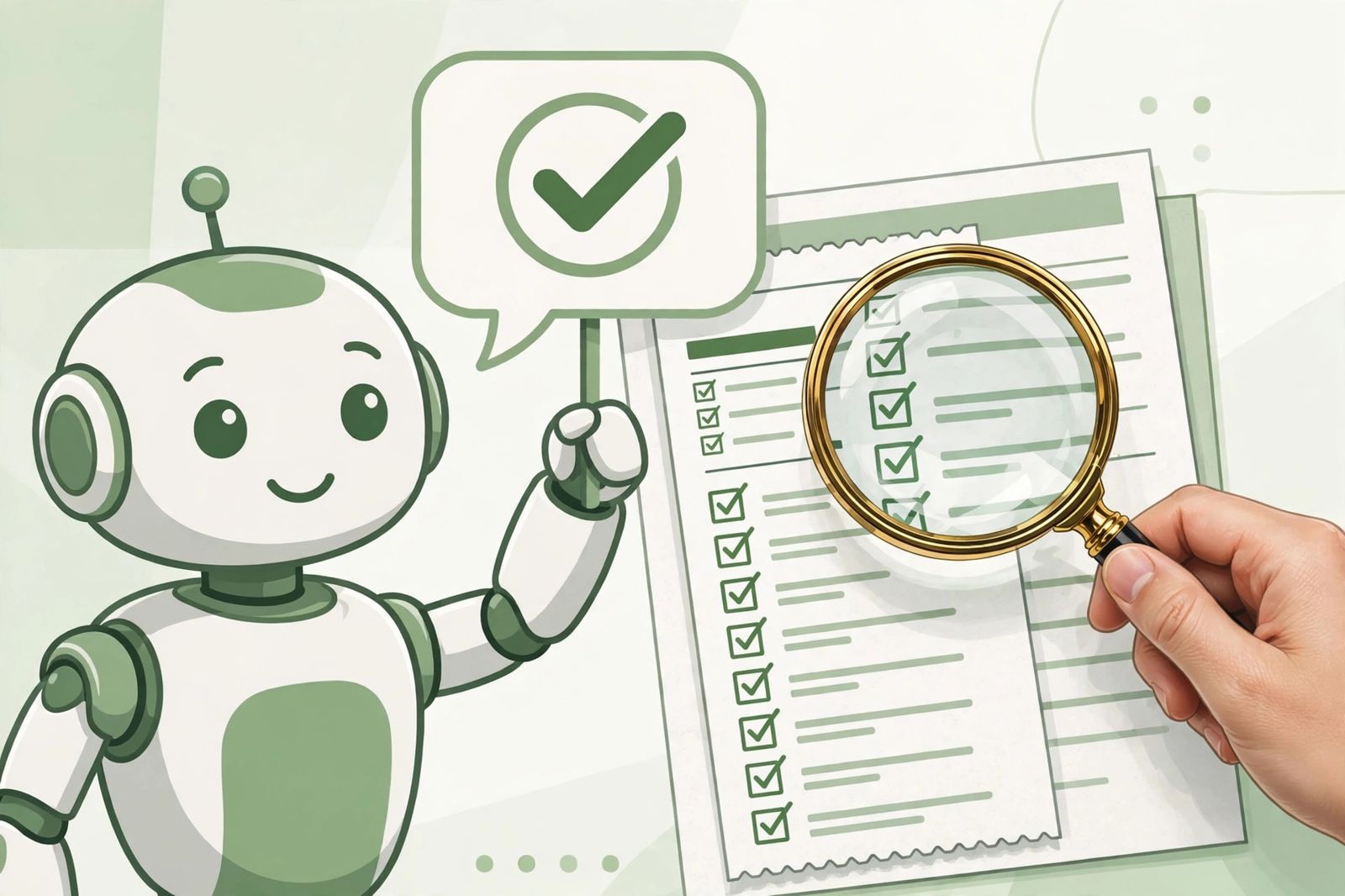
When an AI's answers contradict each other, the safest move is not to pick the version you like better. Stop, make it lay out the grounds for each version, and then check the key facts against the original sources yourself. A contradiction is itself a signal: at least one version was improvised, or your question contained an assumption it failed to separate out. Here is why it happens, and the order in which to handle it.
Why the same person can get opposite answers
It generates replies by continuing text step by step, and wording steers it every time. Rephrase the question or add one leading sentence, and it may follow the new tone to the opposite conclusion, because it has no fixed record of positions to consult. Long chats add context drift: conditions stated early get pushed to the margins by later content, and the model rebuilds its answer around the most recent lines. Sampling also carries randomness, so asking the same question twice commonly produces small variations — but a reversal on a core fact usually means it was never sure about this question in the first place.
When you spot a contradiction, work in this order
Step one: quote the contradiction back verbatim. Paste its earlier sentence and require it to state clearly which version stands and why it changed. An answer that smooths both sides over counts as no answer. Step two: make it produce the grounds for each version — which rule, which document, which figure the conclusion rests on. A version with no concrete source gets downgraded to untrusted. Step three: split the big question into small, checkable ones. Ask separately about whether something is allowed, what it costs and when it takes effect; factual questions are hardest to bend with tone and easiest for you to verify. Step four: open a fresh conversation and ask the original question neutrally, then compare. If the new chat produces a third version, this topic cannot be settled by asking it.
Contradictions you must check yourself
For anything involving money, contract terms, medical advice, platform rules or version features, a single contradiction is enough to retire its conclusion: go straight to the official documentation, the contract text or a confirmation call. There is a subtler failure mode, too: to make both versions seem right, it may invent a distinction on the spot — a plan tier that does not exist, a rule exception that was never published. Treat every newly offered qualifier as a new claim and verify it again, instead of letting it pass because it sounds reasonable.
When to stop asking and switch route
If the same question flips twice or more, if the grounds never reach an original source, or if every follow-up adds a condition never mentioned before, further conversation will only produce smoother phrasing. The right move is to stop treating it as the source of the answer: check facts in primary material, treat both of its versions as unverified hypotheses on judgement calls, and confirm important matters with a person or an official channel. It is good at organising your thinking and listing what to verify; it is not the party to decide for you while it is contradicting itself.