MAI-Base-2 has finished pre-training. On October 15, 2026, Microsoft AI published the details in its official post "Frontier Pre-training at Microsoft AI": the foundation model is a mixture-of-experts design with 2.8 trillion total parameters, activating only about 80 billion per inference. On Microsoft's own held-out evaluations, its bits-per-byte score came in lower than every open-weight model tested.
Read the efficiency claim carefully
The headline number is efficiency. Microsoft estimates, by fitting scaling laws, that matching DeepSeek-V4-Pro-Base on these evaluations would take its recipe roughly one quarter to one twelfth of the compute. This is not two models racing on the same compute budget; it is recipe efficiency inferred from scaling curves, and Microsoft itself notes that some rivals were only available as post-trained checkpoints. Read that way, the figure says more about training methods improving than about who won a single benchmark run.
A recipe produced by 16,000 GPUs over 38 days
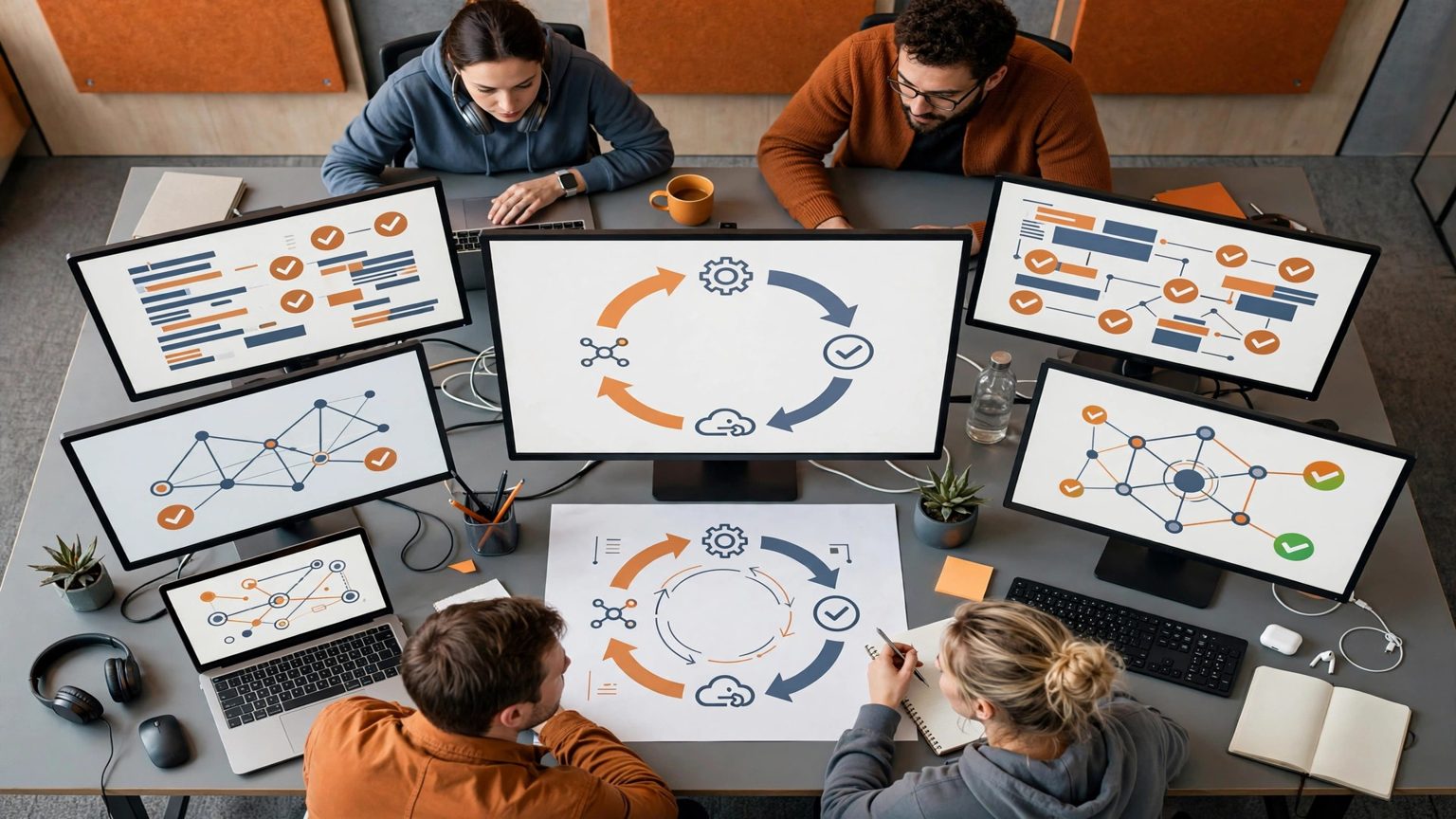
The run took place in August and September 2026 on 16,000 GB200 GPUs over 38 days, at an average model FLOPs utilization of 21% and a goodput of 89%. Three choices carried it: scaling ladders with source scaling, which use small runs to forecast large ones; mixture-of-experts in every layer, with dropless routing lifting expert-layer utilization from 24% to 35%; and the Muon optimizer in place of the usual AdamW. Microsoft stresses that the training data is organic data under its own provenance, with no distillation from other models.
Why Microsoft is building its own pipeline
MAI-Base-2 is now in post-training, and no user-facing release or full results are out yet. The commercial path Microsoft describes is licensing the weights to trusted partners through Foundry. For customers, the pitch is not just parameter count: it is traceable data provenance and training and serving infrastructure tuned by the same owner. In other words, Microsoft wants to hold not only the distribution channel but the production process of frontier models themselves. The open question is whether the post-trained version can turn this pre-training efficiency into real task performance.