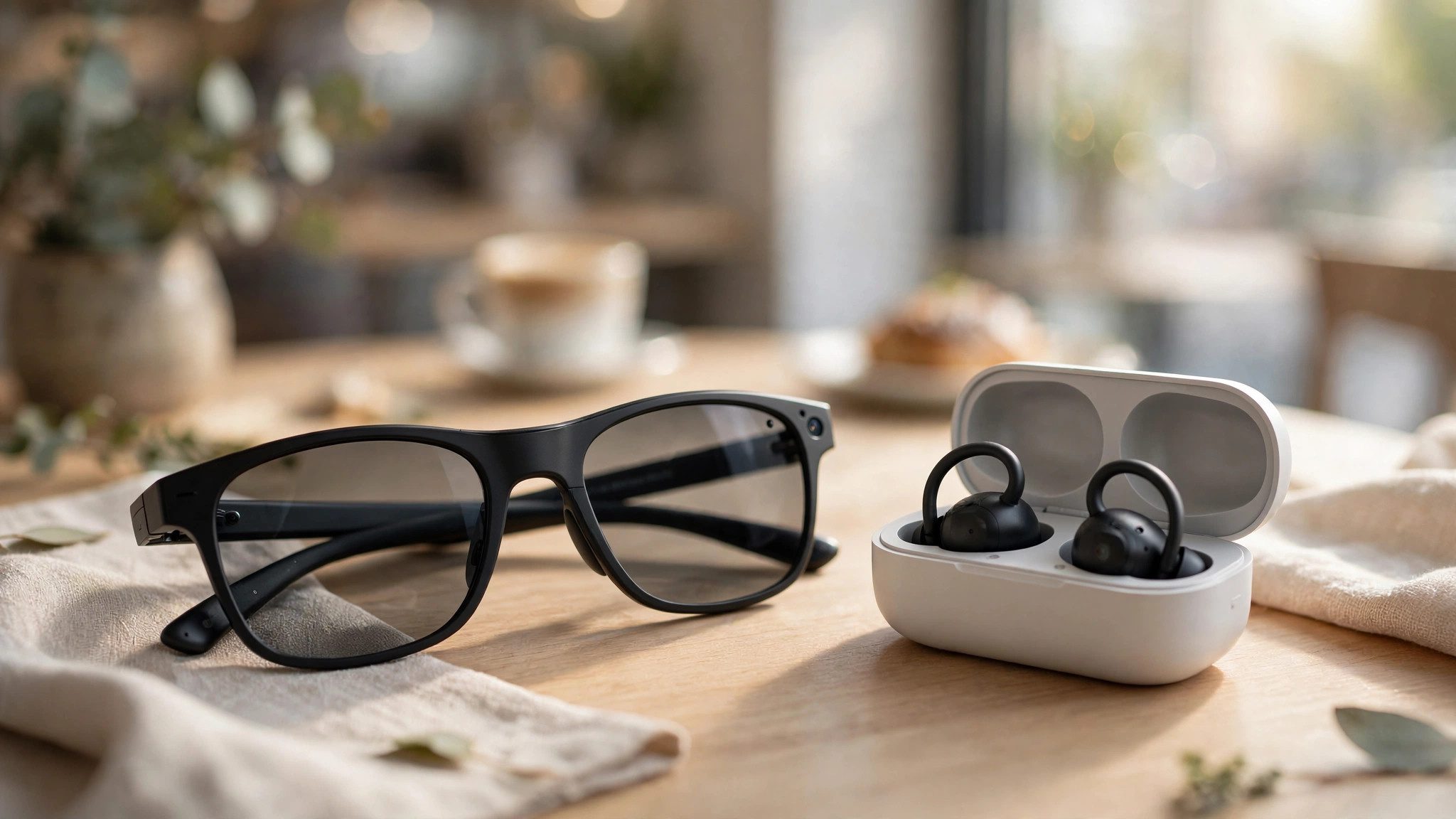
Qwen's AI glasses N1 and N1 Pro, together with a clip-style AI earphone, officially got their prices and went on sale on October 13, 2026, across Tmall, JD and Douyin. The trio had been shown at the Apsara Conference on September 22; what is new is pricing and availability. After national subsidies and launch offers, the glasses start at ¥2,218 and the earphones at ¥1,099. Song Gang, a vice president of Alibaba's Qwen unit, positions the hardware as the physical-world extension of a Personal Agent — and the pitch has indeed shifted from specifications to sensing and getting things done.
The gap between the two glasses is two sets of sensors
Both the N1 and N1 Pro carry a 50-megapixel imaging system with 4K video, stabilization and live photos, plus low-power ambient sensing and on-device visual understanding: with the user's permission, they can proactively offer travel reminders, translation and meeting notes, and take voice-assigned tasks. Both use swappable temple batteries, rated at 9 hours for the N1 and 8 hours for the Pro. What the Pro adds is sensors. Eye tracking can tell which dish on a menu you are looking at before translating it; health monitoring measures heart rate, blood oxygen and skin temperature, and can nudge cyclists to adjust their breathing; iris verification, built with Ant Group's GPASS, lets you look at a payment code, nod to confirm, and pay via Alipay. Note that the AI-organized health readouts are not a medical diagnosis.
The earphones take translation and listening notes
The clip-style earphones, launched jointly with Bose and tuned with Bose's acoustic input, use an open design. They support AI translation in 89 languages and recording transcription with meeting notes across 92 languages, and can hand tasks — gathering material, drafting a report, preparing a daily briefing — to the Qwen assistant by voice, with a notification when done. They are IP55-rated, connect to two devices, charge wirelessly, and run about 9 hours per charge or up to 40 hours with the case. The division of labor is deliberate: eyes watch the world, ears listen and remember.
¥2,218 is the subsidized price — check the list price
The prices need unpacking: the N1 standard set lists at ¥2,899 and the N1 Pro at ¥3,399; the ¥2,218 and ¥2,600 figures depend on subsidy eligibility and limited-time offers, while the earphones start at ¥1,099. The market backdrop is unforgiving: according to IDC figures cited by Yicai, China's smart-glasses shipments fell 8.0% year on year to 611,000 units in the second quarter of 2026, the category's first decline. Qwen's bet is that connecting glasses to an agent turns a novelty into a daily habit. Iris payment and health tracking are reasons to keep wearing them, but whether the ecosystem integration and proactive services actually work will only be clear after real users have worn them for a while.