DXC's partnership with LangChain was announced on October 13, 2026, in an official DXC press release: DXC's intelligent operations platform OASIS will be built more deeply on LangChain's stack, with the goal of pushing governed AI agents into mission-critical IT environments in regulated industries. OASIS is already in production and is scaling toward 125 customer environments across multiple countries and regions; what this deal adds is the toolchain for developing, evaluating and observing agents.
Start with the numbers from production
DXC's reported results come from more than 500 measured production use cases: OASIS has cut resolution time by 95% on average, with diagnostic accuracy of 92% or better when validated against senior engineer judgment. The per-scenario gaps are starker. Filesystem incidents that took 53 to 90 minutes now take 3 to 6 minutes; database performance problems went from 2 to 3 hours to 5 to 12 minutes; complex problem management that previously required 2 to 6 days has been compressed to 8 to 10 minutes. These figures are DXC's own and have not been independently verified, but they show agent-based operations leaving the demo stage and entering production work billed by the minute.
What exactly this partnership adds
OASIS was already built on LangGraph, LangChain's open-source framework, using its delegation, state management and human-in-the-loop workflows to orchestrate agents. The new piece is a LangSmith licence, covering agent development, evaluation and observability. The two companies also published a technical white paper the same day, devoted to the governance framework for agents in mission-critical IT operations. In short, DXC is not just buying an orchestration framework; it is buying the layer that lets you inspect, stop and assign responsibility when something goes wrong.
Why governance is placed ahead of speed
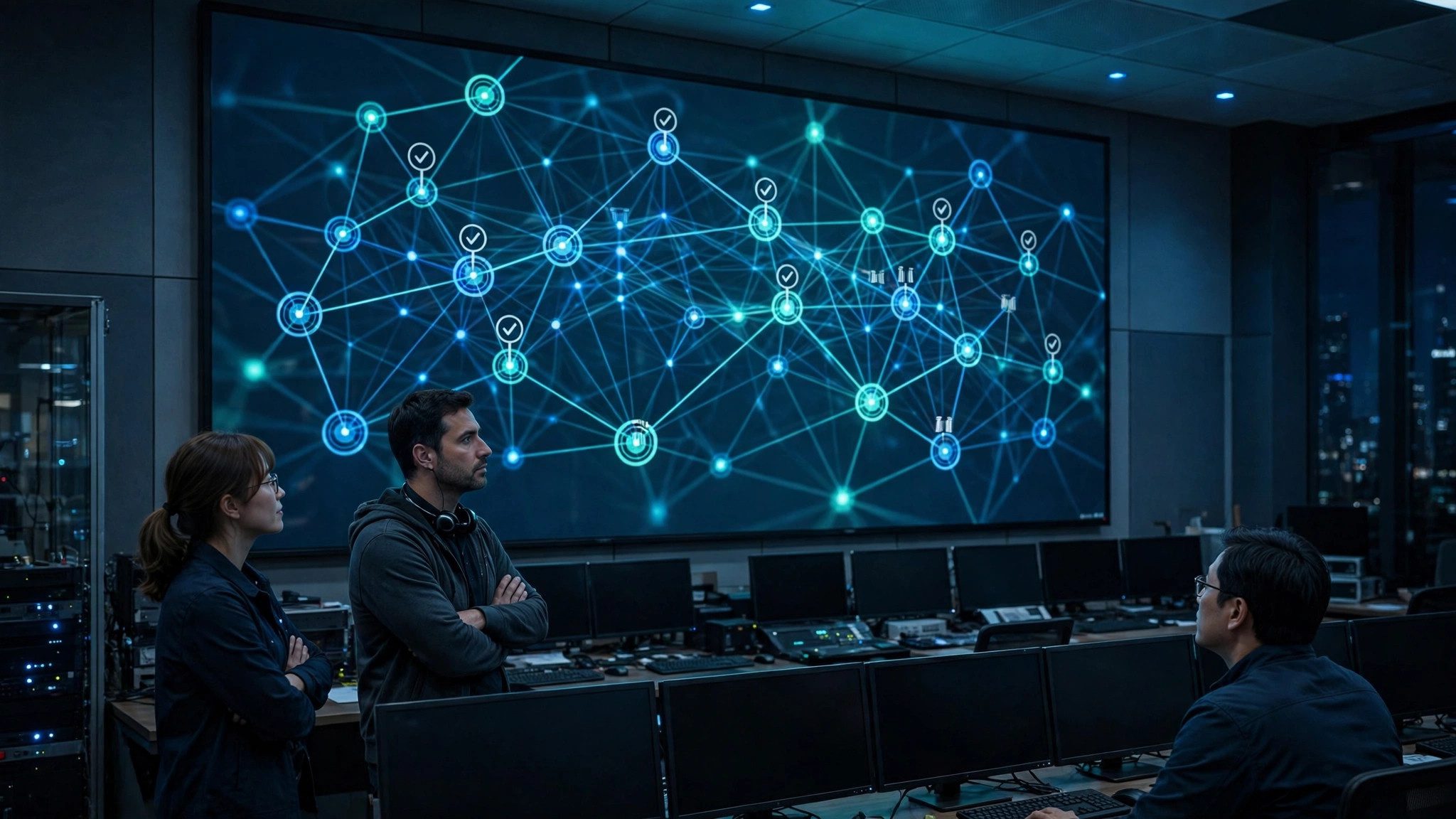
According to the announcement, OASIS agents act only within defined authority: each action is assessed by reversibility, impact, verifiability and the agent's track record, sensitive actions can be paused for human approval before execution, and agent decisions, tool calls and outcomes are traced end to end. The platform is model-agnostic, letting customers pick models per workload by quality, cost, latency and privacy, and deployments can span public cloud, private cloud, dedicated and sovereign environments, with customers retaining control of their data and workflows. This is the same thread as Anthropic teaming up with HCLTech to bring Claude into enterprises, covered earlier on this site: enterprise agent competition is shifting from "can it do the task" to "who is accountable when it fails, and how do you stop it". Whether OASIS renews and truly reaches those 125 environments is the hard metric that will test this governance story.