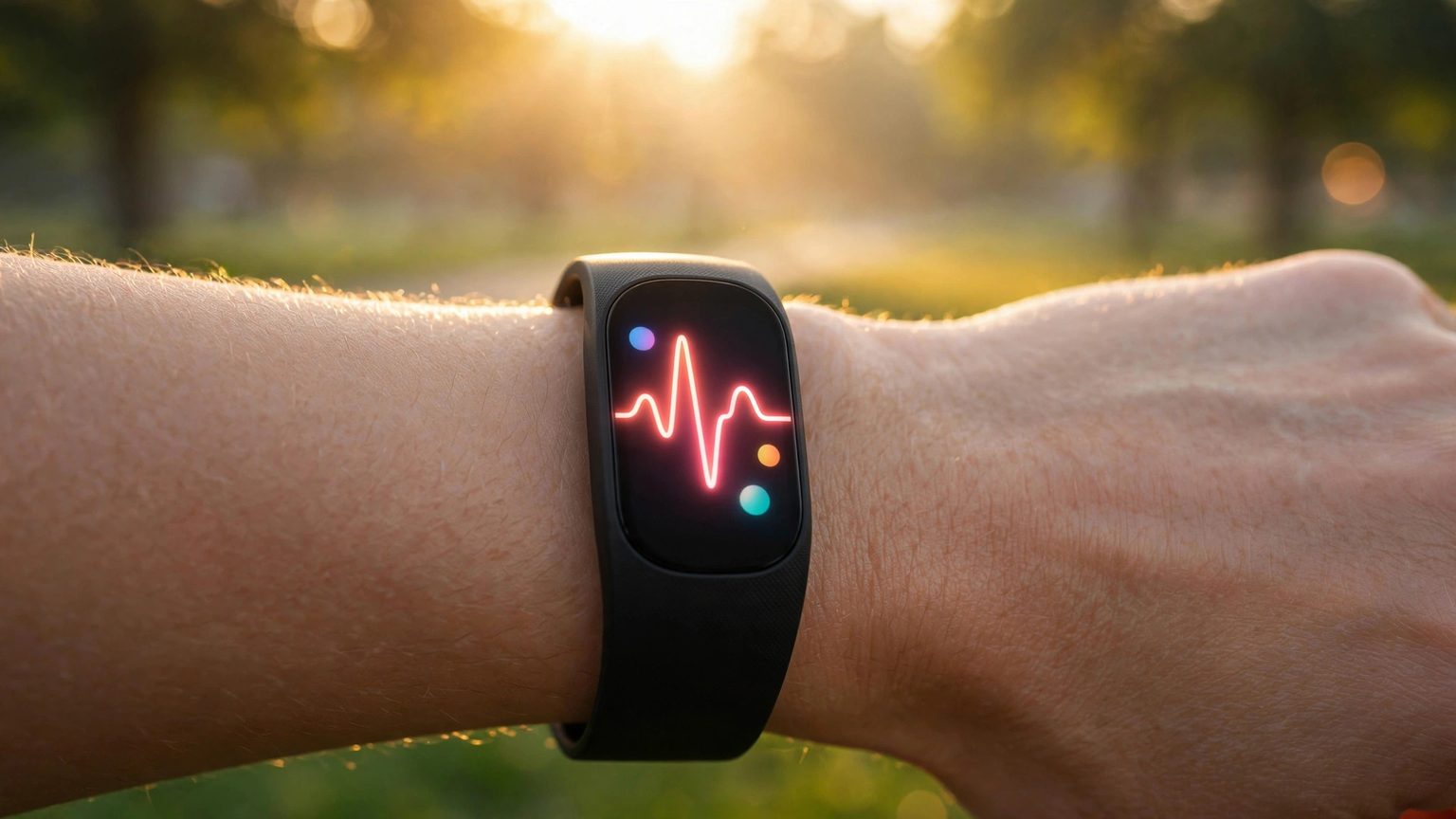
Fitbit Edge was formally announced by Google on October 12, 2026, with preorders opening the same day. The standard edition costs $179.99 and the Stephen Curry Special Edition $219.99, with retail availability on October 27. It fills the middle slot in Google's wearable lineup: more capable than the screenless Fitbit Air, cheaper than the Pixel Watch, and built around a larger display, built-in GPS, and up to seven days of battery life. The real novelty sits at both ends of the product — a Gemini-powered health coach outside the band, and a battery the user can replace.
Subtraction on the body, addition in the sensors
The Edge is 11.5mm thick and weighs 17.7 grams, with a recycled aluminum case, a physical side button, and a 1.34-inch always-on OLED display that Google says offers 46% more viewing area than earlier models. Built-in GPS is claimed to be up to 40% more accurate than the previous generation, and an altimeter handles elevation. More than 50 exercise modes are supported, and the tracker can automatically recognize and log up to 100 activities. The health sensor set is generous: ECG, blood oxygen, skin temperature, continuous heart rate, and irregular rhythm notifications, in a body rated 5ATM and IP68. But it runs Fitbit OS rather than Wear OS, has no NFC payments, and has neither a microphone nor a speaker, so voice interaction simply does not happen on this device. Google has deliberately made it a focused health recorder, not a shrunken smartwatch.
The AI coach is not in the band; it is in the subscription
The Google Health Coach paired with the Edge is powered by Gemini, but it runs in the Google Health app, not on the tracker itself. The coach can draw on a user's fitness and health information to build weekly training plans, adjust them as schedules change, and offer daily exercise and recovery suggestions. Arriving in the same rollout, Health Guardian watches for significant changes in health measurements, including trend indicators related to blood pressure and insulin resistance — a capability first shown on the Pixel Watch 5 that now extends to the Edge, the Fitbit Air, and the Pixel Watch line. The condition is stated plainly: the coach requires a Google Health Premium subscription, the purchase includes only a three-month trial, and basic statistics remain free to view. In other words, the $179.99 buys the hardware that collects the data; the intelligence that interprets the data is billed monthly.
A replaceable battery is the differentiator — and the old question returns
The Edge is Fitbit's first repairable design, with a user-replaceable battery rated for up to seven days per charge, about two days with the always-on display, a five-minute top-up good for roughly a day, and a full charge in about 90 minutes. It replaces the Charge 6, which Google is phasing out, and it competes with screenless bands from Whoop and Oura as much as with the Apple Watch. A replaceable battery answers the most mundane form of wearable decay — the whole device becoming e-waste when the cell ages — which matters for a health device meant to be worn for years. The other side of the ledger is just as clear: while the hardware moves back toward durability and battery life, the AI value is locked behind a subscription, and some health-trend features will depend on regional regulatory approvals rather than launching everywhere at once. The purchase therefore splits into two separate judgments. Whether the band itself is worth $179.99 can be decided on its screen, GPS, and battery. Whether the Gemini coach deserves a monthly fee can only be decided during the trial, by whether its plans understand your body better than a generic template does — a question no launch specification can answer for you.