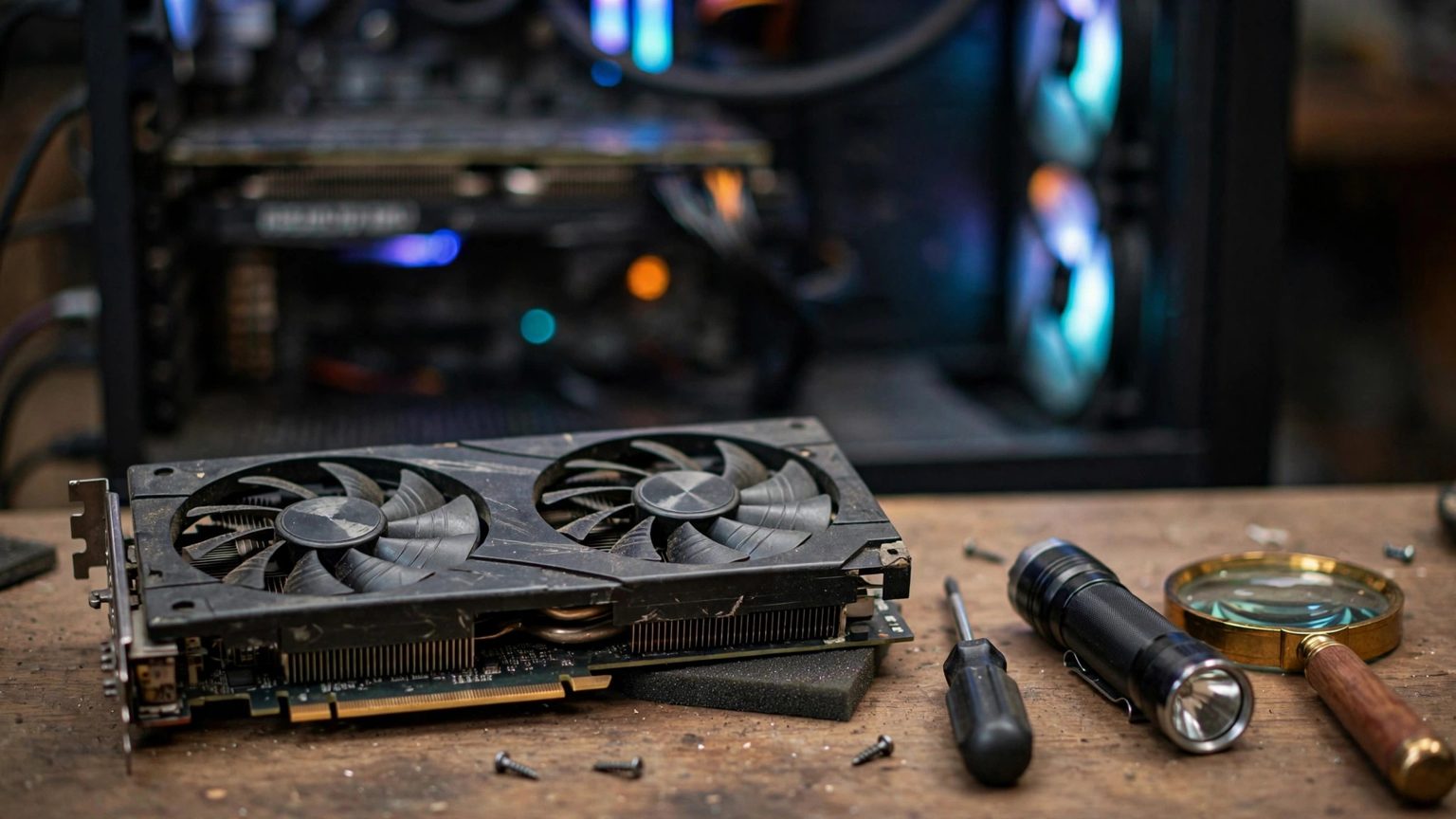
Used graphics cards are hard to avoid for anyone running large models locally: for the same money, the used market usually offers one tier more VRAM, and VRAM is exactly what decides how big a model you can run. But these deals come with no warranty and condition judged from a seller's description — a bargain and a trap are often one inspection apart. Here is the breakdown: where the value is, where the pitfalls are, and how to inspect.
The one real selling point: VRAM per dollar
Local inference is a VRAM-hungry workload. Take the typical used favorite, the RTX 3090: its 24GB holds an entire 32B model at 4-bit quantization on one card, while new cards at a similar price usually offer 12GB to 16GB — enough only for smaller models, or for offloading part of the computation to system memory at a clear speed cost. For the hard question "does the model fit at all", used former flagships still have no new equivalent. Sort your needs by VRAM first:
| Goal | VRAM bar | Common used pick | Note |
|---|---|---|---|
| Run 7B–14B quantized models | 12GB | RTX 3060 12GB | New cards cover this too; the used advantage is small |
| Run a 32B quantized model | 24GB | RTX 3090 | The sweet spot of used value |
| Run a 70B quantized model | 48GB (dual card) | Two RTX 3090s | Power supply, motherboard slots, and heat all need recalculating |
Count the entry costs first
A 3090-class card draws around 350W — an old power supply may not cope, and case cooling must keep up; the card is long and thick, and small cases simply do not fit it. Running inference at full load for months wears fans and power delivery more relentlessly than gaming, and noise plus electricity are ongoing costs. Older cards also lack the newest video codecs and some modern features, so lower your expectations if it must double for editing and new games.
The downsides, stated plainly
The biggest risk is ex-mining and refurbished cards: after long full-load mining, the aging of VRAM and power stages is hard for a layperson to see, and a seller's "personal use only" is unfalsifiable. Second is the missing warranty: the risk that a new card's three-year warranty covers should be priced into the discount — if the used price is only twenty percent below new, the deal is not good. Third is resale: the pool of next buyers for old flagships keeps shrinking, so buying in is easy and selling out may not be.
Who should buy, and how to inspect
Players who know they need the 24GB tier, understand hardware, and can tolerate tinkering still get real value from a used 3090-class card. Complete beginners, anyone who dreads after-sales trouble, and people who merely want to try local models should skip the used market and buy a new card with enough VRAM instead — it is simply less worry.
Inspection comes down to four things: ask the seller for a continuous stress-test video showing temperature and VRAM usage; check the production date and whether warranty seals are intact; when it arrives, run a full VRAM test tool to scan for errors; and keep the transaction on a platform channel with inspection and return protection, never paying off-platform. These four steps cut the risk a lot — but not to zero, which is exactly what the used discount is paying for.