
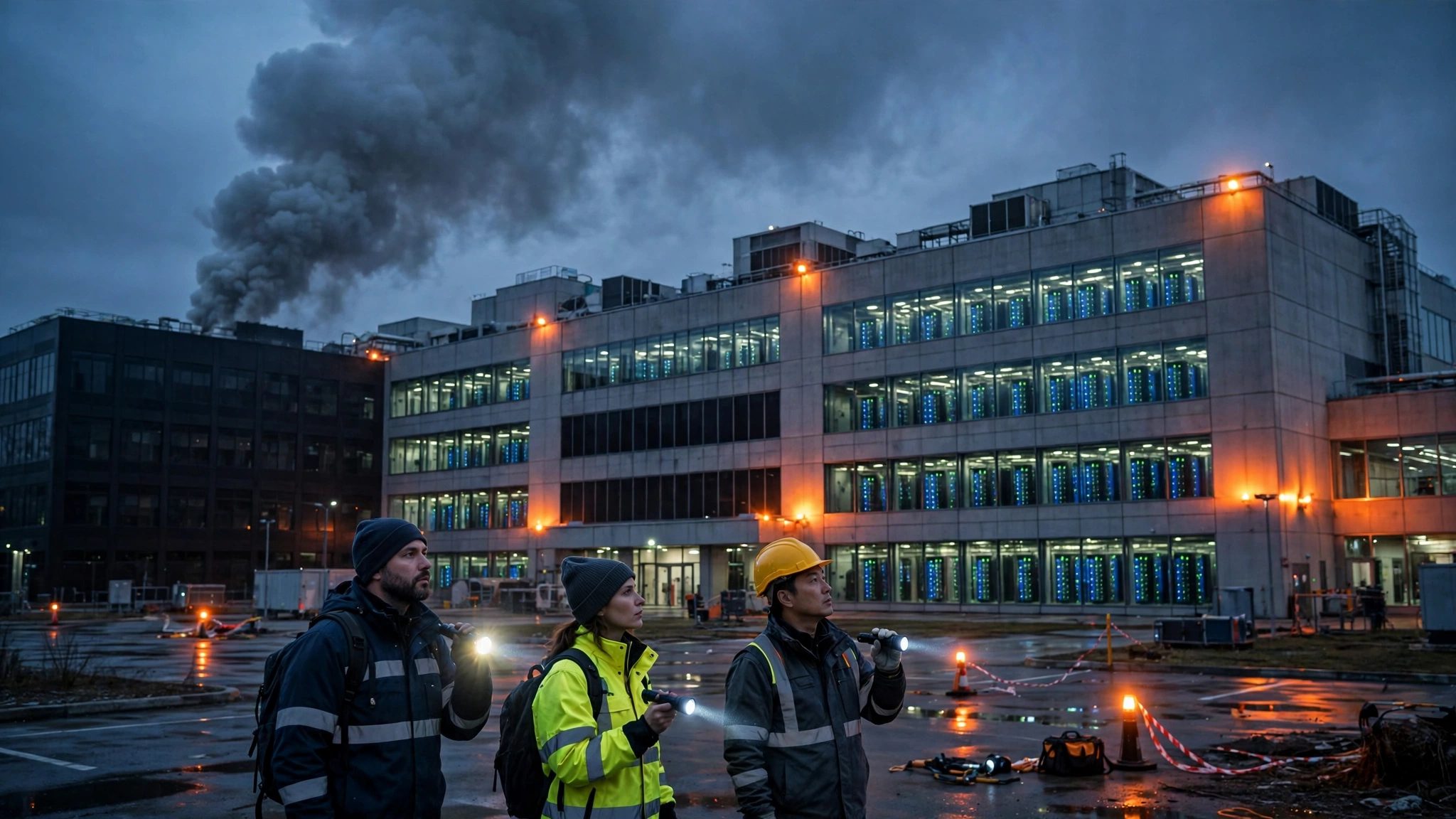
Yandex confirmed on October 9, 2026, that a drone attack had completely disabled several modules at its data centre in Russia's Kaluga region, the second of the Russian technology and AI company's data centres to be hit in two days. The company said no one was injured and that some services may be disrupted. The site is southwest of Moscow.
The first site to go down housed the AI supercomputers
A day earlier, on October 8, a Ukrainian drone hit Yandex's data centre in Sasovo, in the Ryazan region, starting a fire and forcing operations there to a halt. That campus holds tens of thousands of servers and is one of the company's five large data centres. More critically, two of the three supercomputers Yandex uses to develop its AI model are housed there. The company said at the time that its core consumer services were unaffected, but that it was still assessing the damage and could not confirm whether the equipment could be restored. Its cloud service warned of power problems in one availability zone and advised customers to use others. Ukrainian defence firm Firepoint said it carried out the Kaluga strike with its FP-1 one-way attack drones and described the target as Yandex's biggest data centre. Ukrainian President Volodymyr Zelenskiy said on October 8 that the strikes were a mirror response, noting that Russia has been hitting data centres and telecommunications infrastructure inside Ukraine, including in central Kyiv, over the past month.
Data centres have moved from backstage to the target list
Read together, what changed is not the size of any single loss but the type of target. Drone campaigns by both sides this year have spread from energy sites, refineries, ports, and e-commerce warehouses to data centres. Yandex services are used daily by millions of people for navigation, music, video, and food ordering, and its cloud carries many businesses; at least one startup founder told reporters his app's users had been cut off since Thursday because its backup database in Yandex Cloud was unreachable. For the AI industry, the episode pushes a term that usually lives in disaster-recovery documents into the open: physical risk. The supercomputers that train models and the cloud zones that serve inference sit in a handful of campuses. Multi-region deployment, backups outside a single provider, and never keeping the only copy of critical data in one place used to read as compliance chores. They now decide whether a service survives at all.
What Yandex has to answer next is whether the Sasovo equipment can be repaired, how long the Kaluga modules take to bring back, and whether customers start moving workloads elsewhere. It is the same bill every AI company that concentrates compute in one country and a few campuses will eventually face: the efficiency of concentrated compute and the survivability of dispersed compute are hard to maximize at the same time.