
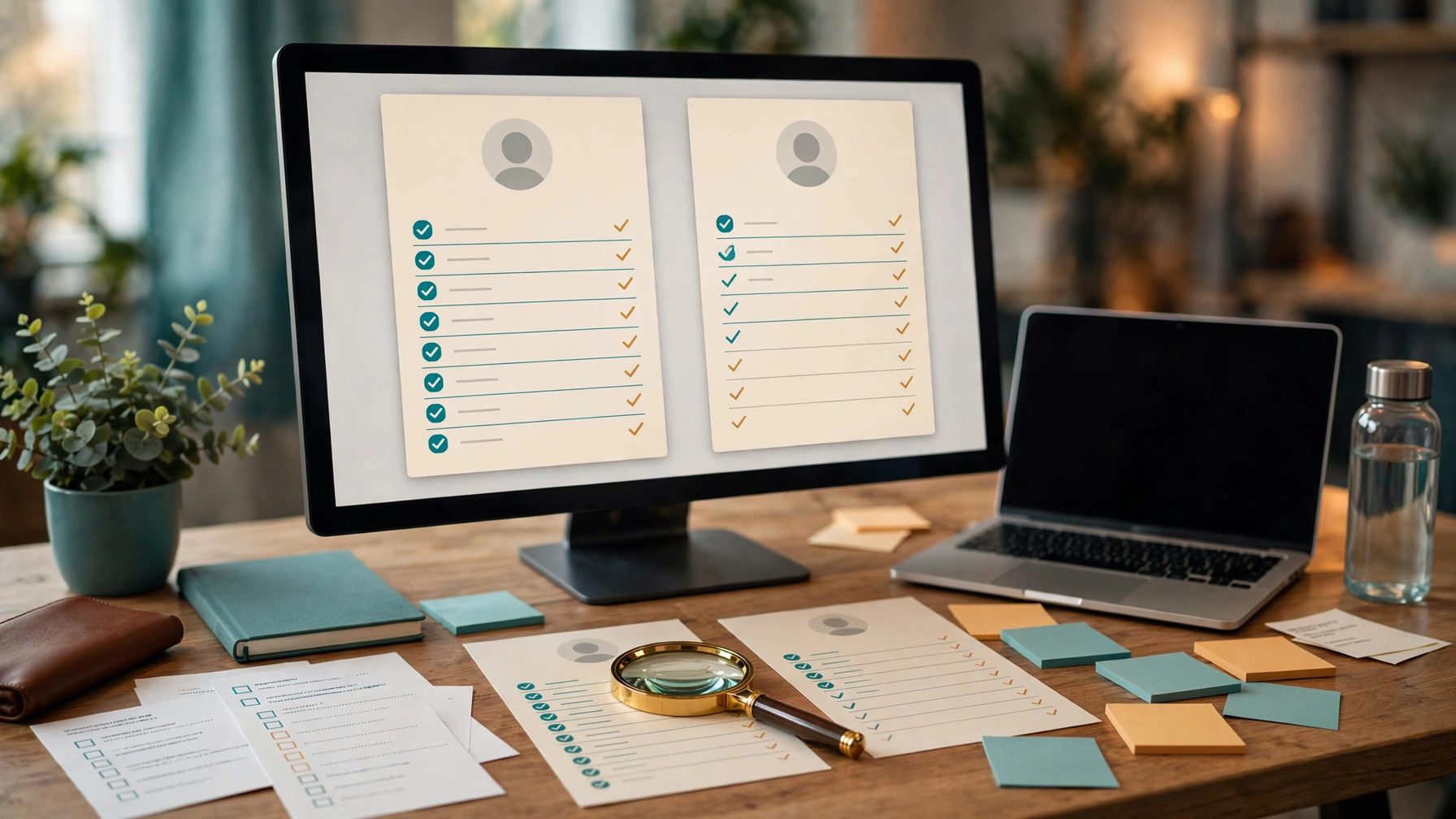
A competitor analysis prompt fixes not an inability to analyse, but the pile-up problem: you have read the rival's website, screenshotted the pricing page, and scrolled dozens of reviews, yet when it is time to report, all that remains is "they are doing quite well". The prompt below locks the sources first, then forces a fixed delivery order: an item-by-item comparison table, a list split into "copyable" and "not copyable", and three moves you can land within 30 days. Paste in the material and it runs; no framework study required beforehand.
Most people simply ask an AI to "analyse rival X" and get back four filled boxes — positioning, strengths, weaknesses, opportunities — that look complete but never touch the actual material in hand. Worse, it fills gaps from memory: last year's price, a feature it guessed. Take that "analysis" into a meeting and the first follow-up question exposes it. The biggest risk in competitor analysis is not having no view; it is having views with no source.
The prompt (copy and use)
You are a senior product strategy analyst who does competitor analysis from public material only. Follow these five steps strictly and never skip one:
1. Use only the material I give you: cite only facts that appear in the material below. Where the material says nothing, write "not stated in the material". Never fill gaps from your own memory, and never guess at prices, features, or user numbers.
2. Comparison table first: compare us and the rival item by item in a table — one-line positioning, core features, pricing model and prices, target users, what users praise most, what users complain about most. After each item, note which document it came from.
3. Then split copyable from not copyable: divide what the rival does well into "directly copyable" and "not copyable". For anything not copyable, state the barrier — brand, channel, budget, or accumulated data. Never turn a not-copyable item into a recommended action.
4. Three moves landable in 30 days: based on the table, give us three actions, sorted by cost of change from low to high. For each, state what changes, which gap it closes, and which metric verifies whether it worked.
5. Finish with a verify list: list separately any claims that contradict each other across documents, are clearly outdated, or rest on a single source, and flag them for manual checking. Do not write them into the conclusions above.

Our product: [one line — what it does and who it is for]
Rival material: [paste website copy, pricing-page text, help docs, and verbatim user reviews; leave a blank line between different sources]
Target users: [e.g. teams of under ten people / students preparing for exams]
Purpose of this analysis: [e.g. input for next version's planning / a one-page comparison for a manager / deciding whether to match a feature]
How to swap the variables
| Variable | What to put in | Example |
|---|---|---|
| [our product] | A one-line positioning, not a whole landing page | "Expense approval tool for small teams" tells it to watch approval speed, not feature counts in the abstract |
| [rival material] | Original text first: pricing pages, help docs, verbatim reviews | Paste the pricing page itself, not your paraphrase "roughly tens per month"; numbers in the original are what let the table carry numbers |
| [target users] | Who this comparison actually serves | The same rival yields two different conclusions for students versus enterprises; leave users blank and you get the average answer |
| [purpose] | What decision this analysis feeds | Planning input tilts actions toward product changes; a comparison page tilts output toward differences users can understand |
Follow-ups that actually improve the result
Run one rival at a time. Two rivals in one round blur the table; finish one, switch to the next, then ask it to merge the tables into a one-page overview. If the rival has hundreds of reviews, first run them through the user feedback prompt that classifies, counts, and ranks hundreds of reviews in one pass and paste only the frequent complaints into the material field — far more accurate than dumping the whole pile in. When following up, never ask it to "go deeper"; point at one table row and say "show me the exact source sentence for this item". A row with no source sentence gets treated as "not stated in the material".
Three cases where you should not report its conclusions as-is
Prices and features move fastest: before any price, plan, or feature list from the table goes into a report or a public page, re-check it on the rival's live pages — the AI only had the material as of the moment you pasted it. Review samples are biased: people who write reviews tend to be delighted or furious, so treat complaints as leads, not as proof that "all users think this". Finally, if it still invents figures the material never contained, do not use that round; go back to step 1 of the prompt, emphasise the use-only-my-material rule, and rerun. If it invents numbers two rounds in a row, the material itself is too thin, and the missing items can only be filled by manual checking.
Write "use only the given material, table first, then split copyable from not copyable" firmly into the prompt, and the AI stops handing back four generic boxes and delivers a table you can take into a meeting, with a source behind every row. Switching rivals means changing only the material and purpose fields.