
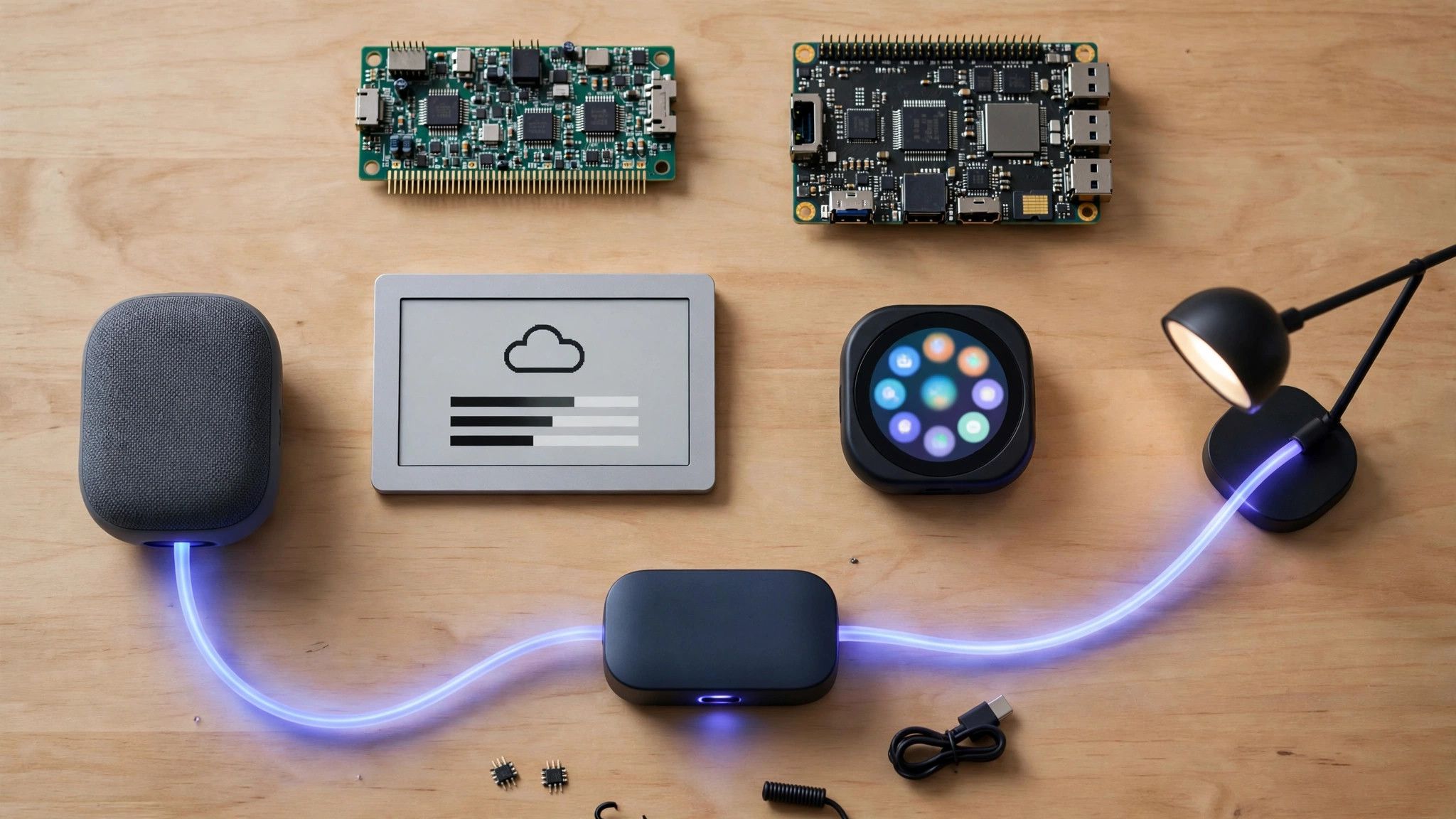
Muse Gadgets is an open-source project Meta launched on October 2, 2026, with the official site gadgets.muse.ai going live alongside the release. What Meta handed over was not a finished piece of hardware, but two open-source device software development kits: the ESP32 Device SDK and the Linux Device SDK, together with firmware, published on GitHub under the Apache 2.0 license and provided as is, without warranty. After claiming an SDK token, developers can use an ESP32 development board, or a Linux device such as a Raspberry Pi, to connect a Muse agent to displays, buttons, sensors, actuators and audio input and output, and there is a Discord community for discussion.
What the official examples are trying to connect
The official examples include a Raspberry Pi 5 connected to Home Assistant; a Waveshare ESP32-S3 round AMOLED touchscreen that supports press-to-talk and has a speaker and microphone; a Seeed reTerminal E1002 color e-ink display used for morning briefings, reminders and shopping lists; the M5Stack StickS3 as a pocket status screen; AiPi Lite as a desktop companion that talks at the press of a button and shows images on a color screen; the ideaspark 1.9-inch screen, focused on status display; the Home Assistant Voice Preview Edition; and a small stick that plugs into a TV's HDMI port, which is coming soon. Their common thread is giving an agent senses and hands.
Meta built one itself first: Muse Home Link
Meta also built a device of its own, Muse Home Link. Powered over USB-C, it brings Muse onto the home Wi-Fi network and connects it to compatible devices in the home, or to any device that offers a local HTTP interface. With community skills, Muse can turn on lights, control a TV and send documents to a printer. Nat Friedman, head of product at Meta's superintelligence lab, introduced the device in a social media post. Meta made 5,000 units, offered free to Muse subscribers in the United States, one per person, on a first-come, first-served basis, shipping in October; claiming one only reserves a place and is not an order.
The agent starts growing beyond the screen
Muse is Meta's personal AI agent, able to handle tasks such as booking travel, filling in forms and shopping, and it launched in the United States in September 2026. This week, Meta also launched Muse for Small Business and the Meta Enterprise Platform. Gadgets extends the contest from conversation and errands on a screen into the physical world: the agent no longer lives only in phones and computers, and hardware becomes its peripheral. Open-source SDKs and ready-made development boards lower the barrier, so individuals can prototype quickly. But the limits deserve equal clarity: the SDKs are open source, yet getting started still requires a token issued by Meta, so the entry point stays in Meta's hands; and once a cloud agent joins a home local network, the devices and data it can reach multiply, and so does the attack surface. How far people are willing to open things up will decide whether these gadgets remain hobbyist toys or actually enter everyday homes.