
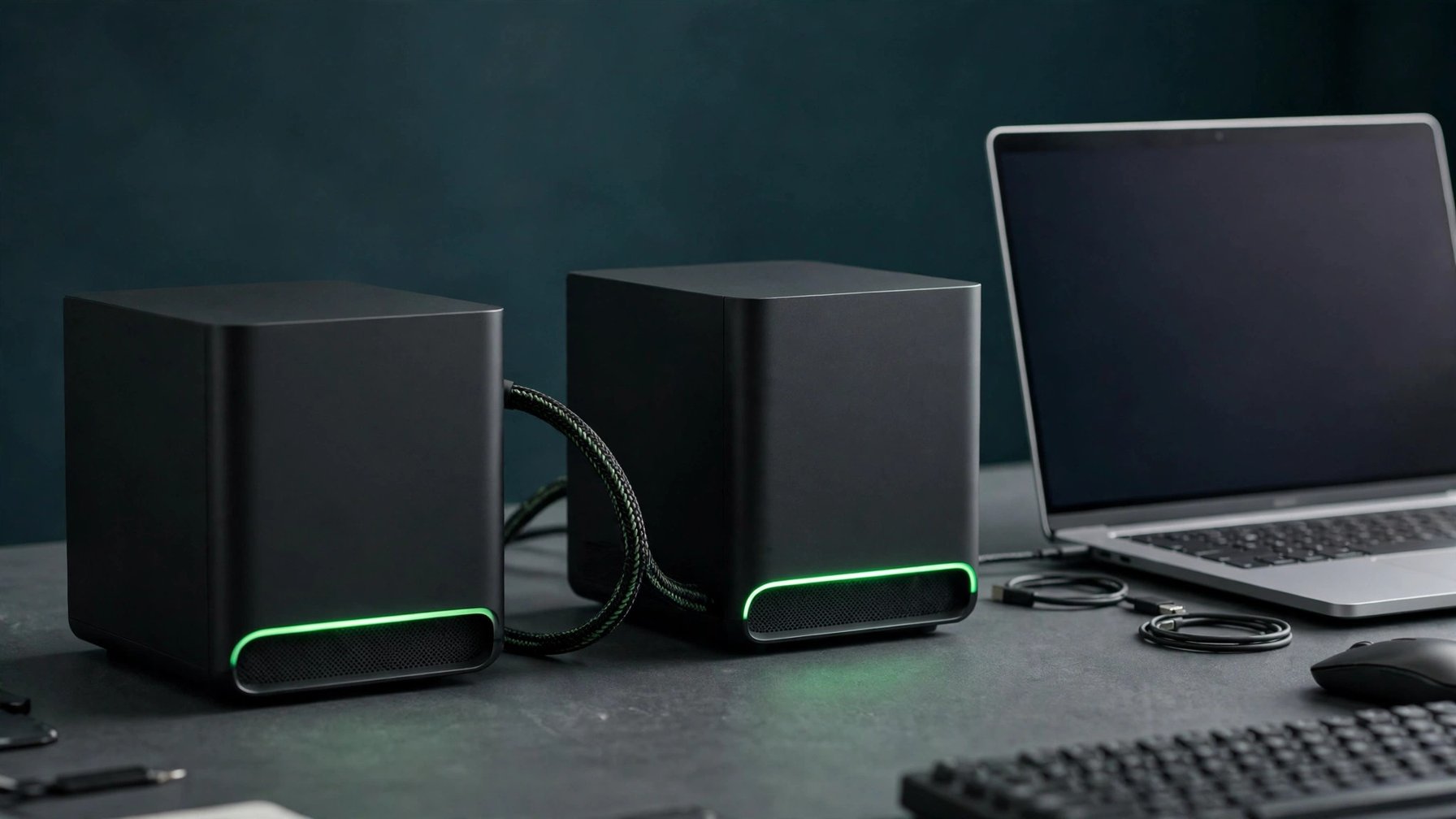
DGX Spark now comes in a new version with 64GB of unified memory, setting the entry price for running large models locally on the desktop at 4999 dollars. On October 2, 2026, NVIDIA announced the new configuration on its official blog, saying the machine will go on sale on October 23 and giving users who want to keep agents on their own devices a cheaper option.
Same hardware, just half the memory
The new version uses the same GB10 Grace Blackwell superchip as the 128GB model, runs the same DGX OS, and ships with the full NVIDIA AI software stack. The only difference is the unified memory: the 64GB version will be sold only through partners — Acer, ASUS, Dell, Gigabyte, HP and MSI — starting at 4999 dollars, with sales beginning on October 23.
With its 64GB of memory, a single machine can run models of up to 100 billion parameters locally, with agents running entirely on the device, privately and without relying on the cloud. For anyone already used to local inference on the desktop, this path will feel familiar: as LM Studio's move to put large models into a desktop app showed in its memory, quantization and model-choice trade-offs showed, what really holds back the experience is often not the interface, but whether there is enough memory to fit the model. That is exactly where the DGX Spark 64GB edition is positioned: get one machine running on its own first, then talk about expanding.
It is ready to use out of the box. The machine comes with the NVIDIA Agent Toolkit, CUDA-X libraries and Nemotron open models preinstalled, and Ollama, vLLM and PyTorch all work directly. A preconfigured Blender installation package is also coming soon. For users who do not want to spend days setting up drivers and frameworks first, this preinstalled combination saves more than installation steps: it also cuts down on common problems such as mismatched versions and conflicting dependencies, so the machine can get to trying models and building agents soon after it is unboxed.
Two machines as a cluster, so buying one first still leaves room to grow
If one machine is not enough, two can be linked into a cluster. The two DGX Spark units connect directly over QSFP cables through their built-in ConnectX-7 network adapters, and NVIDIA Sync Cluster Assistant handles the configuration automatically, with no need to tune the network by hand. Once combined, their memory adds up to 128GB, enough for models of up to 200 billion parameters, with double the memory bandwidth and up to 1.7 times the performance of a single machine. That 1.7x figure, it should be noted, comes from NVIDIA's own official benchmark using Qwen 3.8 27B; real results will depend on the workload.
The supporting tools are catching up, too. Later this month, NVIDIA will release NVIDIA Sync Model Launcher, which lets users download and launch Qwen3.8 27B in a few clicks and can also set up OpenCode automatically, removing the manual work of installing environments and matching parameters. For individual developers, this path of buying one machine first and adding another later is more realistic than stretching for the top configuration from the start.
The 4999-dollar price only makes sense against rising memory prices
To understand this pricing, one piece of background matters. Several media outlets, citing The Register, have reported that the 128GB DGX Spark now sells for around 6950 dollars, up from an original launch price of 3999 dollars, with rising memory prices seen as the main reason. It should be stressed that these price claims come from media reporting, not from NVIDIA itself.
Against that backdrop, the point of the 64GB version becomes clear. Demand for local agents is getting more concrete: many people want an agent that can stay on for long stretches, ready at any time, without handing private data to the cloud. That kind of use is not about peak compute; it is about whether a model can stay resident in memory and run reliably. In short, the bottleneck for this generation of desktop AI machines is memory, not compute. With memory prices rising, making the 128GB version cheaper is not easy, and cutting back to 64GB is NVIDIA's compromise to protect an entry price.
It is not for everyone. If a single machine needs to run a model with more than 100 billion parameters, the 64GB version cannot fit it, leaving the 128GB model, a two-machine cluster or the cloud as the options; if the workload is bursty — idle most of the time, with only the occasional large job — pay-as-you-go cloud services remain better value. Conversely, for work that runs every day, involves sensitive data and needs predictable costs, a DGX Spark 64GB edition sitting on the desk is exactly who this new configuration is trying to reach.