
AI alignment refers to the set of training and evaluation methods that, after pretraining, teach a large language model to respond the way humans expect: honest, harmless, non-fabricating, and refusing dangerous requests. Pretraining only teaches the model "how to talk"; alignment teaches it to "talk well."
Alignment Is Neither Pretraining nor Fine-Tuning
Pretraining: training on massive text corpora so the model learns language patterns and world knowledge — at this stage the model is merely a "text completer."
Fine-tuning (SFT, supervised fine-tuning): teaching the model to "answer in dialogue format" with question-answer pairs, like onboarding training.
Alignment: going one step further after SFT, training the model with human preferences so that, with unchanged capabilities, it makes choices more in line with what humans expect.
An analogy: pretraining produces a student who has read every book; SFT teaches that student how to format exam answers; alignment teaches the student "what to say and what not to say."
The Three Main Alignment Methods: RLHF, RLAIF, and DPO
RLHF (Reinforcement Learning from Human Feedback): humans rank model responses (which is better), a "reward model" is trained to imitate human preferences, and reinforcement learning pushes the model toward higher scores. This was the famous method behind early ChatGPT — effective but expensive, because it needs large-scale human annotation.
RLAIF (Reinforcement Learning from AI Feedback): replacing human raters with AI raters, a stronger model ranks responses according to given principles. Faster and cheaper, but if the rating AI is biased, the bias gets amplified.
DPO (Direct Preference Optimization): no reward model needed. Using contrastive data of "good answer vs. bad answer," the model's parameters are adjusted directly to favor good answers. Simple and efficient — one of the most popular alignment methods in the open-source community today.
What Alignment Cannot Do
≠ Make the model smarter. Alignment adds no knowledge or capability; it only adjusts behavior. A well-aligned model doesn't "know more" than it did after pretraining.
≠ Eliminate hallucinations. The model can still confidently make things up. Alignment reduces the frequency of fabrication but doesn't fix the root problem that "the model can't tell what it actually knows."
≠ A one-time fix. New attack techniques (like prompt injection) can bypass alignment, so it requires continuous maintenance and updates.
Three Common Misconceptions
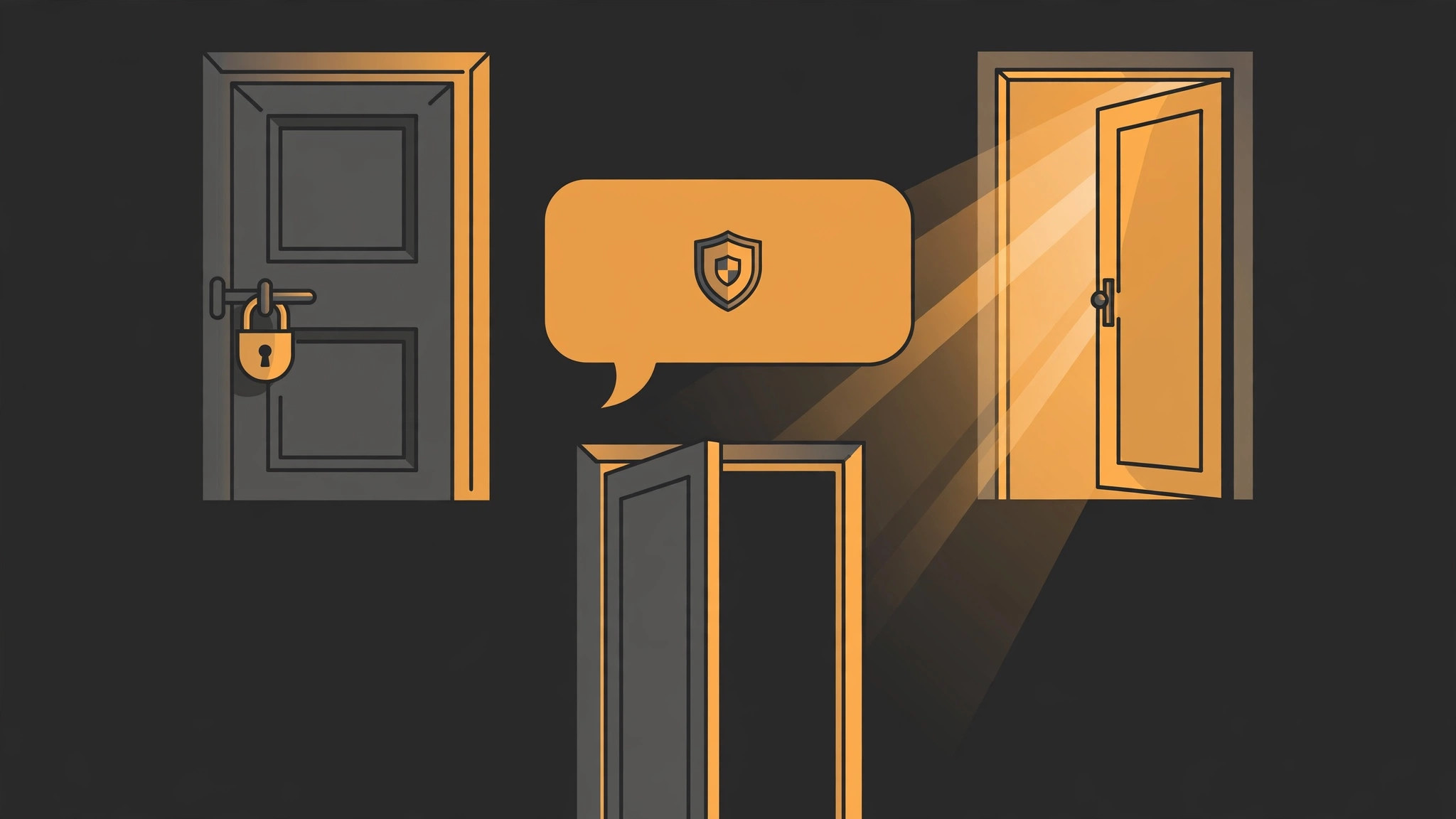
Misconception 1: Alignment is just a blacklist of "things the model may not say." Blacklists are safety guardrails (filtering rules applied at deployment); alignment shapes the model during training — making the model "not want" to say it, rather than "getting blocked after saying it."
Misconception 2: An aligned model is a safe model. Alignment reduces risk but doesn't guarantee safety; adversarial inputs and jailbreak prompts can still get around it.
Misconception 3: Only big companies need alignment. Any scenario that puts a model in front of users needs some form of alignment — the open-source community does it too (for example, fine-tuning open models with DPO).
When You'll Feel Alignment at Work
When you ask "how to make a bomb" and the model politely refuses while offering a safe alternative — that's alignment. When you ask a controversial question and the model presents multiple perspectives instead of taking sides — that's alignment. When the model volunteers "I'm not sure" or "my knowledge is current up to a certain year" in its answers — that's alignment too.
Alignment is inconspicuous, but it determines whether the model you chat with every day is a "handy assistant" or a "talking machine you can't rely on."