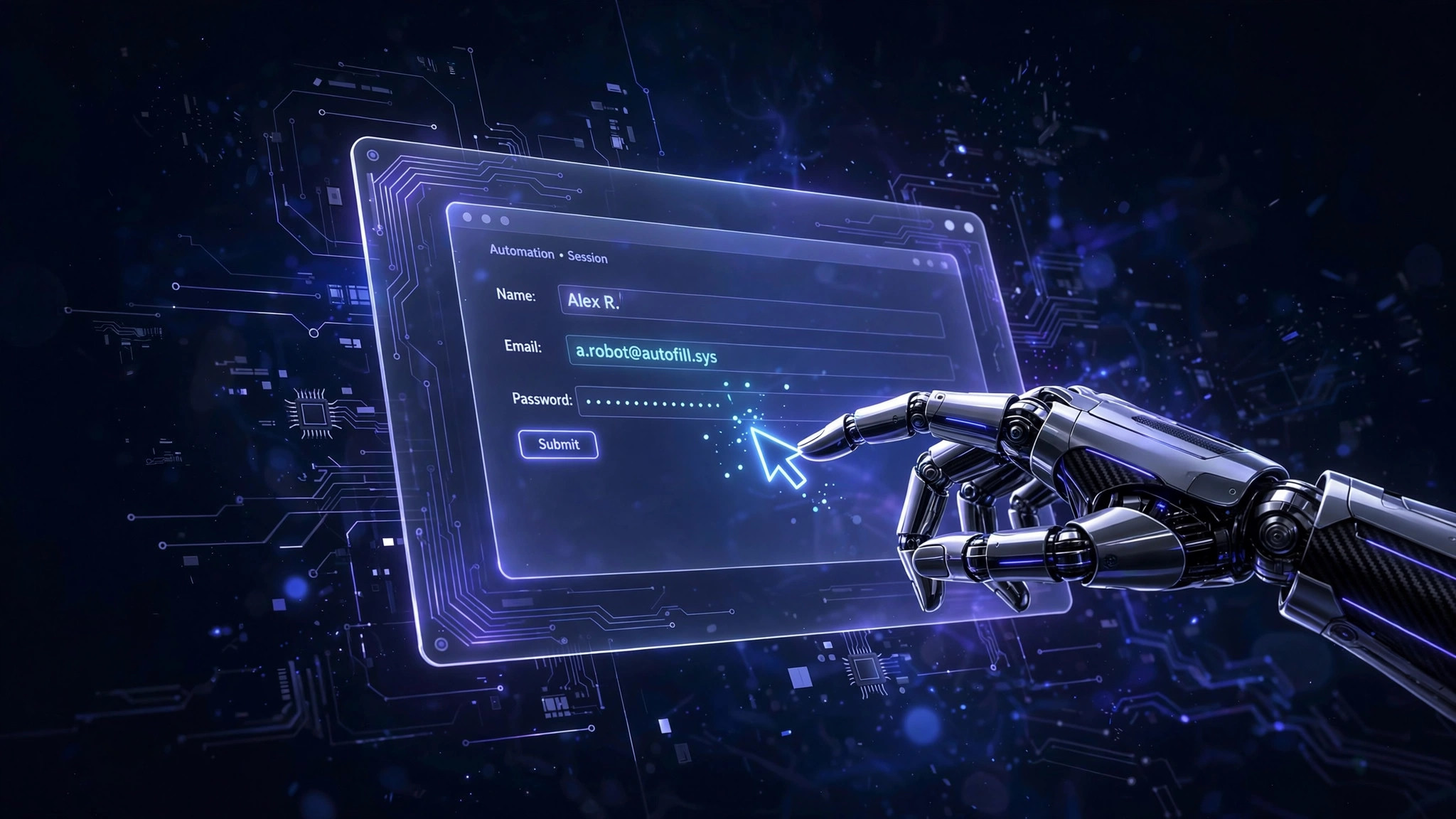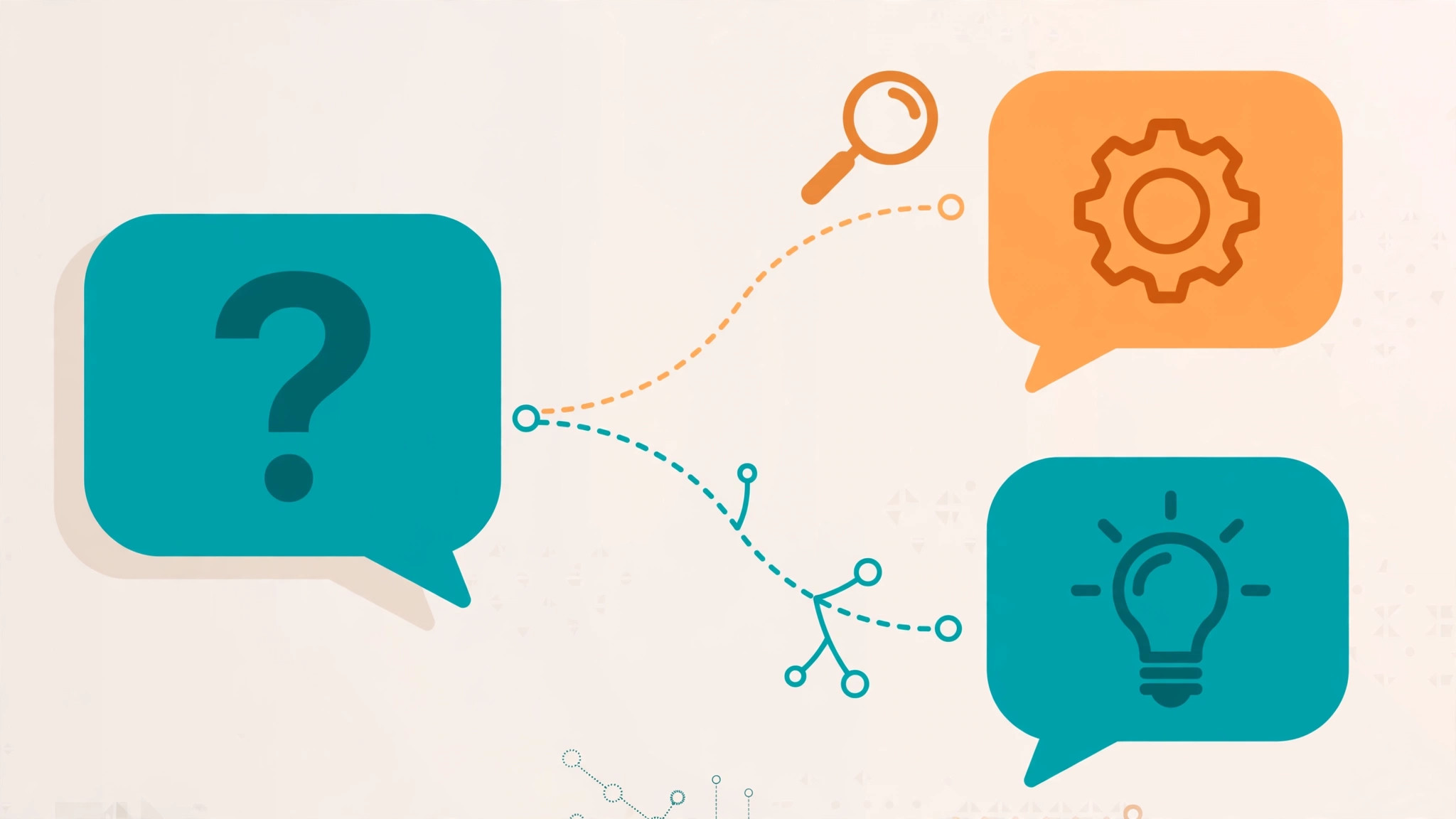
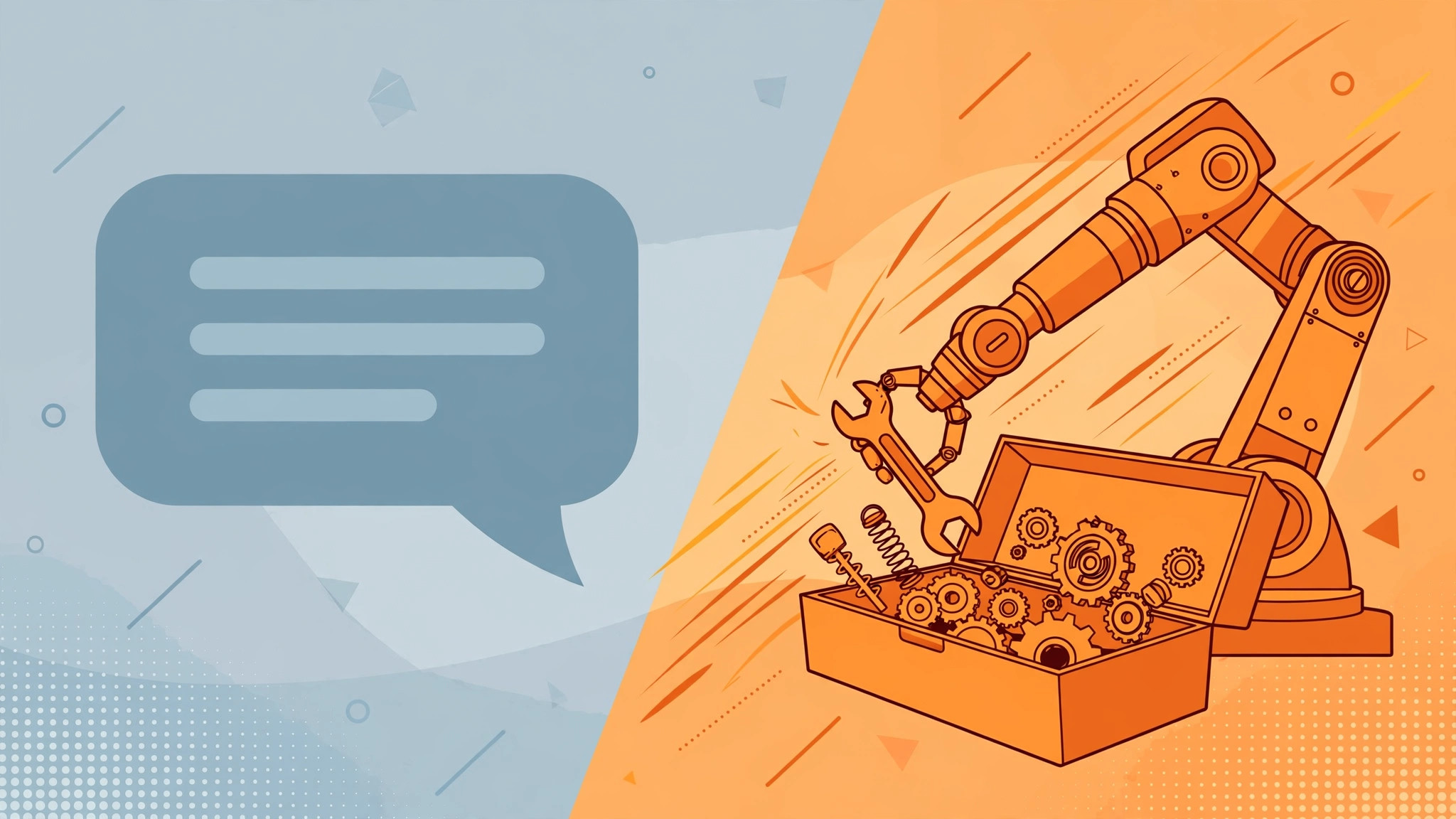
The core difference between AI agents and chatbots comes down to one thing: chatbots only talk to you, while AI agents actually do the work for you. A chatbot answers each message and nothing remains once the conversation ends; an AI agent takes a goal, breaks it down into steps, and calls tools like browsers, files, and APIs to run through a whole multi-step process before handing you the result. So don't look at whether "Agent" is in the product's name — just check whether it can finish the job on its own.
Four Key Differences at a Glance
| Dimension | Chatbot | AI Agent |
|---|---|---|
| Goal | Deliver one conversational reply | Produce a real-world result |
| Capability | Generate text, answer questions | Break down tasks + call tools to execute |
| Interaction | You ask, it answers | You state the goal, it works through it on its own, checking in only at key decision points |
| Failure mode | Gives a wrong answer, hallucinates | Does a wrong step: it might delete a file or spend real money — its mistakes happen for real |
Three Quick Tests: Is What You're Using a Real Agent?
First, give it a task with intermediate steps. For example: "Pull the quotes from this week's three client emails into a spreadsheet and send it to me." If it only lists the steps for you to do yourself, it's a chatbot; a real agent will read the emails, build the spreadsheet, and deliver the file.
Second, see whether it pauses to ask for confirmation. A real agent will ask you before irreversible actions like spending money, deleting files, or sending emails; a chatbot never gets to that point because it never acts.
Third, disconnect and see if it keeps working. A chatbot stops without your next message; a real agent can keep running a long process in the background after you've closed the window.
When Is a Chatbot Enough, and When Do You Need an Agent?
A chatbot is enough when you need writing, translation, looking up facts, or brainstorming ideas — the output is text advice, and you're still the one executing.
An agent is worth it for fixed, repetitive, multi-step work that rarely needs creative judgment. For example: scraping data from a set of websites into a report every morning, organizing invoices by rules, or batch-renaming files.
There's also a cost equation: an agent makes many model and tool calls per run, often costing several to dozens of times more than a simple chat. Don't spin up an agent for something you could finish yourself in five minutes.
Don't Be Fooled: A Chatbot With Web Search Is Still Not an Agent
Many products bolt search or document upload onto a chatbot and then stuff "Agent" into the name. Remember the dividing line: can it use multiple tools in sequence to complete a goal without you directing it sentence by sentence? A chatbot with web access just answers more completely — you still do the work. The hallmark of a real agent is the power to call tools on its own, not a marketing word in its name.