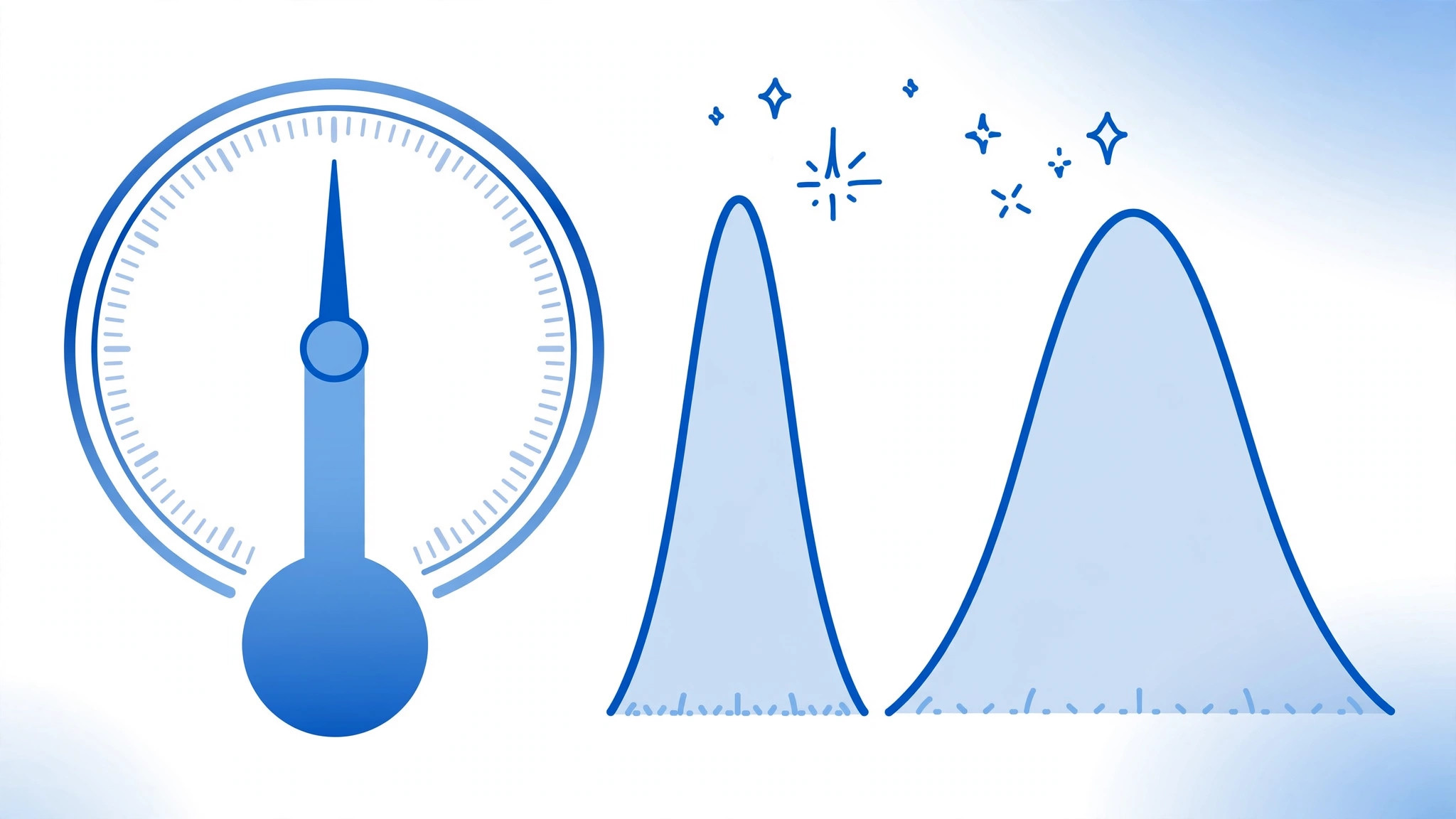

The context window is the upper limit on how many tokens a model can "see" at once: the prompt, the conversation history, retrieved documents, plus the reply the model has already written — all laid out in order in a single sequence. It determines the size of the model's workbench, not how smart it is. A 1M-token window can hold thousands of pages of documents, but that doesn't mean the model can truly make good use of every page.
What's actually inside a context window
A window doesn't hold files — it holds tokens. Prompts, conversation history, retrieved passages, and tool outputs are all sliced into tokens and packed in order into one sequence; the model tells what came first from positional encodings, with no notion of "folders". 1M tokens is roughly 750,000 English words — over a thousand pages of documents. But note: that only means it fits, not that it's remembered.
The hidden bill of the attention mechanism
The model reads this sequence with self-attention: every new token is compared against all previous tokens one by one for relevance, so compute grows quadratically with sequence length — double the length, quadruple the attention compute. The bigger bill is the KV cache: each token's key and value vectors must stay resident in GPU memory during inference to avoid recomputation. Take Llama-3.1-8B: about 128KB of cache per token, so 128K of context needs roughly 16GB of VRAM, and 1M tokens need about 128GB. Doubling the window is never free: it eats VRAM, slows the first-token response, and drives up the price of long-context API calls.
It fits — so why can't the model find it?
Being able to pay the bill doesn't mean using it well. Attention weights are normalized by softmax to a constant sum of 1: the more tokens, the thinner the attention spread across each one. Stanford's 2023 "Lost in the Middle" experiment showed this clearly: put the key fact at the start or end of the context and the model finds it fast and accurately; bury it in the middle and accuracy can drop by more than 20 percentage points — worse than giving no context at all. An even bigger gap hides in how we test: "needle in a haystack" only asks "can you find one sentence", which nearly every model aces; but when NVIDIA's RULER switched to realistic tasks like multi-hop tracing and aggregation, only half of the models claiming 32K support stayed acceptable at 32K — nominal and effective window sizes are often several multiples apart.
Three widespread myths
Myth 1: a bigger window means the model remembers more. The window is a workbench, not a hard drive. A bigger window adds nothing to the "long-term knowledge" in the model's parameters — it just lets the model spread out more material at once. When the conversation ends and the window is cleared, the model "remembers" nothing; cross-conversation memory comes from external memory mechanisms like retrieval-augmented generation.
Myth 2: long context makes RAG obsolete. Dumping an entire knowledge base into the window is expensive and slow: input tokens are billed by volume, and first-token latency plus VRAM usage on ultra-long contexts cost real money. Engineering practice does the opposite — first use semantic retrieval to filter down to the most relevant passages, then read them carefully inside the window; when an answer must be pieced together across documents, there are structured retrieval approaches like GraphRAG. Long windows and retrieval are partners, not rivals.
Myth 3: token count equals effective memory. On tasks that require real reasoning, a model nominally rated at 1M tokens may have an effective length only a fraction of that — "fitting" and "using well" are two different things. Next time you see the number on a model card, ask one more question: at the length my task needs, how much accuracy is left?
How to actually read the window-size number
Start with the task: reading a few contracts or analyzing a code repo, tens of K to 128K is usually enough; for whole-corpus Q&A, the bottleneck is usually retrieval quality rather than the window ceiling. Then check effectiveness: look at long-context benchmarks like RULER or LongBench for real performance at your target length, not just the advertised maximum. Finally, check cost: long-context input tokens cost more per token, and the KV cache limits concurrency — the window isn't better when bigger; the right one is the steadiest performer at the lowest cost within a length that's enough.