On September 23, 2026, Anthropic published a long post titled "Claude discovers a novel enzyme system" in its official newsroom, announcing one of the first early results from its life sciences research group and in-house wet lab: with only high-level direction from its scientists, Claude agents autonomously discovered a novel enzyme system associated with an array of DNA repeats, named ART (array-associated reverse transcriptases). The system's structural features are reminiscent of CRISPR — but Anthropic is careful to stress that its actual function is not yet known.
The facts: roughly 950 agents, 21 hours, 210 million tokens
According to the official announcement, Anthropic gave Claude a single high-level prompt: search a vast database of DNA sequences for interesting new examples of reverse transcriptases (RTs), enzymes that copy RNA into DNA. Human involvement was limited to the initial prompt and the wet-lab work; the database analysis, hypothesis generation, and candidate screening in between were all done by the agents themselves.
The 21-hour search mobilized roughly 950 Claude agents and consumed 210 million tokens. The agents gathered over 200,000 reverse transcriptases, picked out 3,500 new candidate systems, and narrowed them down to the 20 most promising candidates, each accompanied by a human-readable analysis report. For a human expert, analysis at this scale could take weeks to months, Anthropic said.
The turning point came with one of the agents. While examining raw DNA sequences near a gene for an "odd-looking" RT, it spotted a tandem repeat array and logged, in amazement: "I can see by eye a tandem repeat array … that's a CRISPR-like … repeat array?!" It then proceeded much like a human scientist — counting the repeats, measuring their spacing, comparing the layout with known RT systems, and searching the literature to confirm that no one had reported the pattern before — and filed its report for human review.
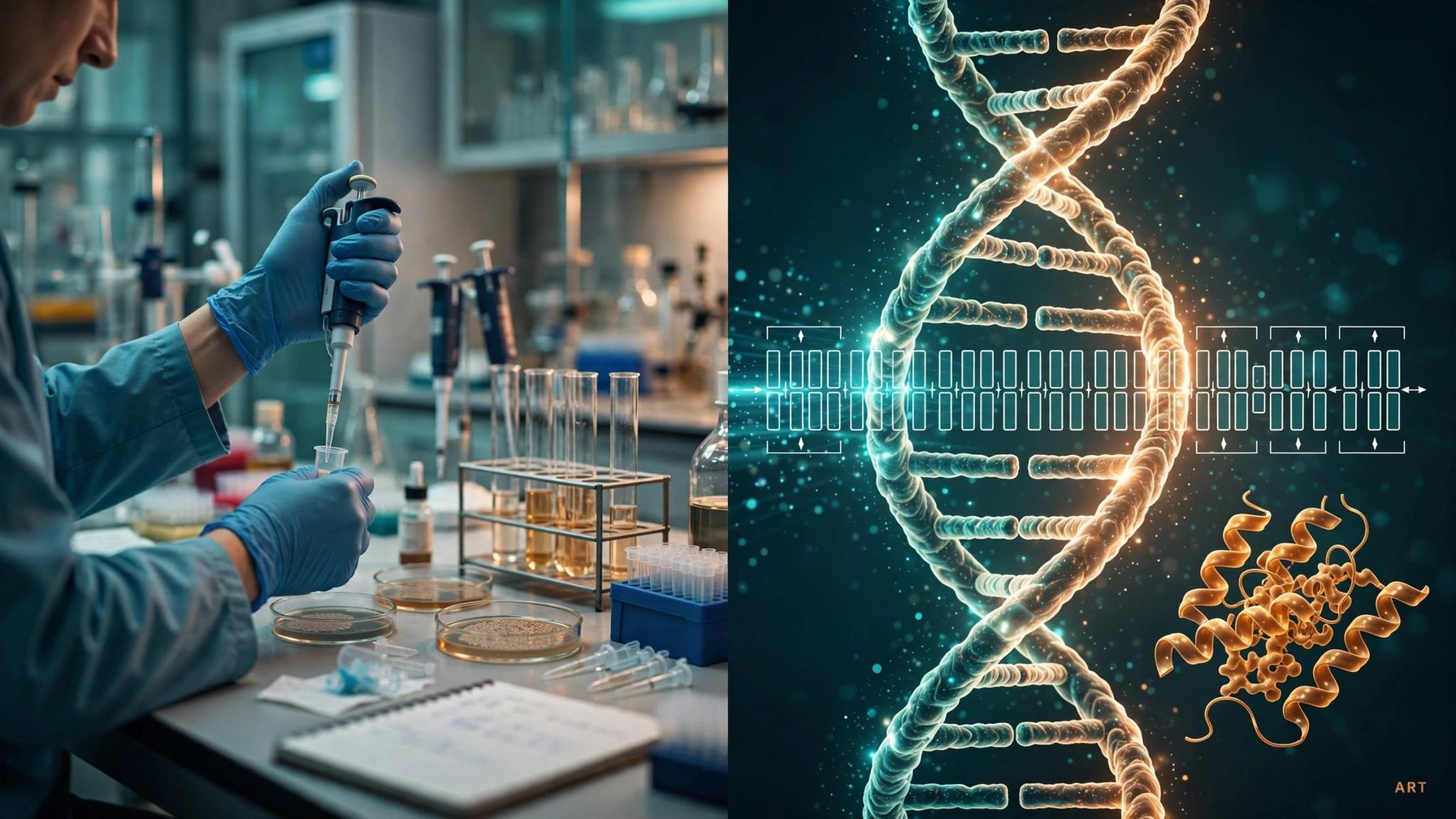
After further analysis and validation in Anthropic's own lab, the company confirmed it as a previously undescribed enzyme system, found mainly in bacteriophages (the viruses that infect bacteria). It consists of three parts: a reverse transcriptase, a partner gene sitting beside it, and a long array of evenly spaced DNA repeats. Notably, the reverse transcriptase itself comes from a jumbo phage and had already been identified in previous studies — but Claude was the first to notice the system's "defining features": the associated array of non-coding DNA sequences and an additional protein of unknown function. Early experiments show the ART array is expressed as a set of distinct short RNAs, echoing how CRISPR arrays work — CRISPR achieves programmability precisely by storing a bank of different RNA sequences.
Feng Zhang, a pioneer of CRISPR genome editing and a professor at MIT and the Broad Institute, said after reviewing the pre-print: "This is an exciting example of how AI agents can contribute to biological discovery. The identification of RNA-repeat arrays associated with reverse transcriptases is genuinely intriguing and merits further investigation." Anthropic has released the finding as a pre-print.
Background: Anthropic's life sciences research bet
This discovery did not come out of nowhere. In the spring of 2026, Anthropic formed a life sciences research group to test whether general AI models can systematize and accelerate such biological discoveries. To that end, the company built its own wet lab, with a single team covering everything from training Claude in biology to running experiments in the lab. The lab sits in the San Francisco Bay Area, works only at BSL-1 and BSL-2 biosafety levels, does not handle pathogens that can infect humans, and all hands-on lab work is performed by human scientists.
The team's typical workflow: first have Claude survey a given protein family, read the literature, and reproduce established results from public data to validate its methods; then look for family members or genomic neighbors that fit no described system, writing a short human-readable report for each candidate that proposes a function and describes the supporting evidence; then critically evaluate the evidence — most candidates are eliminated at this stage; the survivors go to the lab, where proteins are expressed in standard strains and characterized biochemically and structurally.
The announcement also places the result in the lineage of biological discovery: restriction enzymes found in bacterial immune systems launched the biotechnology industry; Taq polymerase, found in a bacterium in a Yellowstone hot spring, became the foundation of PCR diagnostics; CRISPR began as nothing more than odd repeat sequences in bacterial DNA and is now the basis of gene-editing medicines. The implicit message: in the vast diversity of nature's molecular machines, "noticing something odd" remains the starting point of revolutionary discoveries.
See Anthropic's broader life-sciences push (/article/1079-anthropic-fa-bu-claude-yi-liao-yu-sheng-ming-ke-xue-xin-jin-zhan-tui-chu-claude)
Impact: a key step from "analysis assistant" to "discoverer"
Where past AI-for-biology applications mostly "accelerated known analyses," this result tackles a harder question: can AI autonomously discover biological systems no human has ever described? Roughly 950 agents working in parallel, generating hundreds to thousands of candidate reports, with the loop closed by human-run experimental validation — this "large-scale hypothesis generation plus experimental validation" paradigm is what Anthropic is really showcasing. The team has even made the hypotheses themselves an object of study: analyzing which candidates deserved experiments and which were set aside, then feeding what it learns back into Claude's instructions, training it to mimic the scientists' own "scientific taste."
It is also the latest data point in the trend toward always-on AI research agents (/article/1210-karpathy-kai-yuan-2-4-7-ai-yan-jiu-shi-yan-shi-chi-xu-yan-jiu-dai-li-kai-shi-zou): when agents can read raw data around the clock and propose hypotheses by the thousands, the human scientist's role is shifting from "doing the analysis personally" to "designing search strategies and gatekeeping experimental validation."
Our take: the discovery is only the start; the official wording deserves a close read
Two points of official wording deserve care. First, the announcement says ART has "properties reminiscent of CRISPR" — a structural resemblance at the level of the repeat array, not a declaration that a "new gene-editing tool" has been found. Such combinations of features have previously been found together only in a handful of systems that are programmable and perform operations like cutting, copying, and pasting DNA — but ART's own function is still under study and is far from settled.
Second, the official post admits the underlying reverse transcriptase was not Claude's first discovery; Claude's contribution was recognizing the "system" — linking the RT, the non-coding DNA array, and the accessory protein into one whole. That leap "from parts to system" is precisely the step in human genome-mining research that demands the most experience.
All in all, the weight of this announcement lies not in what ART can do today, but in the proof that a path works: agent swarms can "notice anomalies" like human scientists and push them into verifiable discoveries. The pre-print is public, and independent validation from the scientific community will have the final say.
Q: Is ART the next generation of gene-editing tools? A: Not yet. The official announcement states clearly that ART's function has not been determined; "properties reminiscent of CRISPR" refers to the structural similarity of the repeat array, not to gene-editing capability. The road from "spotting an anomaly" to "understanding function" to "engineering a tool" is still long.
Q: Did Claude make this discovery entirely on its own? A: Not entirely. According to the official disclosure, human scientists were involved only in the initial prompt and the wet-lab experiments; the data mining, hypothesis generation, and candidate screening in between were done autonomously by the agents, with human review and validation closing the loop. It is a collaborative loop of "agents propose, humans experiment."