On September 14, 2026, Anthropic revealed on Claude's official blog the expansion experience of its internal continuous integration (CI) system: With Claude involved in writing about 80% of the code, engineering teams delivered an average of eight times the amount of code delivered each quarter compared to 2021-2025, the number of tests increased tenfold, and CI tasks grew twenty-fiffold in just six months. This case serves as a reminder to teams deploying coding agents: after development speed increases, the first to be under pressure may not be models or editors, but test selection, queues, and state storage.
Why does temporary expansion fail so quickly?
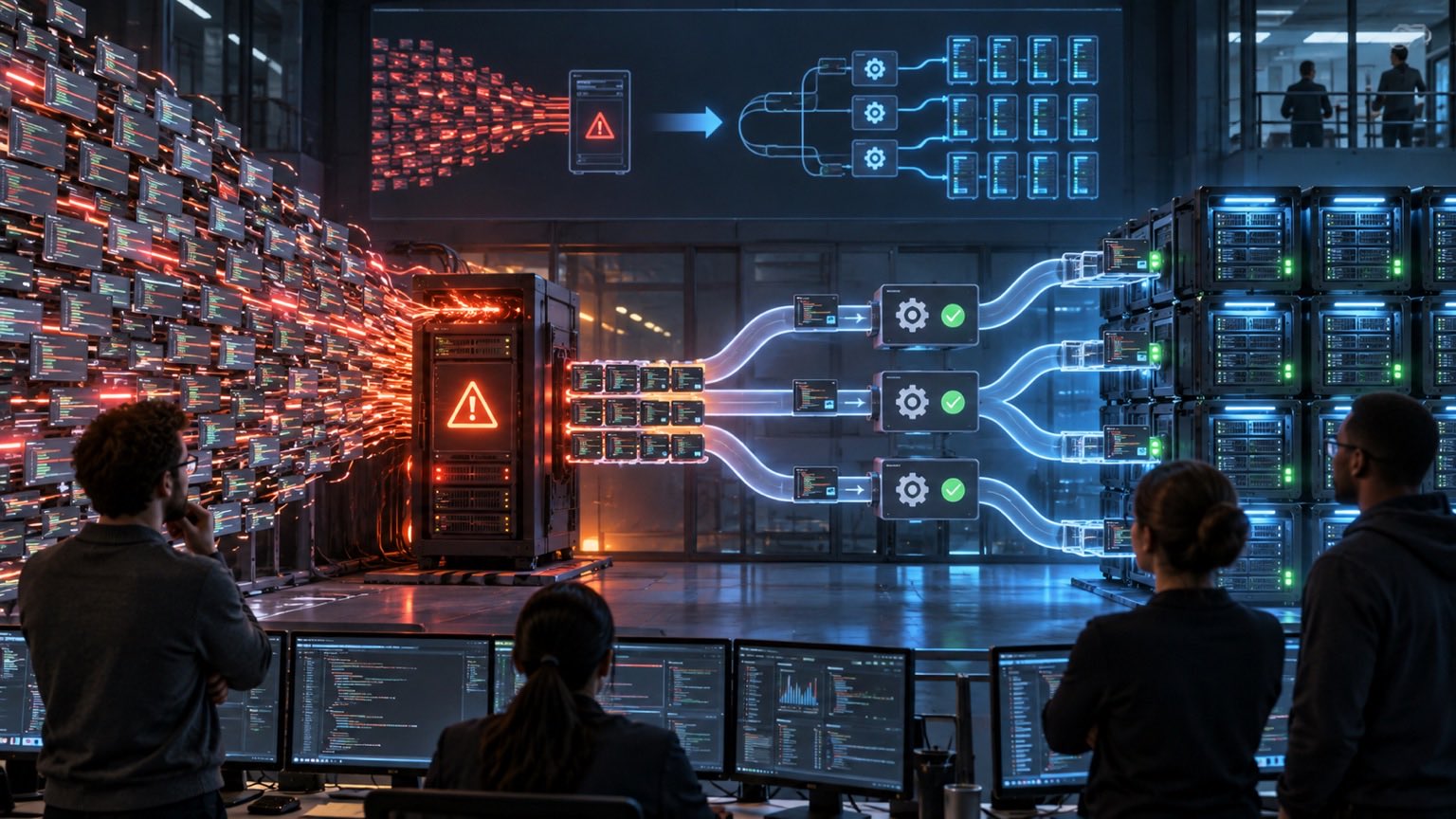
Anthropic tried switching to larger machines, sharding by package, and automatically restarting after process failures. Large machines only lasted about 70 more days, sharding peaked again after about 29 days, and restarts lost effectiveness in less than a day. The reason was that the old system stored test history within a single process: listeners received results and calculated which tests were related to code changes. As the workload rapidly increased, computation, memory, and state recovery mutually restrained each other, and any rolling deployment or crash would amplify the backlog.
The focus of rebuilding is not just continuing to stack machines
The team then split the architecture into stateless listeners, memory data storage, and log consumption processes. Listeners can scale horizontally, only recording test results; Independent consumers organize events into test maintenance histories, and selectors decide which tests to run based on historical hits and package correlations. Anthropic said the new system remained stable after the switchover, and an engineer used Claude to complete what used to be nearly a quarter in about three weeks.
What does it mean for teams adopting coding agents?
- Designed for extreme growth: Anthropic recommends infrastructure leaders anticipate 25-fold load growth over two quarters, but this comes from their own business and should not be mechanically applied as a unified industry forecast.
- Decoupling state and computation: Leaving key history outside the process helps avoid losing context during worker node expansion or restart.
- Monitor input and output first: a 20-minute delay in test events can mean missing tens of thousands of updates; Queue lag, selection hit rate, and duplicate execution count should all be core metrics.
- Recalculation savings: Agents generate code faster, but also increase testing, caching, and hash costs, so focusing solely on development output can easily overestimate net returns.
Conduct a capacity drill before implementation
Companies don't need to wait until CI is completely congested before taking action. You can first count the number of tests triggered by each merge, peak queue duration, historical state recovery time, and the cost per change, then simulate 5x, 10x, and 25x concurrency. If the system still relies on single-node memory or manual reboots to maintain, priority should be given to modifying the observability and state layers. Anthropic's numbers don't prove that all teams will face the same curve, but they send a clear signal: procurement plans for coding agents must be reviewed together with software delivery infrastructure budgets.