On September 1, 2026, Google DeepMind announced Gemini's intelligent emulative video understanding capabilities on its official blog, with the first batch covering Gemini 3.7 Flash, 3.6 Flash, and 3.5 Flash-Lite. The change is not just that "models can watch videos," but that it no longer needs to feed a large number of irrelevant images into context at a fixed frame rate.
It's not about "looking at a few more frames," but deciding where to look first
Traditional video analysis usually extracts frames at a fixed rate, while the Gemini API's static processing default is 1 frame per second. When facing long tutorials, lectures, or hours of recording, this approach either consumes a large number of tokens or misses brief actions due to reduced sampling density.
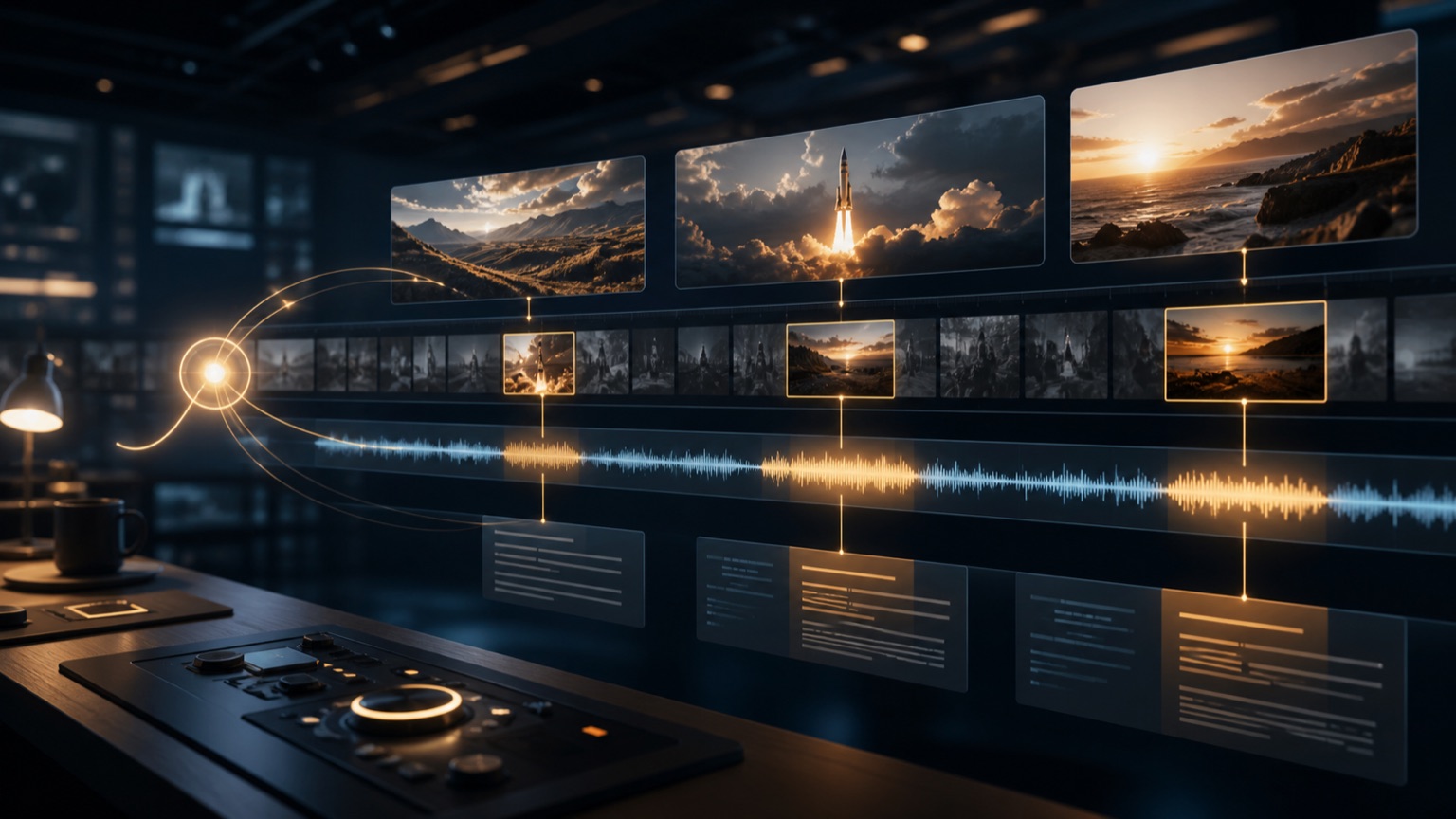
New capabilities combine reasoning with native video tools. The model dynamically searches, scans, and replays clips around the problem, selecting desired signals among visuals, audio, and transcribed text. When locating changes occurring within one second, it can improve local sampling rates; when searching for a key sentence, it does not require reading the entire clip paragraph by paragraph. This is also the difference between AI Agents and fixed workflows: the model begins to decide which tool to call next.
"Save up to 88% tokens" cannot be considered a fixed discount
Google's standard video analytics benchmark shows that after activation, token consumption drops by up to 88%, analysis costs drop by up to 66%, and accuracy improves by up to 7%. All these numbers have "most" conditions and come from specific models, video lengths, and problem types, and cannot be applied directly to every business. A more reliable approach is to use your own video and query collections for A/B testing, while recording tokens, latency, recall, and mislocation.
Officially, Gemini 3.7 Flash offers a better combination of accuracy and cost in the test model; Short videos or tasks requiring only rough summarization may not yield the same benefits. Advantages are more likely to lie in rapid action, anomaly detection, precise counting, and search across hours. For related capability boundaries, please refer to the site's "Multimodal Model Practical Use Summary".
Developers must perform four checks before login
This feature supports uploading videos and YouTube videos, with entry points including Google AI Studio's Gemini API and Gemini Enterprise Agent Platform. Setting the video processing mode to agentic enables it; no additional feature fee is charged, but it is still charged as a regular API token.
Before launch, confirm whether the business needs to focus on details rather than just summarizing; Whether answers should include time points for manual review; What rules should be used when audio, subtitles, and visuals conflict; Whether batch tasks have cost and duration caps. Google plans to bring capabilities to Gemini apps and YouTube's Ask YouTube; currently, API availability cannot be equated with all terminals already live.