
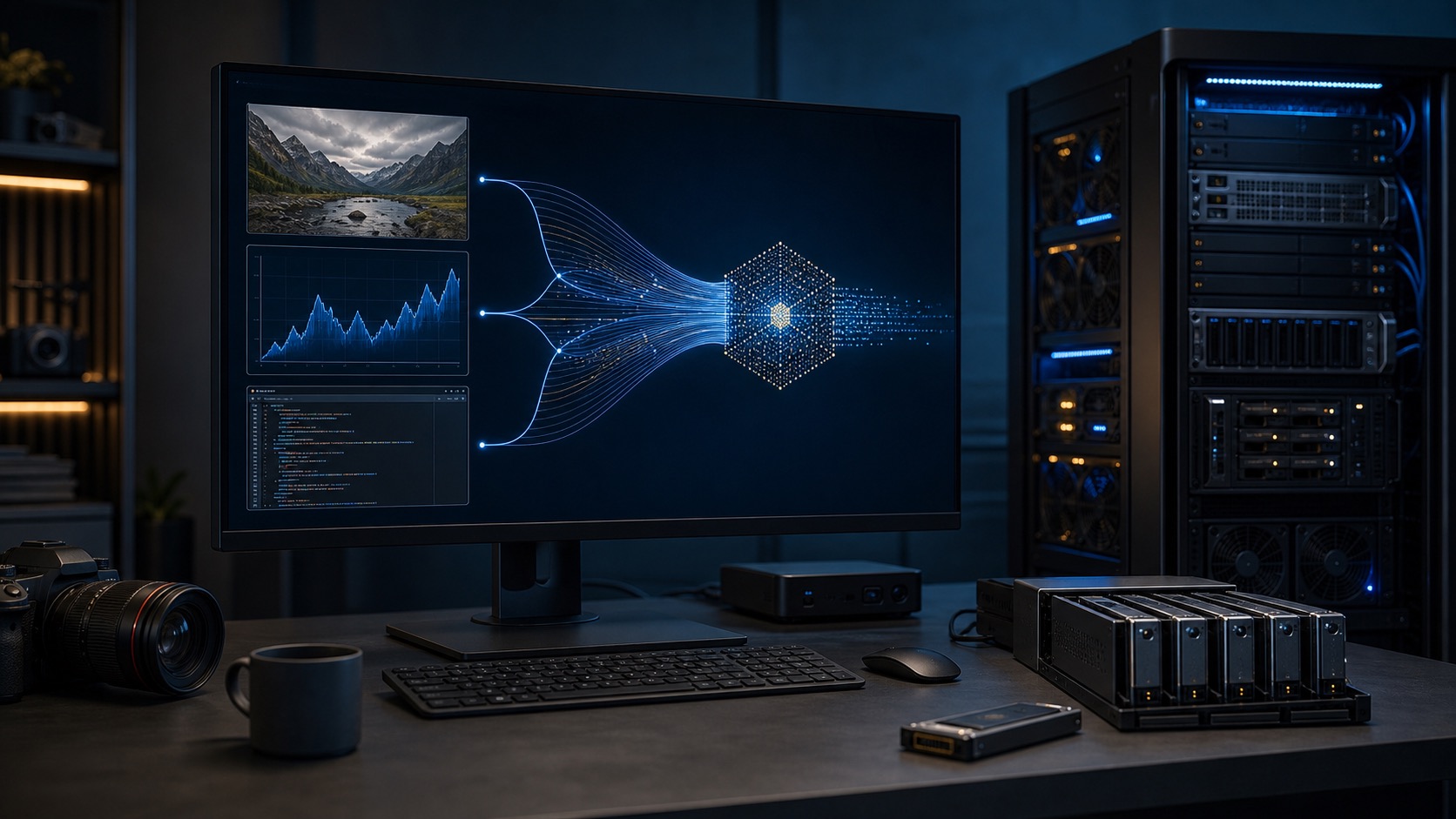
On August 31, 2026, DeepSeek launched DeepSeek-V4-Flash-Vision-Exp open weights on the official Hugging Face organization deepseek-ai. The model repository was created at 06:16 (UTC) on the same day, using the MIT license, providing model files, tokenizers, prompt encoding references, and minimized PyTorch inference implementations. This is not a repeat of the API launch announcement on August 21: previously, cloud-based callability was addressed, but this time weights and key reference code are handed over to developers.
From a "diagram interface" to an inspectable model asset
The official model card shows that the model has about 305 billion parameters, maintaining a level close to DeepSeek-V4-Flash-0731 for pure text agent tasks, while also incorporating visual understanding. It can place images, charts, software interfaces, and text commands into the same task chain, suitable for web operations, chart analysis, screenshot troubleshooting, and visual quality checking. To understand the previous stage of API capabilities, you can refer to the DeepSeek-V4-Flash-Vision-Exp launch interpretation.
In DeepSeek's self-tests, ApexBench Pass@1 improved from 26.2 in the text version to 36.5, scored 64.3 in Chartography, and 35.0 in ZeroBench Pass@5. It also scored 83.9 in Terminal Bench 2.1 and 59.3 in DeepSWE. However, these numbers come from official model cards and cannot be directly equated with the stability of all real business operations.
Open weights are not the same as using a regular computer out of the box
For the team, the value lies in being auditable, fine-tuning, and building controlled agents around private screenshots and internal interfaces; The limitation is that the deployment threshold remains high. 305 billion parameters means that weight storage, VRAM, inference frameworks, and multi-card communication are not easily handled by consumer-grade computers, and the minimum inference code in the warehouse is not a ready-made product.
Therefore, this opening is more like handing over the research foundation for multimodal Agents to cloud vendors, inference framework teams, and computing power enterprises. In the short term, small and medium developers are still suitable to first use API verification tasks before deciding whether to use quantization, managed inference, or private clusters. What truly deserves attention is not "model downloadability," but the transition of visual agents from closed interfaces to inspectable and transiable engineering assets.