The open-source personal AI assistant OpenClaw 2.0 has been officially released, corresponding to version v2026.8.1. According to the official statement, this is the project's history with 16,000 PRs. The real change isn't the number of features, but OpenClaw's shift from a "tinkery AI Agent" to a complete personal agent platform.
OpenClaw 2.0 rework hands-on experience
In the previous 230 days, OpenClaw had released 106 versions, but this update was nearly seven weeks apart. The reason is straightforward: this version contains about half of the project's historical mergers, and the original architecture and release process can no longer handle development speed.
When new users install OpenClaw 2.0 , the system prioritizes identifying existing ChatGPT on their computers, Claude subscriptions, API Keys, and local models, reducing pre-configured configurations. The browser side has also been redesigned: users can directly enter the conversation with the Agent after opening it, rather than facing a complex settings page first.
AI Agents are beginning to take over the continuous task
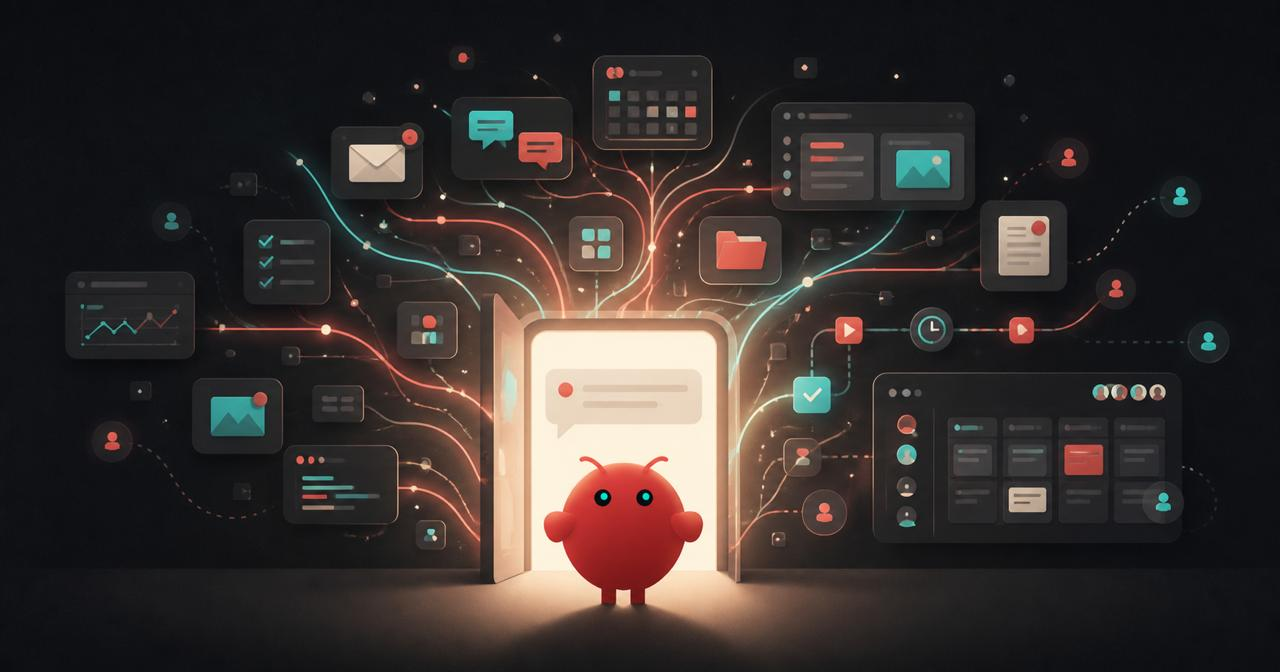
A more critical change is in "task continuity." OpenClaw 2.0 adds session search, long-term memory organization in the background, automatic learning, continuous automation, and the ability to run sessions across devices and the cloud. Agents no longer answer questions only once; they can remember context, execute cyclical tasks, and continuously track work progress.
For example, it can monitor school notifications in the email and push important matters to Telegram; It can also query email receipts based on questions in iMessage and reply directly. The value of AI Agents has shifted from single-time content generation to cross-app real-world operations.
Multi-person collaboration turns agents into workspaces
Shared Cloud Sessions further changed OpenClaw's product boundaries. A running Agent task can invite other members to join while preserving the previous context, and team members can take over the task and continue executing it.
This means personal AI assistants are approaching new forms of software: browsers, messaging apps, automation tools, and team collaboration are all linked by Agents on the same task chain. For OpenClad, what truly needs to prove is no longer "whether more tools can be called," but whether this continuously running, memory-driven, and human-acting open-source Agent is reliable enough to enter daily work.
The direction reflected by OpenClaw 2.0 is clear: the next round of AI Agent competition will not focus solely on model capabilities; memory, permissions, security, cross-application execution, and multi-user collaboration are becoming the infrastructure that determines whether products can be used long-term.