
Latest AI News: The World Artificial Intelligence Conference opens, with 29 countries preparing to establish AI cooperation organizations
24-hour AI News Snapshot: Kimi K3 resets the scale of open-source models, intensifying global AI gov
Resumatic is a ChatGPT resume builder for job seekers and career coaches who want to create ATS-friendly resumes when generating customized resumes from job descriptions, checking resume scores, and typography using templates. It focuses on turning job keywords and personal experiences into resume content that is more suitable for recruiting systems, and common features include support for pasting job descriptions to generate resumes, providing ATS resume templates, and including 10 AI generations for free. It offers free entry or trial credits, making it suitable for verifying the effect with small tasks first. Before using it, you need to pay attention to not letting the tool fictionalize experience, certificates or achievement data, everything must be explained in the interview. If the team is preparing for long-term adoption, it is recommended to test input materials, output quality, manual review costs, and permission boundaries with a set of real-world tasks before deciding whether to include a fixed process.
For tasks like generating customized resumes from job descriptions, checking resume scores, and typography using templates, Resumatic is more like an AI-assisted tool designed around specific workflows. Instead of simply giving generic answers, it transforms job keywords and personal experiences into resume content that is more suitable for recruitment systems, allowing users to get checkable, revisable, and deliverable first drafts or analysis results faster.
These capabilities are suitable for tasks with clear goals: users need to prepare clear input materials, desired results, and review criteria, and then decide whether to continue modifying, exporting, or giving them to the team based on the output.
The value of Resumatic is mainly in centralizing the steps of duplicate sorting, first draft generation, lead screening, or formatting. For job seekers and career coaches who want to create an ATS-friendly resume, it reduces the time spent organizing materials from scratch, but it does not replace judgment on facts, tone, authorization, and final conclusions.
Job seekers and career coaches who want to create ATS-friendly resumes are more likely to get consistent results from Resumatic because they often know the material they are working with, the channels they are targeting, and the acceptance criteria. Individual users can start with a small task, and teams need to agree in advance who is responsible for input, who is responsible for reviewing, and what content can be uploaded.
Generating a customized resume from a job description, checking resume scores, and typography using templates are all good for small-sample testing first. A safer approach is to prepare a set of real but low-risk materials, observe whether the output is close to the target, and then record what content can be used directly and which needs to be manually rewritten or reprocessed.
Don't let the tool fictionalize experiences, certificates, or achievement data, everything should be explained in the interview. If the assignment involves customer profiles, real voices or photographs, commercial materials, recruitment evaluations, academic submissions, ad placements, or internal data, additional confirmations of authorization, privacy, platform rules, and review responsibilities should be acknowledged.
To determine if Resumatic is worth using for a long time, it is recommended to test three to five real-world tasks in a row, documenting input lead time, output availability scale, manual modification points, and eventual adoption. When the results are stable and the review cost is controllable, it will be safer to put it into the fixed process.
What problems is Resumatic primarily suitable for? **
It is mainly suitable for generating customized resumes from job descriptions, checking resume scores, and using template layout, especially for tasks where input materials are clear and target results can be manually accepted. Writing down the target, material scope, and review criteria clearly before use often makes it easier to determine if the output is usable.
Can Resumatic replace manual delivery with final delivery? **
Direct substitution is not recommended. It can undertake generation, collation, analysis, or recommendation, but fact-checking, compliance judgments, professional conclusions, and final trade-offs still need to be done by humans, especially when it comes to commercial releases, customer materials, or sensitive data.
What do I need to prepare before using Resumatic?
It is recommended to prepare clear input materials, target formats, usage scenarios, and review rules. When using it, the team also agrees on what content cannot be uploaded, who is responsible for reviewing the output, and what standards the results meet before it can continue to be used.

Swooped helps users turn clear source material into editable results for content, media, data, learning, or operational workflows. It is best used when the goal, input, output format, and review standard are clear. Users should test it with a low-risk task first and keep human review for customer data, student work, financial information, portraits, production code, or public content.

SpeakNotes is an AI job search and recruitment tool suitable for recruitment teams, HR, outsourcing recruiters and companies that need to screen candidates for AI transcription, intelligent summary, and multi-language support. Its focus is to organize candidate origin, outreach and screening information into a recruitment process that is easier to track. Current visible capabilities include free 5 minutes per note, AI transcription, and smart summaries. It provides free entry or trial credits, which is suitable for verifying a small task before deciding whether to pay. Candidate judgment, outreach content and recruitment decisions require manual review and cannot rely solely on automatic output. If you plan to use it for a long time, it is recommended to use a real but low-risk task to test input preparation, output stability, manual review costs and authority boundaries before deciding whether to include it in a fixed process.

SourceGeek is an AI job search and recruitment tool suitable for recruitment teams, HR, outsourcing recruiters and companies that need to screen candidates when using LinkedIn automated, AI-driven candidate sourcing. Its focus is to organize candidate sourcing, outreach and screening information into a more easily traceable recruitment process. Current visible capabilities include free 1-month trials, LinkedIn automation, and AI-driven candidate sourcing. It provides free entry or trial credits, which is suitable for verifying a small task before deciding whether to pay. Candidate judgment, outreach content and recruitment decisions require manual review and cannot rely solely on automatic output. If you plan to use it for a long time, it is recommended to use a real but low-risk task to test input preparation, output stability, manual review costs and authority boundaries before deciding whether to include it in a fixed process.

Sourcebae is an AI job search and recruitment tool suitable for recruitment teams, HR, outsourcing recruiters and companies that need to screen candidates for AI-driven interviews and visits to pre-screened talents around the world. Its focus is to organize candidate sourcing, outreach and screening information into a more easily traceable recruitment process, and current visible capabilities include 30 free AI-driven interviews, AI-driven interviews, and access to pre-screened talents around the world. It provides free entry or trial credits, which is suitable for verifying a small task before deciding whether to pay. Candidate judgment, outreach content and recruitment decisions require manual review and cannot rely solely on automatic output. If you plan to use it for a long time, it is recommended to use a real but low-risk task to test input preparation, output stability, manual review costs and authority boundaries before deciding whether to include it in a fixed process.

Snowball is an AI job search and recruiting tool for HR teams, hiring leaders, managers, and businesses that need to work with employee information to automate X (Twitter) content creation, AI-powered interactions. It focuses on organizing employee, candidate, and process information into more trackable management processes, with current visibility capabilities including a free three-day trial, automated X (Twitter) content creation, and AI-powered interactions. It offers a free entry or trial credit, which is good for verifying a small task before deciding whether to pay or not. Employee data, candidate judgments, and performance-related conclusions need to be reviewed manually and cannot rely solely on automated output. If you are going to use it for a long time, it is recommended to test input preparation, output stability, manual review costs, and permission boundaries with a real but low-risk task before deciding whether to include a fixed process.

SmallTalk2Me is an AI job search and recruitment tool for HR teams, hiring leaders, managers, and businesses that need to process employee information for AI-powered English speaking and writing assessments, accurate CEFR levels, and detailed reporting. It focuses on organizing employee, candidate, and process information into more trackable management processes, with current visibility capabilities including a free trial, AI-powered English speaking and writing assessments, accurate CEFR levels, and detailed reporting. It offers a free entry or trial credit, which is good for verifying a small task before deciding whether to pay or not. Employee data, candidate judgments, and performance-related conclusions need to be reviewed manually and cannot rely solely on automated output. If you are going to use it for a long time, it is recommended to test input preparation, output stability, manual review costs, and permission boundaries with a real but low-risk task before deciding whether to include a fixed process.

24-hour AI News Snapshot: Kimi K3 resets the scale of open-source models, intensifying global AI gov
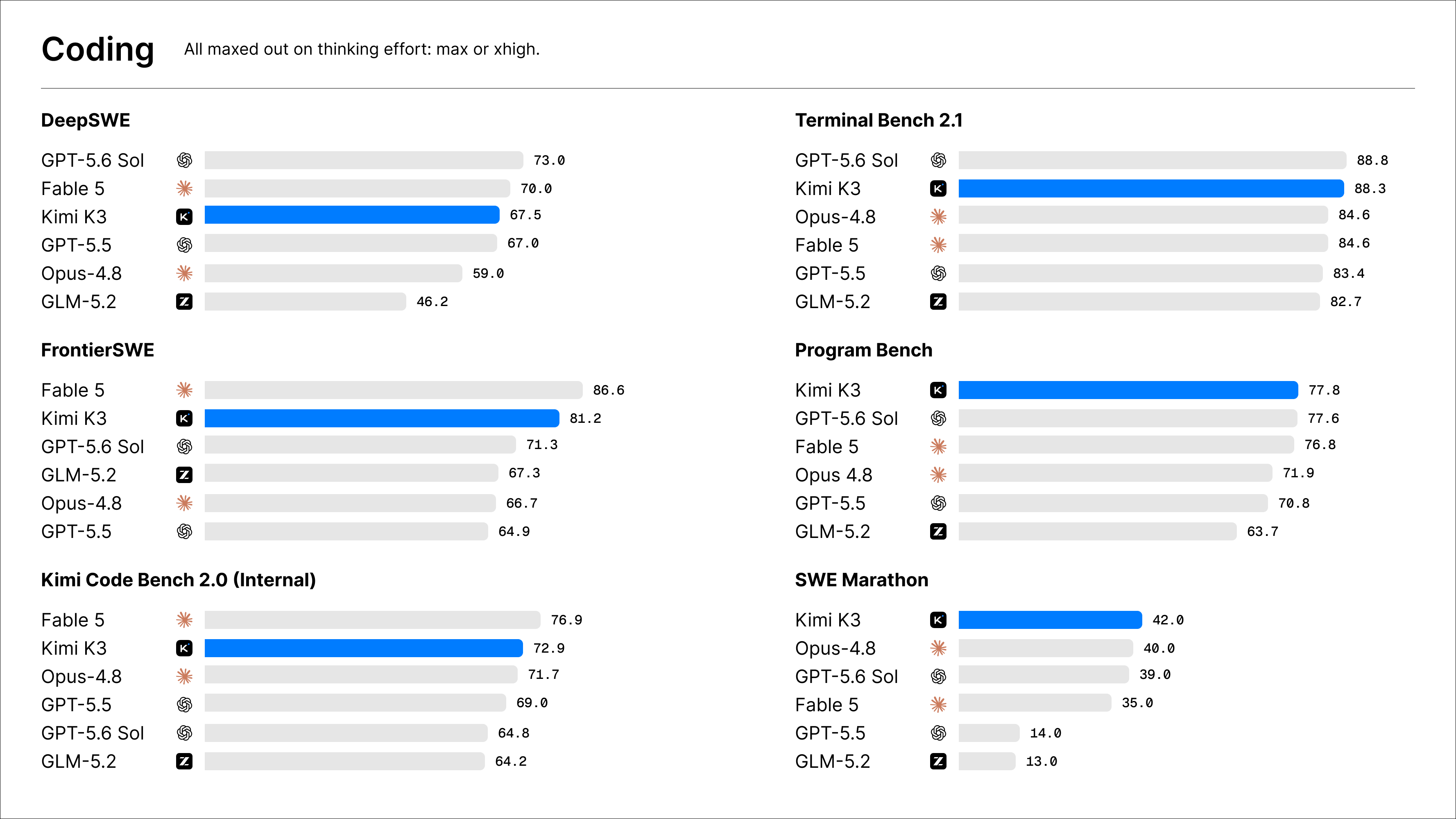
Moonshot AI officially launched the Kimi K3 . This 2.8-trillion-parameter model provides 1 million t
24-hour AI News Summary: Global AI competition continues to heat up, with chips, models, security re

On July 9, 2026, Mistral announced in its official article "Your Prompts and Skills Need a System of

On July 9, 2026, Google Research released the wearable health foundational model SensorFM. It was pr

On July 9, 2026, OpenAI officially announced ChatGPT Work in its announcement "ChatGPT is now a part