
Codex is stuck and not responding? Check by approval, terminal, and log check
If Codex is stuck and unresponsive, do not send the same message repeatedly. Confirm in order whethe
Pangeanic is an AI data annotation, model evaluation and multilingual data platform. It is mainly used to provide multilingual training data, model alignment, LLM evaluation, data annotation management and enterprise-level AI deployment support. It is suitable for AI teams, government agencies, enterprise R & D, language technology teams and organizations that require multilingual data operations. Common uses include building multilingual model training data, evaluating LLM output quality and security, and deploying linguistic AI systems for enterprises or governments. When using it, it should be noted that data operation projects usually require clear labeling specifications, privacy processing and quality sampling mechanisms, and cannot rely solely on automated processes. For corporate and project-based procurement, it is usually necessary to contact the team to confirm the scope and quotation. It is recommended to use one or two low-risk tasks to test input materials, output quality, manual modification amount and final adoption ratio before deciding whether to put them into a fixed process.
Pangeanic is suitable for targeted tasks such as building training data for multilingual models, evaluating LLM output quality and security, and deploying linguistic AI systems for enterprises or governments. Its value lies in turning steps that are scattered, repeated or require a lot of preliminary finishing into results that are easier to check, allowing users to see the executable direction faster, and then manually complete judgments, modifications and trade-offs.
These capabilities make Pangeanic more suitable for use in auxiliary aspects of existing processes. Users can prepare clear goals, sample data and acceptance criteria first, and then observe what manual sorting, searching, generation, or screening work it can reduce in real tasks.
A safer approach is to start with a small task: limit the input range, check whether the output meets expectations, and then record what can be directly used and what needs to be modified manually. For AI teams, government agencies, corporate R & D, language technology teams, and organizations that require multilingual data operations, this approach is easier to determine tool boundaries than accessing a complete process at one time.
Pangeanic is more suitable for AI teams, government agencies, corporate R & D, language technology teams and organizations that require multilingual data operations. Such users often already know what problems they are trying to solve and can determine whether the results are in line with business, learning, creative or operational goals. Individual users can start with a single task, while team use it requires additional permissions, review responsibilities and cost caps.
Data operation projects usually require clear labeling specifications, privacy processing and quality sampling mechanisms, and cannot rely solely on automated processes. If the input content involves customer data, real photos, voices, business materials, homework, legal documents, medical financial information or internal data, the authorization, privacy and scope of use should also be confirmed first to avoid directly uploading content that is not suitable for external processing.
For corporate and project-based procurement, it is usually necessary to contact the team to confirm the scope and quotation. It is recommended to continuously test three to five real samples and record the input conditions, output results, manual modification points and whether they are finally adopted. If the results are stable and the cost of modification is controllable, it is suitable for gradually incorporating them into the fixed process; if the goal is frequently deviated, it is more suitable for use as inspiration, first draft or auxiliary inspection material.
What is Pangeanic mainly suitable for?
It is mainly suitable for providing multilingual training data, model alignment, LLM evaluation, data annotation management and enterprise-level AI deployment support. It is especially suitable for building multilingual model training data, evaluating LLM output quality and security, and deploying language AI systems for enterprises or governments. Such tasks as systems have clear goals and results can be manually reviewed.
Can Pangeanic directly replace manual delivery?
Not recommended. It can undertake the generation, organization, identification, analysis or recommendation stages, but fact verification, compliance judgment, professional conclusions and final trade-offs still need to be completed by people.
What content should I prepare before using Pangeanic?
It is recommended to prepare clear input materials, expected results and acceptance criteria. When the team uses it, it is also necessary to agree on who is responsible for review, what content cannot be input, and what standards the output meets before it can continue to be used.

Zilliz is an enterprise-grade vector database and Milvus hosting platform aimed at AI application developers, data engineering teams, and enterprise retrieval teams. Its value is not to make all the work for the user at once, but to provide actionable assistance around building vector retrieval, RAG, and large-scale similarity search services: users can create vector libraries, write data, run retrieval, expand capacity, and then complete the subsequent processing based on their own business judgment. When choosing such tools, you need to pay attention to data permissions, index design, and query costs, especially when it comes to accounts, customer information, contracts, courses, audio, video, or code output, all of which should be manually reviewed. Its visibility capabilities include Vector Lakebase, Milvus, real-time vector search, and lake-scale discovery, making it more suitable for enterprise AI retrieval infrastructure.

Xpoz MCP is a social data API for AI Agents, primarily aimed at marketing teams, intelligence analytics, and AI Agent developers, providing data interfaces for brand monitoring, social listening, and lead analysis. It's for people who already have clear tasks, assets, or business processes, bringing together social data APIs, brand monitoring, and competitive intelligence into easier workflows. When using it, you need to focus on platform policies, data authorization, and privacy compliance, especially when it involves customer data, learning content, audio and video materials, business data, or public release, you should first confirm authorization and manual review. Overall, Xpoz MCP is suitable as an auxiliary tool for providing data interfaces for brand monitoring, social listening, and lead analysis, rather than a substitute for professional final judgment.
XCrawl is an AI web scraping and structured data extraction API aimed at developers, data teams, and AI app builders for scraping web pages and outputting structured JSON, Markdown, or search data. It's for those who already have a clear task, footage, or business process that brings together structured extraction, built-in agents, and AI-ready web scraping into a more actionable workflow. When using it, you need to focus on website permissions, rate limiting, and data compliance, especially when it comes to customer information, learning content, audio and video materials, business data, or public publishing. Overall, XCrawl is suitable as an aid for scraping web pages and outputting structured JSON, Markdown, or search data, rather than a substitute for the final judgment of professionals.

WebscrapeAI is a no-code web data collection automation tool aimed at operators, data teams, and researchers to automatically collect web data and organize structured results. It's better for people who already have clear assets, scripts, customer communications, or business processes that centralize no-code ingestion, structured extraction, and automation tasks into a one-to-one workflow that's easier to execute. When using it, you need to pay attention to website permissions, anti-crawling rules, and data compliance, especially when it comes to customer information, human voices, image materials, web page data, or published content, you should first confirm authorization and manual review. Overall, WebscrapeAI is suitable as an auxiliary tool for automatically collecting web page data and organizing structured results, rather than a complete replacement for the final judgment of editors, operations, R&D, or management.

WaterCrawl is a web scraping framework for LLMs, primarily aimed at developers, data teams, and AI application builders, to convert web content into data suitable for large models. It is more suitable for people who already have clear materials, scripts, customer communications, or business processes, centralizing web scraping, structured output, and large model data preparation into a more performable workflow. When using it, you need to pay attention to crawl permissions, rate limiting, and data compliance, especially when it comes to customer information, character voices, image materials, web page data, or published content. Overall, WaterCrawl is suitable as an auxiliary tool for converting web content into data suitable for large models, rather than completely replacing the final judgment of editors, operations, R&D, or managers.

VoiceAIWrapper is an AI API and developer platform for teams and creators who need a practical way to generate, organize, convert, or review work before it moves into a final production flow. It is best used with clear source material, a defined output goal, and a human review step for accuracy, rights, privacy, and publishing quality.
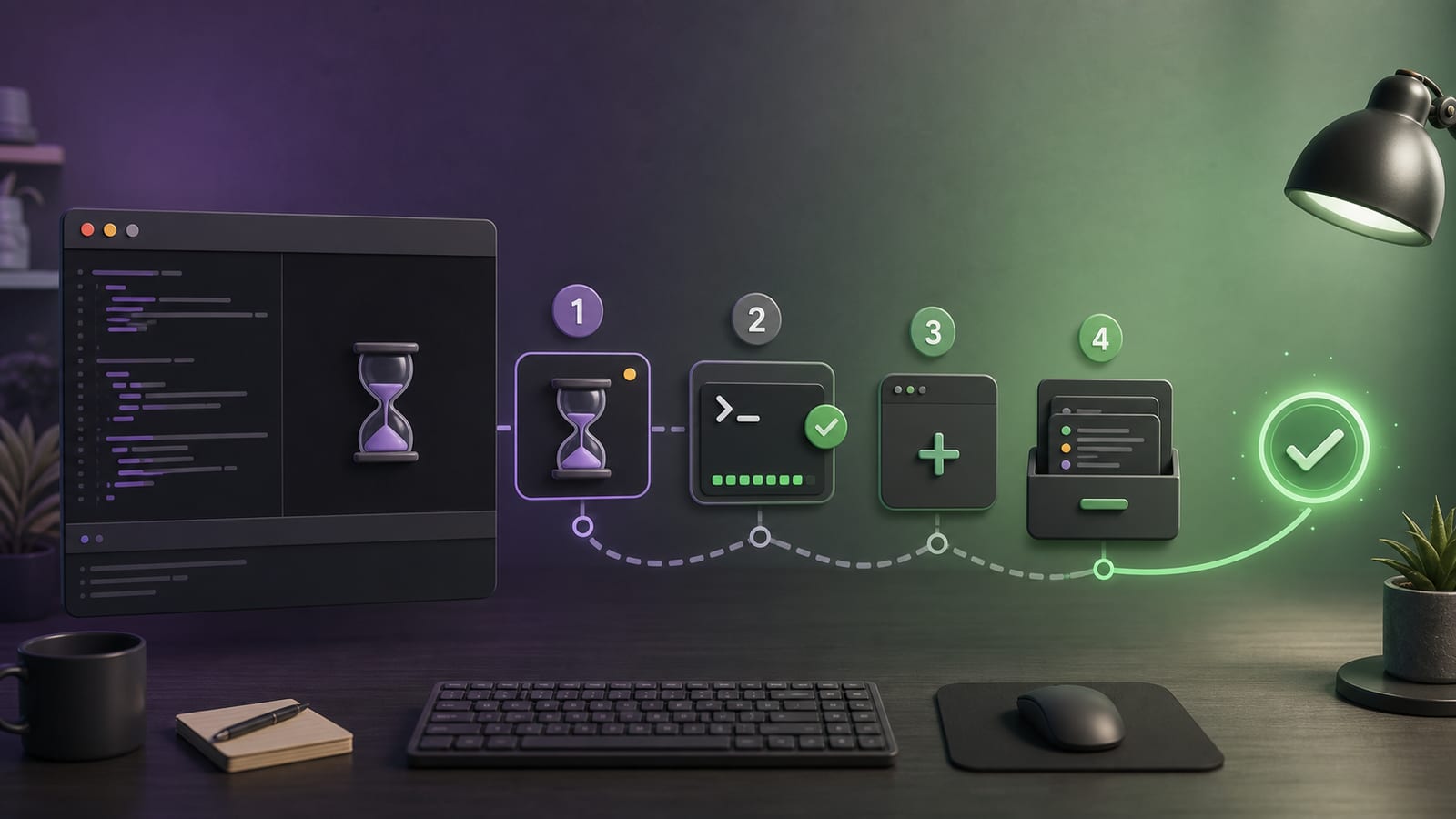
If Codex is stuck and unresponsive, do not send the same message repeatedly. Confirm in order whethe

codex exec In CI, it can analyze code without making changes; first check the sandbox: non-interacti

If Codex Skills is installed but does not trigger, first check if it is located in the scan director

Codex config.toml changes that don't take effect usually don't mean the TOML file is corrupted, but

After exiting the Codex CLI, you don't need to redescribe the entire task; just run codex resume sel

On August 3, 2026, the Qwen team released the Qwen 3.8-Max on the official Qwen blog, positioning it