
Latest AI News: The World Artificial Intelligence Conference opens, with 29 countries preparing to establish AI cooperation organizations
24-hour AI News Snapshot: Kimi K3 resets the scale of open-source models, intensifying global AI gov
Offset is an AI financial model and file data extraction tool, mainly used to extract data from financial documents and quickly build financial models. It is suitable for investment analysts, financial teams, corporate strategists and researchers. It can quickly build financial models, extract accurate data from filing documents, and support local deployment to protect privacy. When using it, it should be noted that the results of the financial model require professional review and cannot be directly used as investment, financing or audit conclusions. It is recommended that one or two low-risk tasks be used to test input materials, output quality, manual modifications, and final adoption ratios before deciding whether to put them into a fixed process and document whether they are suitable for long-term use and team review.
Offset is suitable for targeted tasks such as extracting data from financial documents and quickly building financial models. Its role is to turn the preliminary sorting, generation, identification or analysis work into a checkable draft, allowing users to see the direction faster, and then manually complete judgments and trade-offs.
These capabilities are suitable for extracting data from financial documents and quickly building financial models. If the task is already related to customer delivery, commercial release, learning results or internal decision-making, it is recommended to let Offset take charge of the auxiliary link first, and then let the person in charge confirm whether to enter the formal process.
It is safer to prepare three to five representative samples to test input requirements, generation speed, result stability and subsequent modification costs. This allows you to see the boundaries of Offset in real tasks and avoid long-term adoption with just one demonstration.
Offset is suitable for investment analysts, finance teams, corporate strategists and researchers. Such users usually already know what tasks they are going to complete and can also judge whether the output content, analysis results, or recommended solutions meet expectations. Individual users can start with a single task, while team use it requires additional permissions, review responsibilities and cost caps.
Financial model results require professional review and cannot be directly used as investment, financing or audit conclusions. If the input content involves customer data, real photos, voices, commercial materials, medical financial information, study assignments or legal documents, authorization, privacy and use boundaries must also be confirmed in advance.
Input conditions, output results, manual modification points and final adoption of each test can be recorded. If Offset performs stably many times in the main scenarios, it is suitable for gradual inclusion in the process; if the results often deviate from the goal, it is more suitable for use as inspiration, first draft or reference material.
What is Offset mainly suitable for?
It is mainly suitable for extracting data from financial documents and quickly building financial models. It is especially suitable for tasks where the goals are clear, the materials are ready, and the results can be manually reviewed.
Can Offset directly replace manual delivery?
Not recommended. It can undertake the generation, organization, identification or analysis stages, but fact checking, compliance judgment, professional conclusions and final trade-offs still need to be completed by people.
What should I prepare before using Offset?
It is recommended to prepare clear input materials, expected results and acceptance criteria. When the team uses it, it is also necessary to agree on who is responsible for review, what content cannot be input, and what standards the output meets before it can continue to be used.

ToolSpend is an AI workflow tool for teams that need to create, organize, convert, or review task-specific material before final use. It should be used with clear source material, a defined output goal, and human review for accuracy, rights, privacy, and publishing quality.

TickerTrends is an AI tool for users who need a clearer way to handle focused digital work. It can support creation, automation, analysis, learning, media production, development, research, customer operations, or document workflows depending on the product scope. Start with a small low-risk task, compare the result with your own standards, and keep human review for facts, permissions, privacy, brand voice, safety, and final delivery.

TheAnalystAI is an AI tool for users who need a clearer way to handle focused digital work. It can support creation, automation, analysis, learning, media production, development, research, customer operations, or document workflows depending on the product scope. Start with a small low-risk task, compare the result with your own standards, and keep human review for facts, permissions, privacy, brand voice, safety, and final delivery.

Tendi is an AI tool for users who need a clearer way to handle focused digital work. It can support creation, automation, analysis, learning, media production, development, research, customer operations, or document workflows depending on the product scope. Start with a small low-risk task, compare the result with your own standards, and keep human review for facts, permissions, privacy, brand voice, safety, and final delivery.

Tabby is a practical AI tool for teams and individual users who need a clearer way to handle focused digital tasks. It can support content work, document handling, automation, learning, communication, media production, research, or customer workflows depending on the product scope. Users should start with a small low-risk task, compare the output with their own standards, and keep human review for facts, permissions, privacy, brand voice, and final delivery.

Syft Analytics helps users turn clear source material into editable results for content, media, data, learning, or operational workflows. It is best used when the goal, input, output format, and review standard are clear. Users should test it with a low-risk task first and keep human review for customer data, student work, financial information, portraits, production code, or public content.

24-hour AI News Snapshot: Kimi K3 resets the scale of open-source models, intensifying global AI gov
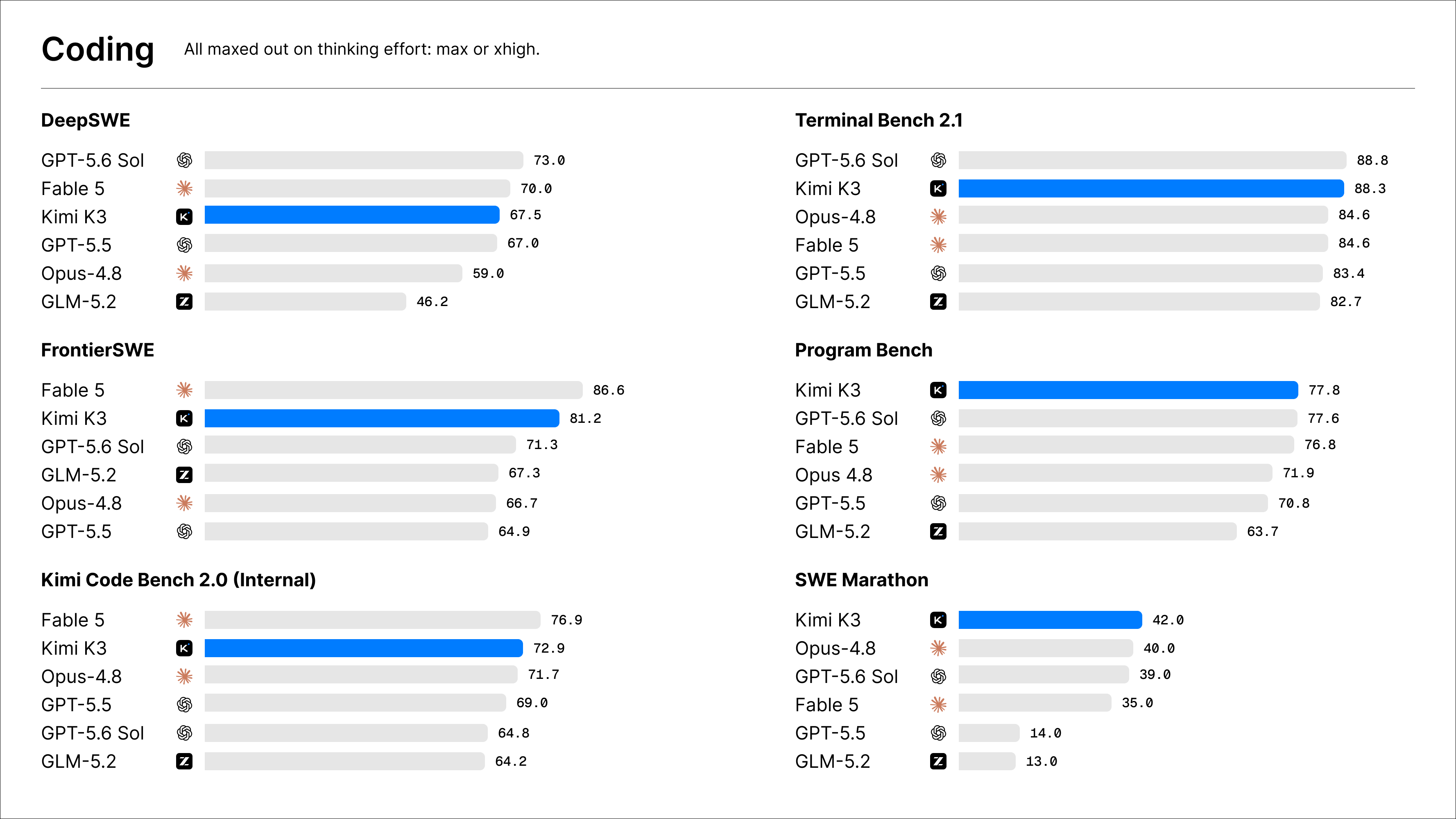
Moonshot AI officially launched the Kimi K3 . This 2.8-trillion-parameter model provides 1 million t
24-hour AI News Summary: Global AI competition continues to heat up, with chips, models, security re

On July 9, 2026, Mistral announced in its official article "Your Prompts and Skills Need a System of

On July 9, 2026, Google Research released the wearable health foundational model SensorFM. It was pr

On July 9, 2026, OpenAI officially announced ChatGPT Work in its announcement "ChatGPT is now a part