
Codex is stuck and not responding? Check by approval, terminal, and log check
If Codex is stuck and unresponsive, do not send the same message repeatedly. Confirm in order whethe
MimicPhoto is an AI photo expression editing and video generation tool. It is mainly used to edit facial expressions, retake effects and generate hugging or kissing videos. It is suitable for portrait creators, social media users, Short videos producers and lightweight retouching users. It can edit facial expressions in photos, support photo-to-video effects, and provide LivePortrait, retake and interactive video capabilities. Pay attention when using it. You must obtain authorization to process real photos. Intimate interactive generation especially needs to respect portraits and privacy boundaries. Free trials are provided. Before formal adoption, it is recommended to use low-risk samples to test once, record the input materials, output results, and manual modifications. The amount and final adoption ratio are then decided whether to put them into a fixed process.
If you often need to process editing facial expressions, retake effects, and generate hug or kissing videos, MimicPhoto can serve as a front-end assistant to produce measurable results first and then hand them over to others to make choices. For portrait creators, social media users, Short videos producers, and lightweight retouching users, its role is not to replace all judgments, but to make it easier for repetitive sorting, first draft generation, information extraction or auxiliary analysis to enter a reviewable state.
These capabilities are suitable for editing facial expressions, retaking effects, and generating hugging or kissing videos. If the team already has a mature process, they can put MimicPhoto in the drafting, sorting, preview or preliminary screening stage first, rather than directly undertaking the final delivery. This allows you to see the stability of the tool in real tasks, and also retains necessary manual inspections.
MimicPhoto is suitable for portrait creators, social media users, Short videos producers and lightweight retouching users. Such users usually already know what materials they are going to process and what results they want, and can also determine whether the output needs to be modified. If you only try occasionally, you can start with a single task; if you want the team to use it for a long time, you should add permissions, source of materials, review responsibilities, and cost caps.
You must obtain authorization to process real photos. Intimate interactive generation especially requires respecting portraits and privacy boundaries. When selecting such tools, you should not just look at the results of the first demonstration, but also look at the stability and waiting time in multiple consecutive tasks., modification costs and ease of traceability.
Three to five real but low-risk samples can be prepared, and input conditions, generated results, manual adjustment points, and final adoption can be recorded respectively. If MimicPhoto is stable on the main task, it is suitable for putting it into a fixed process; if the results often need to be redone, it is more suitable as inspiration, first draft or reference material.
It is best for editing facial expressions, retaking effects, and generating hug or kissing videos, especially for people who already have a clear goal but don't want to start sorting out from a blank state.
Not recommended. It can handle repetitive generation, identification, sorting, or preliminary screening tasks, but fact checks, compliance judgments, professional conclusions, and final trade-offs still require humans to complete.
It is recommended to prepare clear input materials, expected results and acceptance criteria. If customer data, real photos, commercial materials, medical financial information or study assignments are involved, authorization, privacy and use boundaries must also be confirmed in advance.

Midjourney is an AI image generation platform developed by Midjourney Inc., an independent research laboratory in the United States, that allows users to generate high-quality images from natural language prompt words. Users can use Discord or the web version to enter descriptive text to quickly generate a variety of image works. The platform provides a variety of model versions and parameter settings to meet the needs of different styles and precision, and is widely used in art creation, product design, advertising and marketing and other fields.

Fotor AI is a multi-functional creative platform that integrates AI image generation, intelligent retouching, and graphic design, and is suitable for a wide range of users, including content creators, designers, and marketers. Users can quickly generate high-quality images in a variety of styles, including illustrations, 3D renderings, cartoons, oil paintings, etc., by entering text or uploading images, to meet a variety of application scenarios such as social media content, brand visuals, and commercial promotion. The platform also provides practical tools such as AI avatar generation, image restoration, background removal, photo coloring, etc., to improve creative efficiency. Accessible on the web and mobile, Fotor is user-friendly and easy to use, making it easy for users to realize their creative ideas.

Ideogram is an AI image generation platform founded by former Google Brain researchers that focuses on accurately incorporating text into images, solving the problem of AI-generated images that are difficult to read Chinese characters. The platform supports a variety of style tags, such as "Typography", "Poster", "3D Render", etc., and users can generate images containing clear text through natural language prompts, which is suitable for poster design, brand identity, social media content and other scenarios. Ideogram is available on the web and for iOS, with batch generation and image editing capabilities to help users efficiently create high-quality visual content.

NightCafe is a leading AI art generation platform that allows users to quickly create high-definition art images by entering text prompts. The platform integrates Stable Diffusion, DALL· E and other image models, covering dreamy, realistic, abstract and other styles, suitable for illustration, cover design, social content production and other application scenarios. Users can customize the canvas size, art style, and number of iterations, and create on the go via web or mobile. NightCafe also has a work community and creative challenges to help designers output inspiration and fan interaction, effectively improving the visual expression of the brand.

Stable Diffusion is an open-source text-to-image generation model developed by Stability AI that enables users to generate high-quality images through natural language prompts. The model uses diffusion generation technology, which can generate realistic images based on the input text description, and is widely used in art creation, product design, advertising and marketing, and other fields. Stable Diffusion supports on-premise and cloud-based access, and provides APIs for developers to integrate into custom applications. The latest version, Stable Diffusion 3.5, offers significant improvements in image quality and generation speed, making it suitable for professional scenarios that require high-resolution image generation.

DALL· E is an AI image generation model developed by OpenAI that supports users to generate high-quality images through natural language prompt words. Latest versionDALL· The E 3 is integrated into ChatGPT to understand complex prompts more accurately and generate nuanced images. The model supports functions such as image extension (Outpainting) and editing (Inpainting), which is suitable for art creation, product design, advertising and marketing, and other fields. Users can access DALL· E service to meet the diverse needs of image generation.

If Codex is stuck and unresponsive, do not send the same message repeatedly. Confirm in order whethe
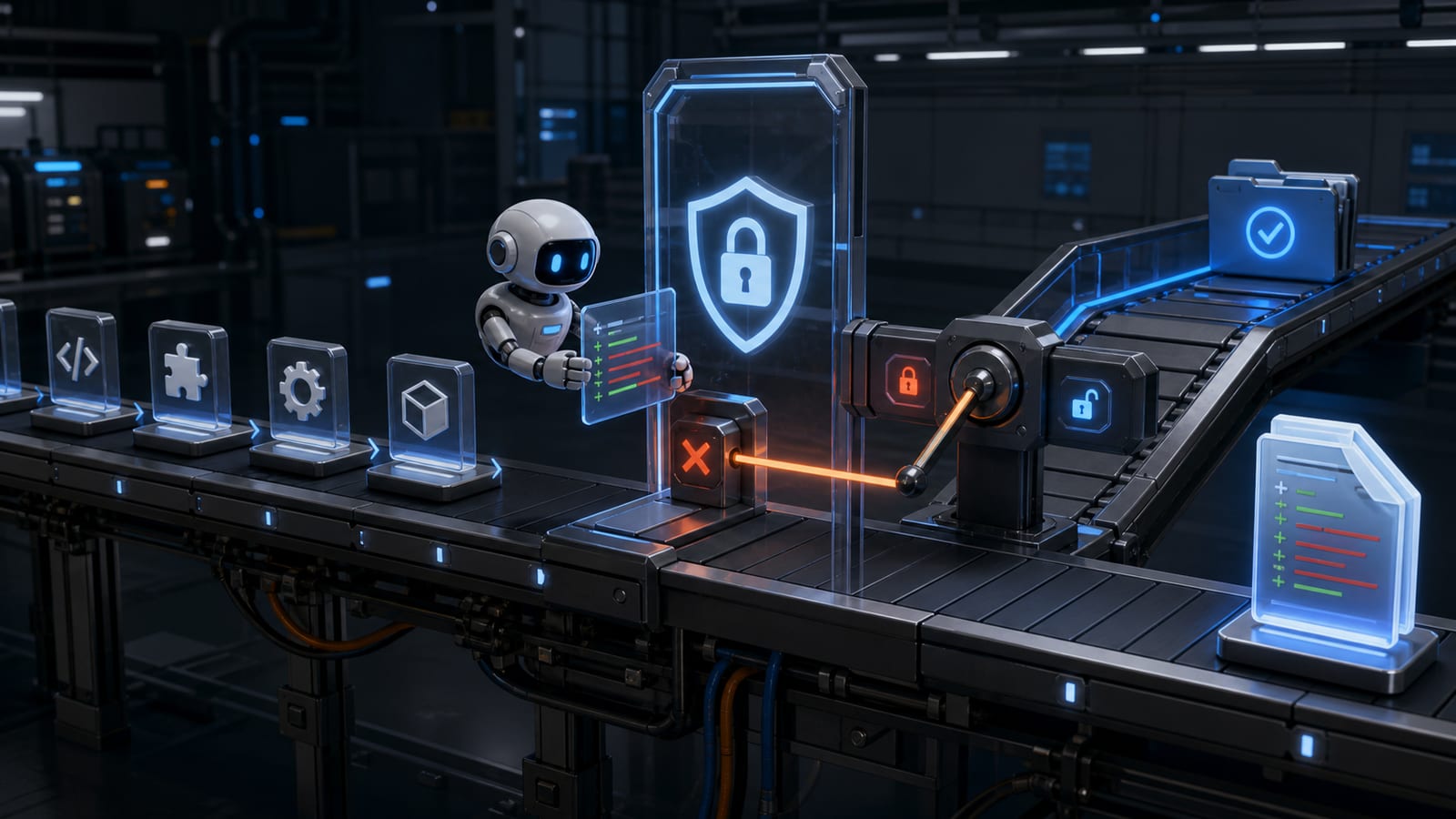
codex exec In CI, it can analyze code without making changes; first check the sandbox: non-interacti

If Codex Skills is installed but does not trigger, first check if it is located in the scan director

Codex config.toml changes that don't take effect usually don't mean the TOML file is corrupted, but

After exiting the Codex CLI, you don't need to redescribe the entire task; just run codex resume sel

On August 3, 2026, the Qwen team released the Qwen 3.8-Max on the official Qwen blog, positioning it