
Latest AI News: The World Artificial Intelligence Conference opens, with 29 countries preparing to establish AI cooperation organizations
24-hour AI News Snapshot: Kimi K3 resets the scale of open-source models, intensifying global AI gov
Mezzi is an AI wealth management and portfolio analysis tool mainly used to analyze account portfolios, tax opportunities, retirement planning and asset allocation. It is suitable for self-managed investors, high-net-worth families, financial advisers and tax planning users. It can analyze cross-account portfolios, provide tax and asset allocation related advice, and provide portfolio insights around retirement planning. Pay attention to when using it. Investment suggestions involve market risks and personal circumstances. Before major decisions, a licensed consultant or tax professional should be consulted, mainly for annual fee subscriptions. Before formal adoption, it is recommended to use low-risk samples to test once and record the input materials., output results, manual modifications and final adoption ratio, and then decide whether to put them into a fixed process.
The value of Mezzi is that it breaks down tasks such as "analyzing account portfolios, tax opportunities, retirement planning, and asset allocation" into steps that are easier to start, review, and iterate on. For self-managed investors, high-net-worth families, financial advisers, and tax planning users, its role is not to replace all judgments, but to make it easier for duplication, first draft generation, information extraction, or auxiliary analysis to enter a reviewable state.
These capabilities are suitable for analyzing account portfolios, tax opportunities, retirement planning and asset allocation. If the team already has a mature process, you can put Mezzi in the drafting, sorting, preview or preliminary screening stage first, rather than directly undertaking final delivery. This allows you to see the stability of the tool in real tasks, and also retains necessary manual inspections.
Mezzi is suitable for self-managed investors, high-net-worth families, financial advisers and tax planning users. Such users usually already know what materials they are going to process and what results they want, and can also determine whether the output needs to be modified. If you only try occasionally, you can start with a single task; if you want the team to use it for a long time, you should add permissions, source of materials, review responsibilities, and cost caps.
Investment advice involves market risks and personal circumstances. Before major decisions, a licensed consultant or tax professional should be consulted. When selecting such tools based on annual fee subscriptions, you should not just look at the results of the first demonstration, but also look at multiple tasks in a row. Stability, waiting time, modification costs and ease of traceability.
Three to five real but low-risk samples can be prepared, and input conditions, generated results, manual adjustment points, and final adoption can be recorded respectively. If Mezzi is stable on the main task, it is suitable for putting it into a fixed process; if the results often need to be redone, it is more suitable as inspiration, first draft, or reference material.
What problem is Mezzi best suited to solve?
It is best for analyzing account portfolios, tax opportunities, retirement planning and asset allocation, especially for people who already have clear goals but don't want to start with a blank.
Can Mezzi directly replace manual judgment?
Not recommended. It can handle repetitive generation, identification, sorting, or preliminary screening tasks, but fact checks, compliance judgments, professional conclusions, and final trade-offs still require humans to complete.
What should I prepare before using Mezzi?
It is recommended to prepare clear input materials, expected results and acceptance criteria. If customer data, real photos, commercial materials, medical financial information or study assignments are involved, authorization, privacy and use boundaries must also be confirmed in advance.

ToolSpend is an AI workflow tool for teams that need to create, organize, convert, or review task-specific material before final use. It should be used with clear source material, a defined output goal, and human review for accuracy, rights, privacy, and publishing quality.

TickerTrends is an AI tool for users who need a clearer way to handle focused digital work. It can support creation, automation, analysis, learning, media production, development, research, customer operations, or document workflows depending on the product scope. Start with a small low-risk task, compare the result with your own standards, and keep human review for facts, permissions, privacy, brand voice, safety, and final delivery.

TheAnalystAI is an AI tool for users who need a clearer way to handle focused digital work. It can support creation, automation, analysis, learning, media production, development, research, customer operations, or document workflows depending on the product scope. Start with a small low-risk task, compare the result with your own standards, and keep human review for facts, permissions, privacy, brand voice, safety, and final delivery.

Tendi is an AI tool for users who need a clearer way to handle focused digital work. It can support creation, automation, analysis, learning, media production, development, research, customer operations, or document workflows depending on the product scope. Start with a small low-risk task, compare the result with your own standards, and keep human review for facts, permissions, privacy, brand voice, safety, and final delivery.

Tabby is a practical AI tool for teams and individual users who need a clearer way to handle focused digital tasks. It can support content work, document handling, automation, learning, communication, media production, research, or customer workflows depending on the product scope. Users should start with a small low-risk task, compare the output with their own standards, and keep human review for facts, permissions, privacy, brand voice, and final delivery.

Syft Analytics helps users turn clear source material into editable results for content, media, data, learning, or operational workflows. It is best used when the goal, input, output format, and review standard are clear. Users should test it with a low-risk task first and keep human review for customer data, student work, financial information, portraits, production code, or public content.

24-hour AI News Snapshot: Kimi K3 resets the scale of open-source models, intensifying global AI gov
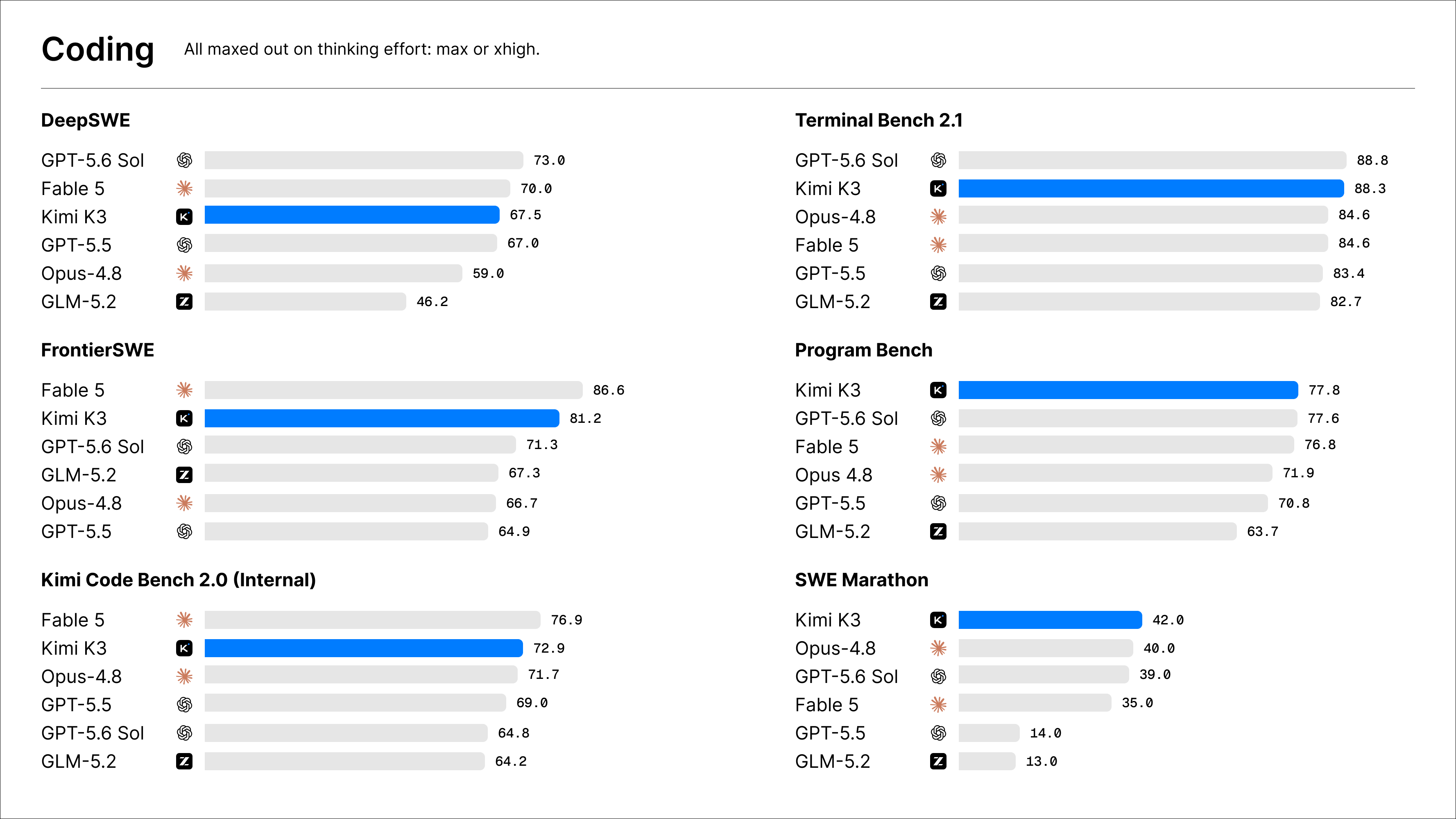
Moonshot AI officially launched the Kimi K3 . This 2.8-trillion-parameter model provides 1 million t
24-hour AI News Summary: Global AI competition continues to heat up, with chips, models, security re

On July 9, 2026, Mistral announced in its official article "Your Prompts and Skills Need a System of

On July 9, 2026, Google Research released the wearable health foundational model SensorFM. It was pr

On July 9, 2026, OpenAI officially announced ChatGPT Work in its announcement "ChatGPT is now a part