
Latest AI News: The World Artificial Intelligence Conference opens, with 29 countries preparing to establish AI cooperation organizations
24-hour AI News Snapshot: Kimi K3 resets the scale of open-source models, intensifying global AI gov
Leeway is an AI stock analysis tool that provides stock research assistance around fundamentals, market rhythms, and portfolio observations, helping investors organize scattered information into comparable analytical clues. It is suitable for individual investors actively researching stocks, investment advisors, and researchers who need to quickly screen targets. Before use, it is recommended to conduct small-scale testing with real materials or real processes, focusing on observing output quality, review costs, payment boundaries, data permissions, and whether the team can establish a stable manual review process. Before handling formal business, it should also be judged based on material authorization, privacy requirements, and manual review standards, and avoid using automatic results directly for external release or key decisions. If it is used for teams, customers, or teaching scenarios, it is also necessary to clarify the input source, result review responsibility, and scope of external use, and avoid putting the trial results directly into the formal process.
Leeway can be put in a real workflow as a front-end support: the most time-consuming and repetitive parts are handed over to the tool, and then the person in charge checks whether the results meet business goals and compliance requirements.
Suitable for individual investors, investment advisors, and researchers who need to quickly screen targets for active stock research. If you only deal with a similar task once in a while, you may not need to introduce such a tool specifically; If the task is repeated, the trial value will be more apparent.
Investment analysis is not a subs服装re for independent judgment and does not guarantee returns; Price fluctuations, earnings changes, and macro events all require manual review. In scenarios involving customers, contracts, health, finance, recruitment, or public postings, it is recommended to keep manual reviews and record of results.
You can first take your familiar stock test to see if the judgment it gives can explain the reason, rather than just looking at the conclusion.
When landing, you can select a low-risk sample first, and record the input materials, generated results, manual modifications, and final adopted versions separately. After several rounds of comparison, the team can more clearly determine which tasks are suitable for tooling and which still need to be led by professionals.
If you use it for a long time, you should also confirm the account permissions, data retention, fee limit, and exception handling responsibility. This allows the tool to enter a traceable daily process rather than just a trial.
Before formal adoption, it can also be compared side-by-side with existing practices: while recording the time required, number of communications, and reasons for rework required for manual processing, the percentage of tool outputs that are adopted, modified, and abandoned on the other. This comparison helps the team determine which part of the job it is really suitable for, rather than relying solely on the effectiveness of a single presentation.
For scenarios that require multiple people to collaborate, it is recommended to agree on naming rules, version retention, approval nodes, and exception feedback methods in advance. The closer the tool gets to the day-to-day business, the more clearly the boundaries of responsibility need to be written, especially when it comes to customer information, personal data, contract content, advertising budgets, or publicly available materials.
Can Leeway give direct buying and selling advice?
It is more suitable as a research aid, and formal transactions still need to be judged by the user.
Is it suitable for novice investors? **
can help understand the metrics, but newbies should confirm their risk tolerance first.
What should I pay attention to when using it?
Focus on whether the analysis logic, data sources and risk warnings are consistent with your own investment framework.

ToolSpend is an AI workflow tool for teams that need to create, organize, convert, or review task-specific material before final use. It should be used with clear source material, a defined output goal, and human review for accuracy, rights, privacy, and publishing quality.

TickerTrends is an AI tool for users who need a clearer way to handle focused digital work. It can support creation, automation, analysis, learning, media production, development, research, customer operations, or document workflows depending on the product scope. Start with a small low-risk task, compare the result with your own standards, and keep human review for facts, permissions, privacy, brand voice, safety, and final delivery.

TheAnalystAI is an AI tool for users who need a clearer way to handle focused digital work. It can support creation, automation, analysis, learning, media production, development, research, customer operations, or document workflows depending on the product scope. Start with a small low-risk task, compare the result with your own standards, and keep human review for facts, permissions, privacy, brand voice, safety, and final delivery.

Tendi is an AI tool for users who need a clearer way to handle focused digital work. It can support creation, automation, analysis, learning, media production, development, research, customer operations, or document workflows depending on the product scope. Start with a small low-risk task, compare the result with your own standards, and keep human review for facts, permissions, privacy, brand voice, safety, and final delivery.

Tabby is a practical AI tool for teams and individual users who need a clearer way to handle focused digital tasks. It can support content work, document handling, automation, learning, communication, media production, research, or customer workflows depending on the product scope. Users should start with a small low-risk task, compare the output with their own standards, and keep human review for facts, permissions, privacy, brand voice, and final delivery.

Syft Analytics helps users turn clear source material into editable results for content, media, data, learning, or operational workflows. It is best used when the goal, input, output format, and review standard are clear. Users should test it with a low-risk task first and keep human review for customer data, student work, financial information, portraits, production code, or public content.

24-hour AI News Snapshot: Kimi K3 resets the scale of open-source models, intensifying global AI gov
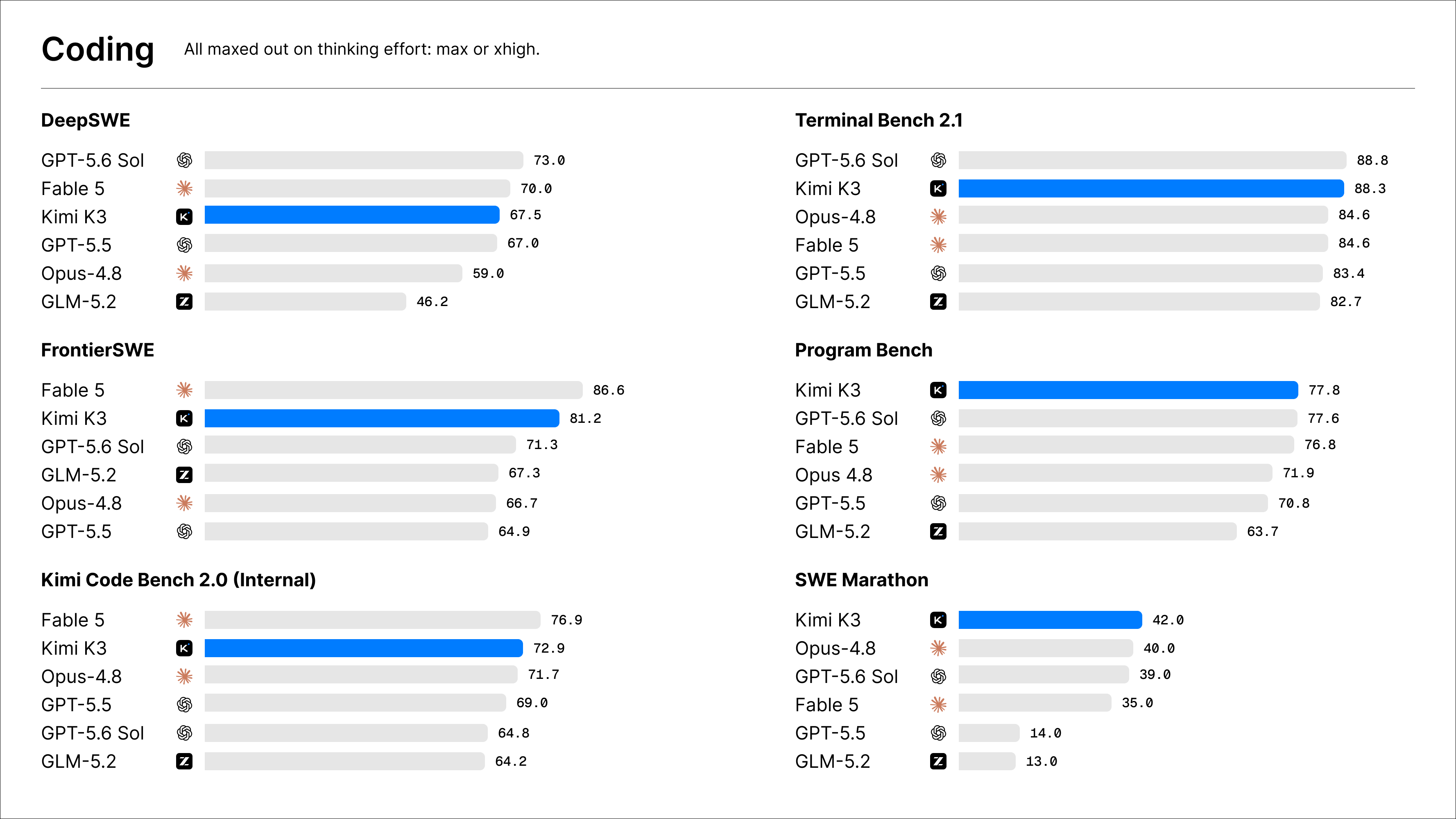
Moonshot AI officially launched the Kimi K3 . This 2.8-trillion-parameter model provides 1 million t
24-hour AI News Summary: Global AI competition continues to heat up, with chips, models, security re

On July 9, 2026, Mistral announced in its official article "Your Prompts and Skills Need a System of

On July 9, 2026, Google Research released the wearable health foundational model SensorFM. It was pr

On July 9, 2026, OpenAI officially announced ChatGPT Work in its announcement "ChatGPT is now a part