
Latest AI News: The World Artificial Intelligence Conference opens, with 29 countries preparing to establish AI cooperation organizations
24-hour AI News Snapshot: Kimi K3 resets the scale of open-source models, intensifying global AI gov
KBY-AI is an AI SDK platform for authentication and computer vision applications, providing capabilities such as face recognition, liveness detection, document recognition, palm print recognition, and license plate recognition, and emphasizes the performance of face recognition in the NIST FRVT rankings. It is suitable for finance, access control, security, access management, KYC, and on-device identity authentication scenarios. The platform offers business models such as perpetual licenses. Privacy compliance, risk of bias, on-premises deployment requirements, and user authorization must be evaluated before use. It's more suitable for users with clear goals, input materials, and boundaries, and small-scale testing can help you determine whether the results are worth going into the formal process faster. Before use, you should also use your own data sources, team processes, and review criteria to avoid direct automatic results into official release, submission, or business decisions.
KBY-AI is aimed at authentication capabilities integration rather than a single photo tool. Development teams can embed face, ID, or license plate recognition into their own systems.
Suitable for developers, enterprises, and security scenarios that require authentication capabilities. Ordinary content creation or photo manipulation is not suitable for it.
Biometrics are highly sensitive data. User authorization, data retention, encryption, bias assessment, and regional regulations must be confirmed.
It is recommended to test KBY-AI with a real small task: whether the input material is easy to prepare, whether the output results require extensive modifications, whether the quota or price is in line with the frequency of use, and whether the team can accept the cost of subsequent review. When it comes to personal data, health information, job search materials, customer communications, copyrighted materials, or account automation, you must also confirm authorization, privacy, platform rules, and manual review responsibilities.
In actual use, the original materials, generated results, and manual modification records can also be retained, making it easy to trace the source, interpret decisions, and control risks. This allows AI output to be put into a controlled process, rather than directly using unconfirmed content for formal scenarios.
In more complex team processes, it is also recommended to set acceptance criteria, such as whether the results cover core requirements, whether they can be reviewed by colleagues, whether they keep records of provenance, whether they meet privacy and authorization requirements, and whether there is a manual way to cover them if they fail. This step may seem trivial, but it reduces subsequent rework, misuse, and unclear accountability.
If you want to use it in a multi-person collaboration, you can also record the input material, output version, manual modifications, and final adoption results separately. This not only makes it easier to review which prompts or materials are really effective, but also makes it easier to explain the basis when customers, colleagues or managers ask questions, reducing communication costs caused by inconsistent calibers.
What does KBY-AI do? **
It mainly provides identity verification SDKs such as face recognition, liveness detection, and document recognition.
Is it suitable for on-premises deployment? **
The page emphasizes the local authentication SDK, and the specific deployment method needs to be combined with the project confirmation.
What is the biggest risk before accessing?
Biometric data compliance, user authorization, and model bias risk must all be assessed in advance.

RNWY is an AI agent trust and reputation infrastructure for developers and platform teams building agent ecosystems, tool marketplaces, or automation services to build identity, scoring, reputation, and capability records for AI or human actors. It focuses on giving agent behavior, skills, and reputation a traceable layer of trust, with key capabilities including positioning as an AI trust layer, showcasing 185K+ agents scored, and providing skill.md for AI reading. It offers free entry or trial credits, which are suitable for verifying results with small tasks first. Before use, it should be noted that on-chain or reputation scores can only be used as signals, and there must be independent mechanisms for identity authentication, permission granting, and risk control. If you plan to adopt it for a long time, it is recommended to test input lead time, output availability, manual review costs, and permission boundaries with real samples before deciding whether to put it into a fixed process.

Resemble AI is a secure voice generation and deepfake detection platform for enterprise security teams, media teams, customer service voice teams, and compliance leaders to generate secure voices, voice cloning, media watermarking, authentication, and deepfake detection. It focuses on putting voice generation capabilities and content security detection in the same governance process, with common capabilities including text-to-speech, speech creation and speech conversion, including watermarking, authentication and deepfake detection, and support for cloud or on-premises deployments. It is more inclined to paid or team procurement scenarios, suitable for users with clear process needs. Before use, it should be noted that voice cloning must be authorized, and the security test results also need to be cooperated with manual and process evidence. If the team is preparing for long-term adoption, it is recommended to test input materials, output quality, manual review costs, and permission boundaries with a set of real-world tasks before deciding whether to include a fixed process.

Pervaziv AI is an AI DevSecOps and multi-cloud security platform that is mainly used to provide code review, risk assessment, package analysis, vulnerability management and multi-cloud enterprise AI capabilities to help teams protect application creation, deployment and operation processes. It is suitable for security teams, DevSecOps teams, cloud platform teams, and enterprise software engineering organizations. Common uses include checking code and dependency risks before release, managing the security status of multi-cloud applications, and establishing automated assistance for enterprise AI and DevSecOps processes. When using it, be aware that the security platform needs to cooperate with existing scanning, permissions, and audit processes. AI results cannot replace the security team's risk acceptance and remediation decisions. The page provides product and pricing entrances, and enterprise deployments usually need to be evaluated based on environmental scale. It is recommended to use one or two low-risk tasks to test input materials, output quality, manual modification amount and final adoption ratio before deciding whether to put them into a fixed process.

Parea AI is an AI evaluation and human annotation platform that is mainly used to help teams conduct experimental tracking, AI system evaluation, production observability, human annotation and failure debugging. It is suitable for LLM application teams, AI engineers, product teams and companies that need stable online model capabilities. Common uses include comparing different prompt words or model versions, checking for quality regression of answers before going online, and collecting manual annotations to improve system performance. Pay attention when using it, and the evaluation results depend on the test samples and labeling standards. If the sample coverage is insufficient, the platform will not be able to discover all real user problems. The page provides a free start entry, and the price needs to be checked for team size use. It is recommended to use one or two low-risk tasks to test input materials, output quality, manual modification amount and final adoption ratio before deciding whether to put them into a fixed process.

Openlayer is an observable platform for AI governance and LLM applications. It is mainly used to provide evaluation, CI/CD verification, production monitoring, safety barriers and compliance testing for AI systems, helping teams discover problems such as hallucinations, PII leaks and prompt injection. It is suitable for AI product teams, platform engineering teams, model governance leaders and enterprise security compliance teams. Common uses include performing regression testing before LLM applications go online, monitoring output quality and delay in the production environment, and establishing frameworks such as EU AI Act and NIST. Governance processes. Be careful when using it. It can help identify risks, but it cannot replace internal security, legal and data governance systems. When the test set design is insufficient, there will also be blind spots in the monitoring results. The page provides request demonstrations and pricing entrances, and is usually quoted based on team size, call volume, and governance needs. It is recommended to use one or two low-risk tasks to test input materials, output quality, manual modification amount and final adoption ratio before deciding whether to put them into a fixed process.

Maxim is a generative AI evaluation and observability platform mainly used to simulate, evaluate and monitor the quality of AI Agents and generative applications. It is suitable for AI product teams, engineering teams, model application developers and quality leaders. It can support experiments, Agent simulation and evaluation processes, provide observability for generative AI applications, and connect development, testing and online links with a unified library. When using it, note that the evaluation platform requires the team to first define indicators, test sets, and failure criteria; if there is no stable data and online process, the value of the tool will be weakened. It is intended for use by teams and enterprises and is usually evaluated by plan or usage. Before formal adoption, it is recommended to test once with low-risk materials or small samples, record the input quality, output results, manual modifications and final adoption ratio, and then decide whether to put them into the long-term workflow.

24-hour AI News Snapshot: Kimi K3 resets the scale of open-source models, intensifying global AI gov
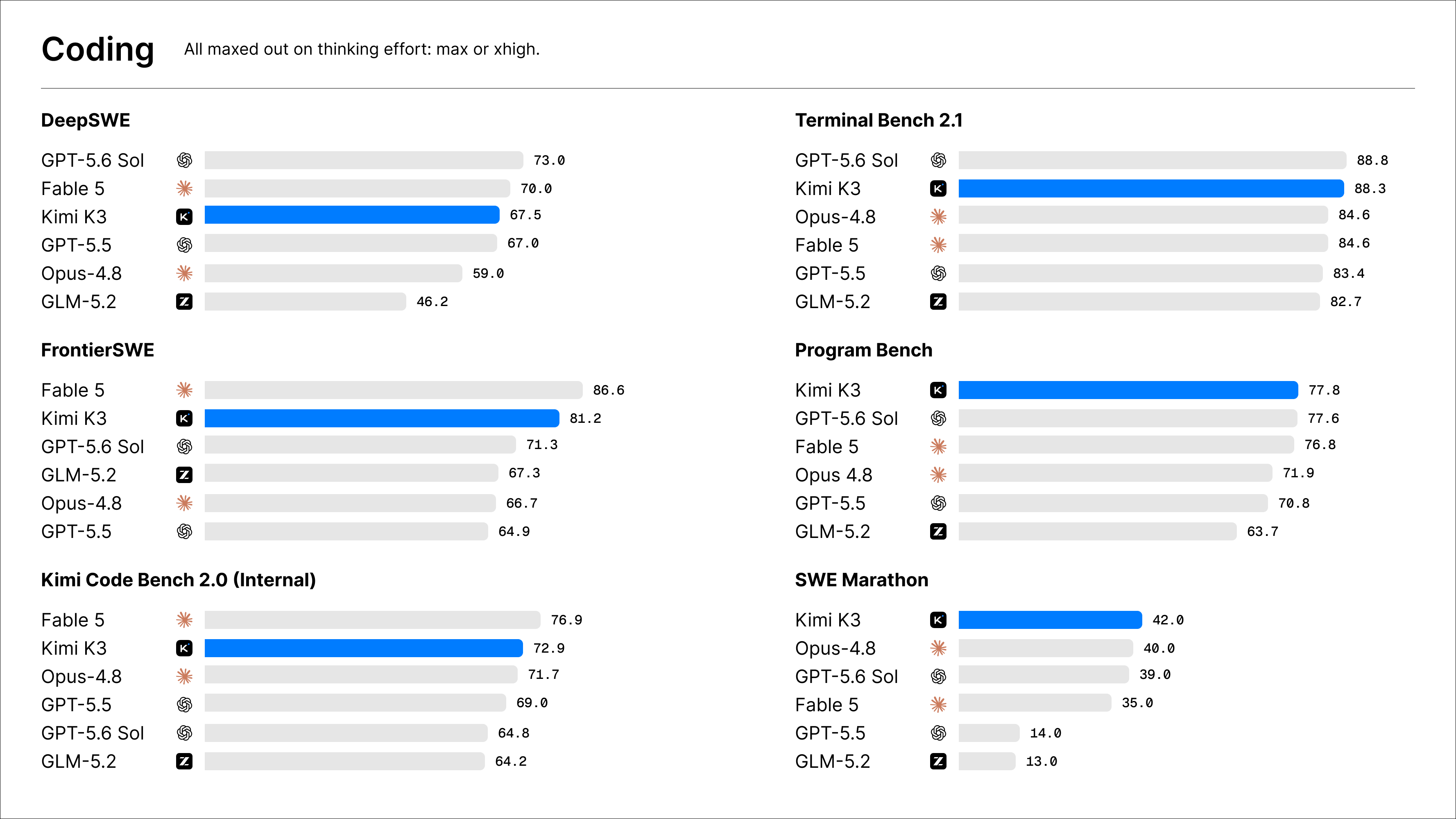
Moonshot AI officially launched the Kimi K3 . This 2.8-trillion-parameter model provides 1 million t
24-hour AI News Summary: Global AI competition continues to heat up, with chips, models, security re

On July 9, 2026, Mistral announced in its official article "Your Prompts and Skills Need a System of

On July 9, 2026, Google Research released the wearable health foundational model SensorFM. It was pr

On July 9, 2026, OpenAI officially announced ChatGPT Work in its announcement "ChatGPT is now a part