
Codex is stuck and not responding? Check by approval, terminal, and log check
If Codex is stuck and unresponsive, do not send the same message repeatedly. Confirm in order whethe
KaraboAI is a custom AI chatbot platform for business websites that allows users to quickly create business support bots and embed them on websites for 24/7 customer service, FAQ answering, lead generation, and visitor conversion. It's suitable for SMBs, service providers, e-commerce, and website teams that need to reduce the stress of repeated inquiries. The platform offers free bots and message credits. Before going online, you need to prepare a knowledge base, business rules, manual takeover methods, and error response handling mechanisms. It's more suitable for users with clear goals, input materials, and boundaries, and small-scale testing can help you determine whether the results are worth going into the formal process faster. Before use, you should also use your own data sources, team processes, and review criteria to avoid direct automatic results into official release, submission, or business decisions.
KaraboAI is suitable for teams that want to quickly deploy AI agents on their websites. Its focus is not on generic small talk, but on answering visitor questions around corporate profiles.
Ideal for websites, e-commerce, small businesses, and service agencies with repeated inquiries. Complex after-sales, legal commitments, and high-value customers still require human customer service.
Chatbots rely on knowledge base accuracy. Before going live, set up unanswerable questions, manual takeovers, and error correction processes.
It is recommended to test KaraboAI with a real small task: whether the input materials are easy to prepare, whether the output results require extensive modifications, whether the quota or price is in line with the frequency of use, and whether the team can accept the cost of subsequent reviews. When it comes to personal data, health information, job search materials, customer communications, copyrighted materials, or account automation, you must also confirm authorization, privacy, platform rules, and manual review responsibilities.
In actual use, the original materials, generated results, and manual modification records can also be retained, making it easy to trace the source, interpret decisions, and control risks. This allows AI output to be put into a controlled process, rather than directly using unconfirmed content for formal scenarios.
In more complex team processes, it is also recommended to set acceptance criteria, such as whether the results cover core requirements, whether they can be reviewed by colleagues, whether they keep records of provenance, whether they meet privacy and authorization requirements, and whether there is a manual way to cover them if they fail. This step may seem trivial, but it reduces subsequent rework, misuse, and unclear accountability.
If you want to use it in a multi-person collaboration, you can also record the input material, output version, manual modifications, and final adoption results separately. This not only makes it easier to review which prompts or materials are really effective, but also makes it easier to explain the basis when customers, colleagues or managers ask questions, reducing communication costs caused by inconsistent calibers.
Is KaraboAI suitable for non-technical users? **
The core scenario is to quickly create and embed a business chatbot.
Can it be a complete replacement for customer service? **
No, I can't. Frequently asked questions can be handled automatically, and complex complaints and special commitments are still taken over manually.
What to prepare before going live?
FAQs, product information, policy terms, contact details, and manual takeover rules are required.

ChatGPT is a full-scenario artificial intelligence chatbot launched by OpenAI, integrating intelligent question answering, long-form writing, AI programming, code debugging, image recognition and voice synthesis, and supports multilingual real-time interaction. The platform offers advanced features such as plugin marketplaces, browser calls, API interfaces, team collaboration, and enterprise-level deployment, and is powered by the GPT-4o large model to accurately understand context and generate high-quality content. ChatGPT can be widely used in intelligent customer service, marketing copywriting, academic research, software development, knowledge management and other scenarios, supporting simultaneous use on the web, mobile and desktop, and has a privacy protection mode, and the data does not participate in model training, which is safe and reliable, helping individuals and enterprises significantly improve work efficiency and creative capabilities.

Claude is an advanced AI assistant developed by Anthropic to provide AI services that are safe, reliable, and in line with human values. Based on the concept of "Constitutional AI", Claude follows a clear set of ethical principles during the training process to ensure that the content of his output is safe and beneficial. The model performs well in natural language processing, text generation, code writing, data analysis, etc., and is suitable for a variety of scenarios such as office automation, customer support, and content creation. Claude supports multimodal input, is able to process text, audio, and image information, and has strong contextual understanding and reasoning skills. Users can access Claude via a web version, a desktop app, or an API to meet different needs. The latest version of the Claude 4 series, which includes the Opus and Sonnet models, further enhances inference, planning, and long-term memory for complex tasks and enterprise-level applications.

Kimi is a high-performance AI chat assistant from Dark Side of the Moon that supports ultra-long contextual input and is capable of processing millions of words of text. It has excellent multi-modal processing and chain reasoning capabilities, and supports multiple functions such as document parsing, code writing, and real-time network search, and is widely used in learning, office, scientific research, and programming scenarios. Kimi provides access to the web, mini-programs, and mobile terminals, making it a powerful assistant for efficiency and creativity.

Tencent Ingot is an intelligent assistant platform built by Tencent based on the Hybrid T1 and DeepSeek-R1 models, providing multi-functional services such as copywriting, AI drawing, programming assistance, translation, intelligent search, and long article summarization. The product supports web, iOS/Android mobile and PC clients, and users can obtain high-quality content through multi-modal interaction such as text, voice, and pictures. With real-time online retrieval and chain reasoning capabilities, Yuanbao can accurately understand the context, realize customized instructions and multi-person collaborative editing, and are widely used in office, learning, creation and scientific research scenarios, helping users to efficiently output and manage knowledge. At the same time, the platform also supports plug-in functions such as intelligent calls, photo answering and table analysis, etc., to improve work and life efficiency in an all-round way.

Z Chat is an open-source intelligent dialogue platform launched by Zhipu AI, driven by the self-developed GLM series of large models, which supports multilingual dialogue, chain reasoning, and deep retrieval. Users can experience high-performance Q&A and knowledge discovery functions for free through barrier-free access on the web terminal. With the advantages of open source transparency, continuous iteration, and community-driven, Z Chat plans to support multi-modal interaction and plug-in extensions in the future, and provide developers, researchers, and enterprises with customized API and plug-in access capabilities to help build innovative applications and intelligent services.

Microsoft Copilot is a multimodal AI assistant launched by Microsoft, integrated with Windows, Microsoft 365, Edge browser and other platforms, providing text generation, voice interaction, image creation and other functions. Based on GPT-4 and Microsoft Graph, Copilot can understand users' natural language instructions and assist in tasks such as document writing, data analysis, email processing, and code writing. Users can access Copilot through the web, desktop app, and mobile devices, enhancing productivity and creativity. Copilot also supports plugin extensions, suitable for the diverse needs of individual users and enterprise teams.

If Codex is stuck and unresponsive, do not send the same message repeatedly. Confirm in order whethe
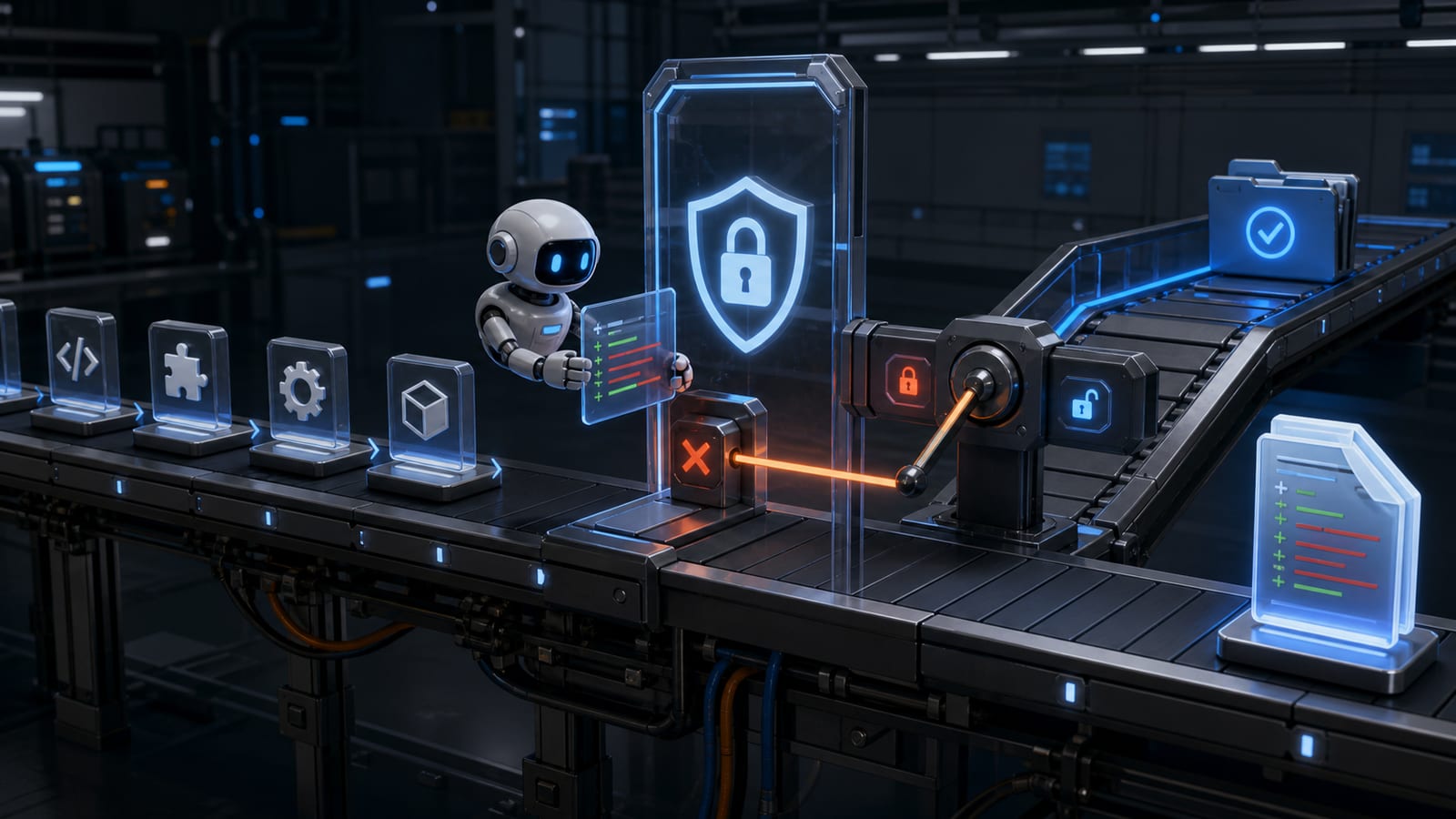
codex exec In CI, it can analyze code without making changes; first check the sandbox: non-interacti

If Codex Skills is installed but does not trigger, first check if it is located in the scan director

Codex config.toml changes that don't take effect usually don't mean the TOML file is corrupted, but

After exiting the Codex CLI, you don't need to redescribe the entire task; just run codex resume sel

On August 3, 2026, the Qwen team released the Qwen 3.8-Max on the official Qwen blog, positioning it