
Codex is stuck and not responding? Check by approval, terminal, and log check
If Codex is stuck and unresponsive, do not send the same message repeatedly. Confirm in order whethe
FinanceGPT is a generative AI financial analysis platform. The core positioning visible on the official website is to combine financial data, charts, and professional knowledge to support investment analysis and business decision-making, and provide online processing capabilities around financial data analysis, chart interpretation, asset management, financial planning, and custom Copilot. It's better suited for analysts, advisors, and institutional teams who need to turn financial data into interpretable insights, and before using it, they should check whether their account, asset licensing, data sources, language support, export formats, and payment boundaries align with their way of working. For scenarios involving portraits, voices, finance, law, medical care, recruitment, or public information, it is also necessary to retain the manual review link, and use the generated results as auxiliary judgments, rather than directly replacing professional opinions or formal conclusions.
The detail page of FinanceGPT focuses on whether it can be implemented in real tasks. It is not a simple concept page, the official website has given a clear entrance, functional module or usage process, suitable for verifying the output with a small task first, and then deciding whether to put it in the long-term process.
It is suitable for collating market data, generating financial analysis drafts, producing client reports, building internal analysis assistants, and assisting in investment research.
Suitable for financial analysts, asset management teams, financial advisors, researchers, and fintech teams.
The limitation is that there are risks in financial markets, AI analysis cannot be used as sole investment advice, and data sources and model assumptions must be checked.
Before use, the data caliber, time range, investment constraints and risk warnings should be clarified, and then the output should be submitted to professionals for review.
First, look at whether the input comes from legal, clear, and authorizable data, and then see if the output can be understood and modified. When it comes to auto-generated content, check facts, tone, formatting, and platform rules; When it comes to data analysis, go back to the original source to check the key figures; When face, voice, or professional information is involved, confirm the other party's authorization and use boundaries.
If you need formal identity verification, medical diagnosis, investment advice, legal advice, hiring conclusions, or a public release process without manual review, these tools should not be ultimately responsible. It is more suitable as a draft, lead, sample, primary screening, or auxiliary analysis tool.
What problem does FinanceGPT mainly solve?
It solves the problem of financial data, charts, and analysis logic being difficult to quickly convert into readable reports.
Is FinanceGPT suitable for jumping straight into formal processes? **
Suitable for entering the research and report drafting process, formal investment advice requires professional qualifications and risk disclosure.
What do I need to prepare before using FinanceGPT?
Financial data, analysis objectives, timeframe, and the report structure you want to generate need to be prepared.

ToolSpend is an AI workflow tool for teams that need to create, organize, convert, or review task-specific material before final use. It should be used with clear source material, a defined output goal, and human review for accuracy, rights, privacy, and publishing quality.

TickerTrends is an AI tool for users who need a clearer way to handle focused digital work. It can support creation, automation, analysis, learning, media production, development, research, customer operations, or document workflows depending on the product scope. Start with a small low-risk task, compare the result with your own standards, and keep human review for facts, permissions, privacy, brand voice, safety, and final delivery.

TheAnalystAI is an AI tool for users who need a clearer way to handle focused digital work. It can support creation, automation, analysis, learning, media production, development, research, customer operations, or document workflows depending on the product scope. Start with a small low-risk task, compare the result with your own standards, and keep human review for facts, permissions, privacy, brand voice, safety, and final delivery.

Tendi is an AI tool for users who need a clearer way to handle focused digital work. It can support creation, automation, analysis, learning, media production, development, research, customer operations, or document workflows depending on the product scope. Start with a small low-risk task, compare the result with your own standards, and keep human review for facts, permissions, privacy, brand voice, safety, and final delivery.

Tabby is a practical AI tool for teams and individual users who need a clearer way to handle focused digital tasks. It can support content work, document handling, automation, learning, communication, media production, research, or customer workflows depending on the product scope. Users should start with a small low-risk task, compare the output with their own standards, and keep human review for facts, permissions, privacy, brand voice, and final delivery.

Syft Analytics helps users turn clear source material into editable results for content, media, data, learning, or operational workflows. It is best used when the goal, input, output format, and review standard are clear. Users should test it with a low-risk task first and keep human review for customer data, student work, financial information, portraits, production code, or public content.
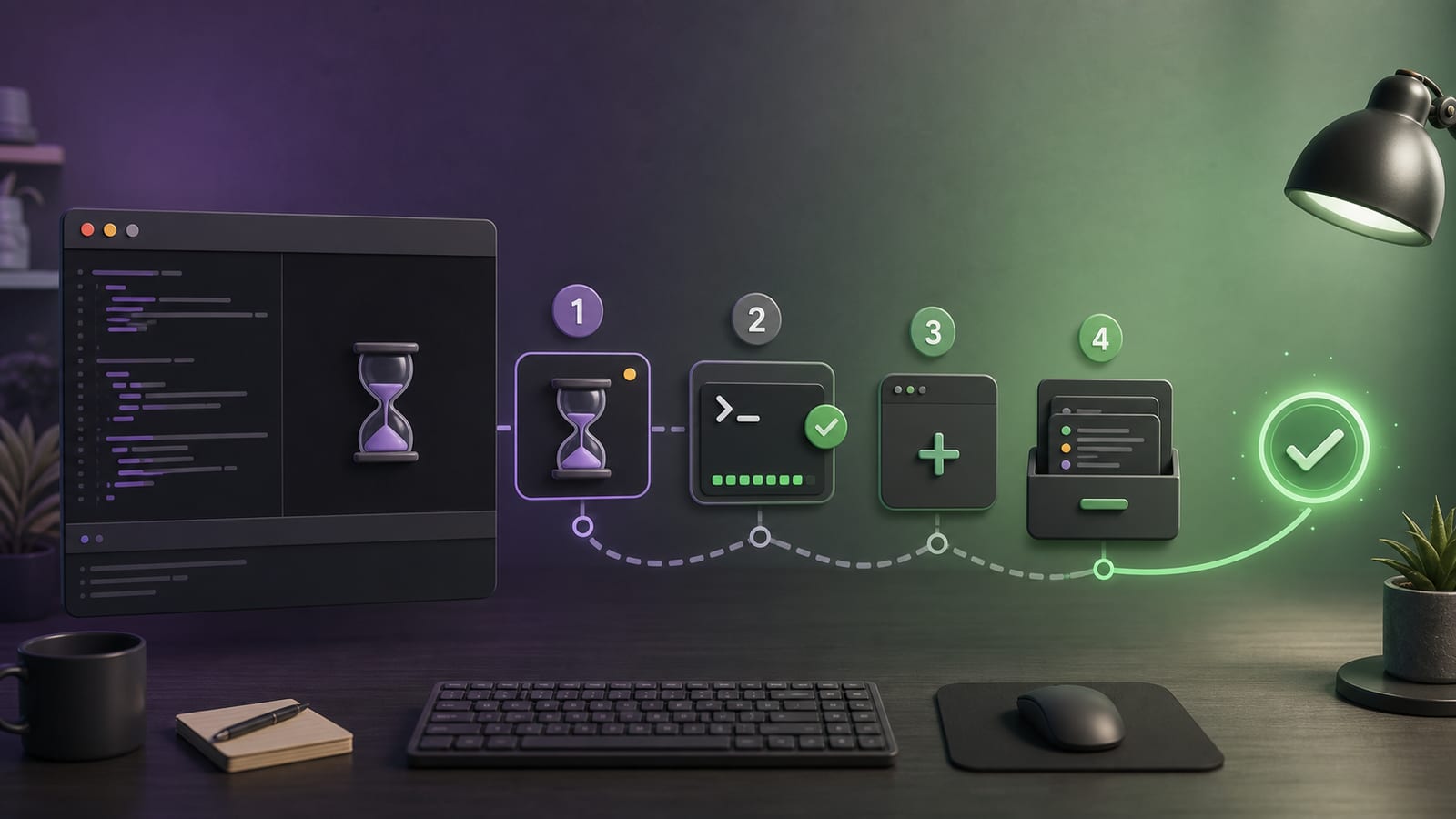
If Codex is stuck and unresponsive, do not send the same message repeatedly. Confirm in order whethe

codex exec In CI, it can analyze code without making changes; first check the sandbox: non-interacti

If Codex Skills is installed but does not trigger, first check if it is located in the scan director

Codex config.toml changes that don't take effect usually don't mean the TOML file is corrupted, but

After exiting the Codex CLI, you don't need to redescribe the entire task; just run codex resume sel

On August 3, 2026, the Qwen team released the Qwen 3.8-Max on the official Qwen blog, positioning it