
Codex is stuck and not responding? Check by approval, terminal, and log check
If Codex is stuck and unresponsive, do not send the same message repeatedly. Confirm in order whethe
Cyanite.ai is an AI tool for music retrieval and music organization scenarios. AI music tagging and similarity search is directly written on the homepage of the official website, and usage scenarios such as publishers, libraries, audio branding, distribution, radio & retail are clearly listed, indicating that it does not serve the universal creative needs, but the music content management, retrieval and recommendation workflow. Its positioning is very clear for teams that need to label music, find similar tracks, and improve the retrievability of the music library. Judging from the information currently verifiable on the official website, its target tasks, applicable objects and product boundaries are relatively clear, and it is more suitable for people who already have clear usage scenarios to start directly, rather than treating it as a universal tool without boundaries.
The more musical assets there are, the really difficult thing is often not "whether there is a song", but "how to find the right song." The core of Cyanite.ai is to use AI to organize music content to make it easier to search, match and discover.
Cyanite.ai is suitable for music library tagging, similar song search, soundtrack search, brand voice screening, music recommendation and creating a more detailed search portal for large-scale music libraries.
Suitable for music copyright owners, music libraries, brand sound teams, distribution teams, music technology companies and organizations that need to manage large amounts of audio content.
It is suitable for organizing work at the labeling and search levels, but the final aesthetic judgment, copyright decision and commercial song selection still need to be decided by the team itself.
When included, Cyanite.ai should be written as a music label and similarity search tool, focusing on tagging, search, music detection and API, and not as an AI composer.
If you already know exactly what type of task you want to solve, such as intra-enterprise search, classroom interaction, Short Video generation, email processing, music retrieval, conference digital personages, job search material optimization or avatar production, it is worth taking real samples to try them directly; if your needs are still extensive, or the official website does not clearly write about prices, permissions, data range and integration methods, it will be more stable to start with the trial version, small tasks or demonstration function.
Cyanite.ai is more suitable for creation or retrieval?
More suitable for retrieval and organization, the core selling points of the official website are tags, search and similar song discovery.
What type of team is Cyanite.ai for?
It is more suitable for music libraries, copyright owners, distribution teams and organizations that do brand sound or music technology.
Can Cyanite.ai replace manual song selection?
It cannot be completely replaced, but it can first narrow down the candidate range to make the song selection process more directional.
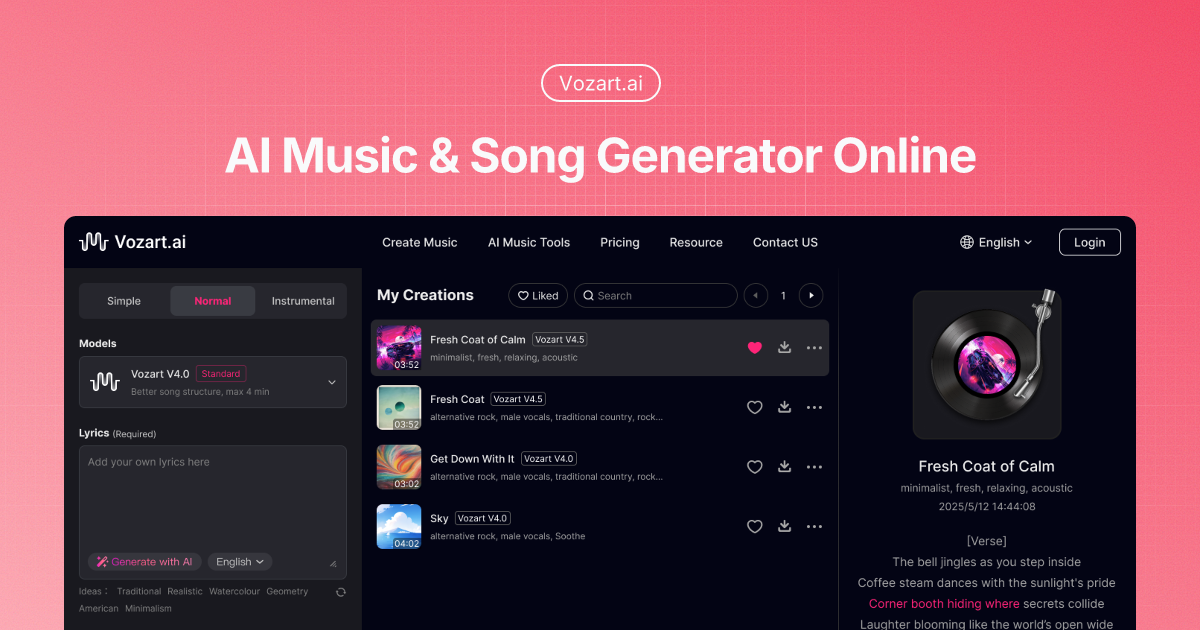
Vozart is an AI music and lyrics generator primarily aimed at music creators, short video teams, and lyric writers for generating drafts of songs, lyrics, and music ideas. It's better for people who already have clear footage, scripts, customer communications, or business processes to centralize song generation, lyric writing, and music drafts into a more performable workflow. When using it, you need to focus on music copyright, style originality and post-production, especially when it comes to customer information, character voices, image materials, web page data or published content, you should first confirm authorization and manual review. Overall, Vozart is suitable as an auxiliary tool for generating drafts of songs, lyrics, and music ideas, rather than a complete replacement for the final judgment of editors, operations, R&D, or management.

Vocs AI is an AI music and sound design tool for teams and creators who need a practical way to generate, organize, convert, or review work before it moves into a final production flow. It is best used with clear source material, a defined output goal, and a human review step for accuracy, rights, privacy, and publishing quality.

Vertate is an AI music and sound design tool for teams and creators who need a practical way to generate, organize, convert, or review work before it moves into a final production flow. It is best used with clear source material, a defined output goal, and a human review step for accuracy, rights, privacy, and publishing quality.

UniMusic AI is an AI workflow tool for teams that need to create, organize, convert, or review task-specific material before final use. It should be used with clear source material, a defined output goal, and human review for accuracy, rights, privacy, and publishing quality.

TinyMusic is an AI workflow tool for teams that need to create, organize, convert, or review task-specific material before final use. It should be used with clear source material, a defined output goal, and human review for accuracy, rights, privacy, and publishing quality.

Text to Song is an AI tool for users who need a clearer way to handle focused digital work. It can support creation, automation, analysis, learning, media production, development, research, customer operations, or document workflows depending on the product scope. Start with a small low-risk task, compare the result with your own standards, and keep human review for facts, permissions, privacy, brand voice, safety, and final delivery.
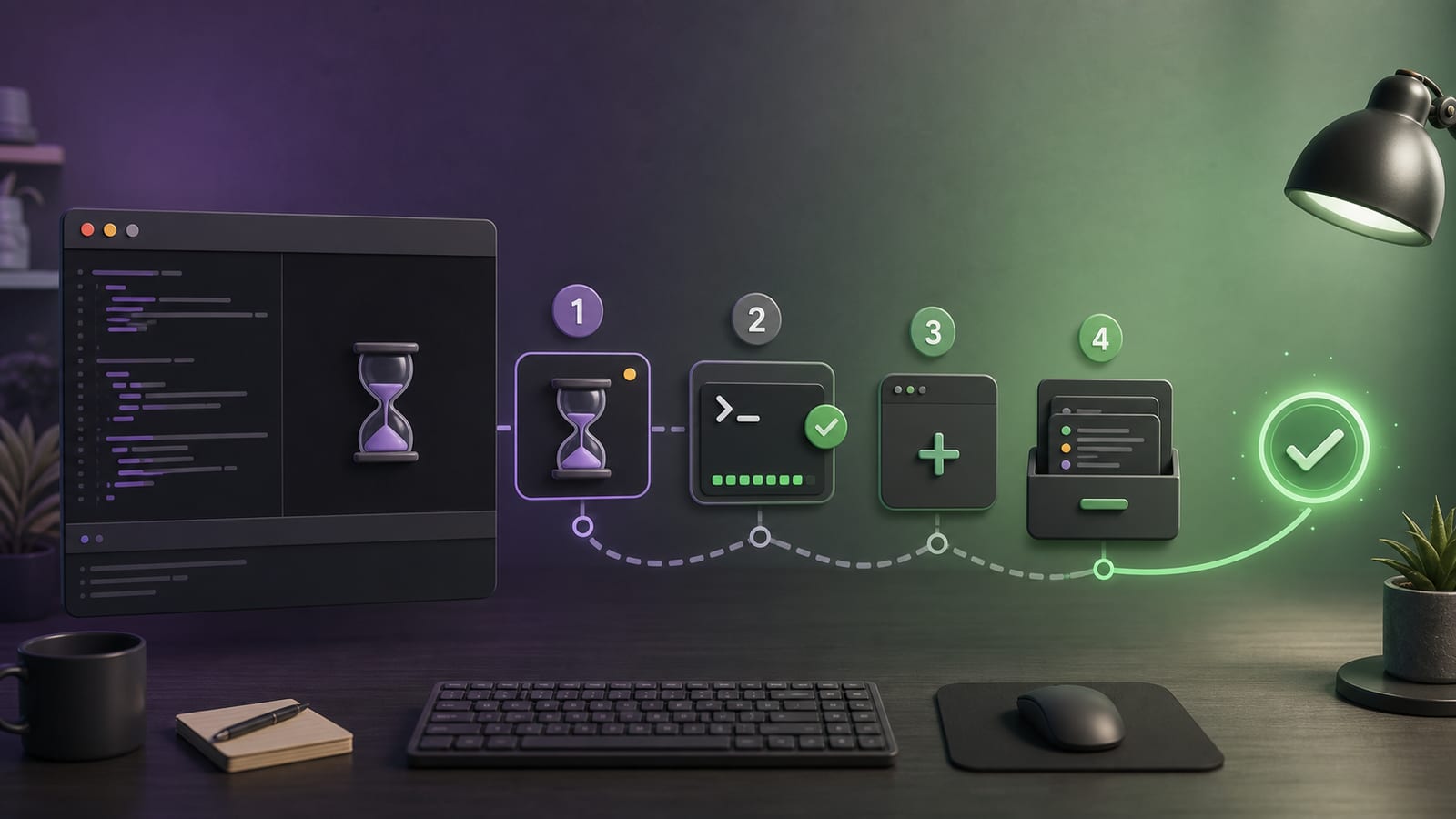
If Codex is stuck and unresponsive, do not send the same message repeatedly. Confirm in order whethe

codex exec In CI, it can analyze code without making changes; first check the sandbox: non-interacti

If Codex Skills is installed but does not trigger, first check if it is located in the scan director

Codex config.toml changes that don't take effect usually don't mean the TOML file is corrupted, but

After exiting the Codex CLI, you don't need to redescribe the entire task; just run codex resume sel

On August 3, 2026, the Qwen team released the Qwen 3.8-Max on the official Qwen blog, positioning it